 Cart
CartMeal Prep or Leftovers? Choose the Right Plan for Your Week
Meal prep protects future evenings; leftovers solve the next meal. Choose the approach that matches your schedule, storage space, and energy.
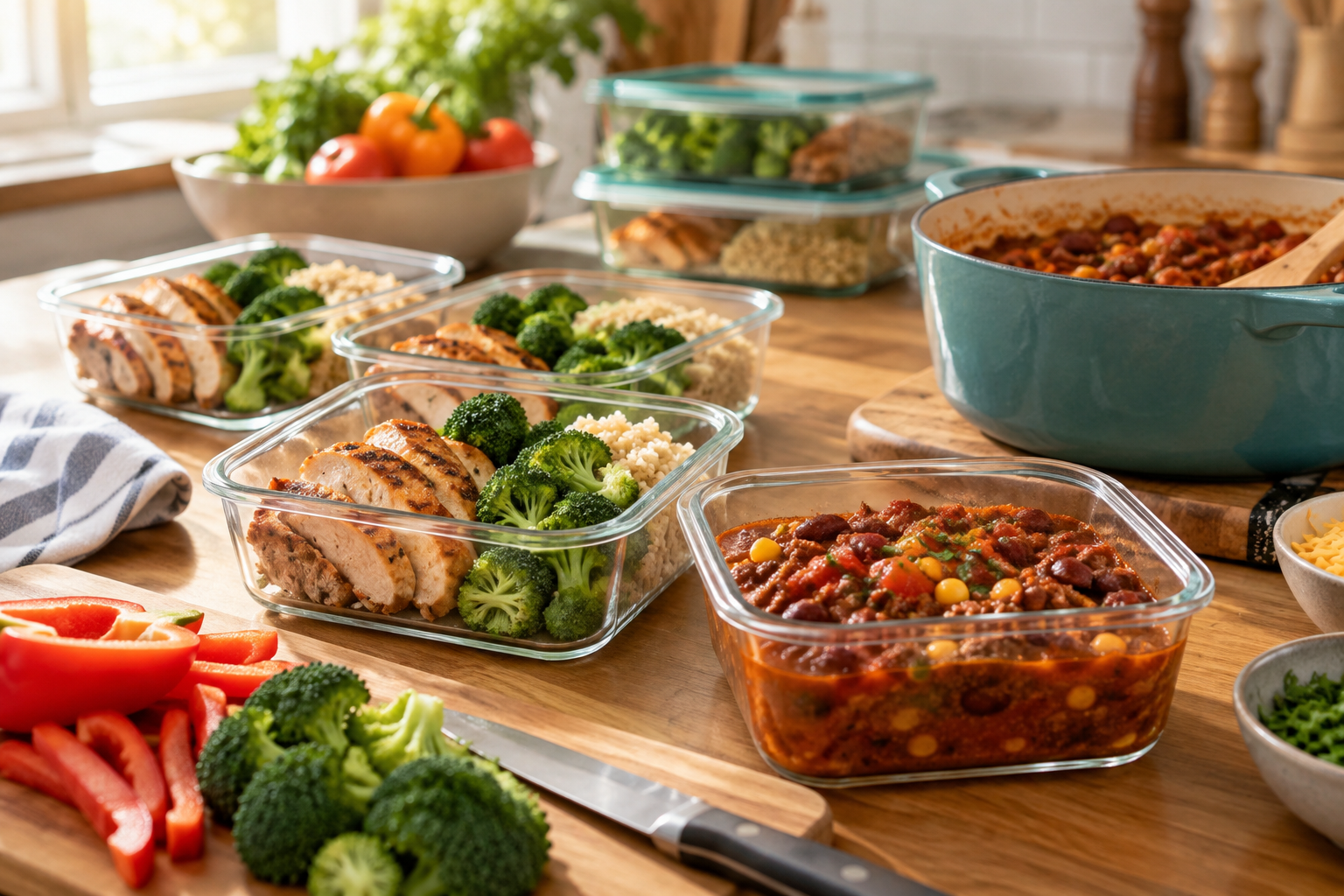
A container of Tuesday’s chilli can be tomorrow’s lunch, but it is not the same thing as a Sunday batch cooked for three separate meals. That difference is the key to choosing between meal prep and leftovers.
Both approaches can reduce weekday cooking. Both can save money when they help you use what you buy. But they solve different problems. One plans ahead on purpose. The other gets more value from supper you were already making.
Meal prep vs leftovers: what is the difference?
Meal prep means cooking, washing, chopping, or portioning food specifically for future meals. You might roast vegetables for bowls, cook a batch of rice, or make several portions of soup for later in the week.
Leftovers are extra portions from a meal you were already cooking. You make supper, serve everyone, and save what remains for lunch or another supper. No separate cooking session is required.
The distinction matters because the time, storage, and planning are different.
Meal prep asks you to spend effort before you need the meal. In return, the future meal is mostly ready.
Leftovers ask you to cook once and stretch that work. In return, the next meal depends on having enough food left and a family willing to eat it again.
Neither is automatically better. The right choice depends on your week.
Choose meal prep when your week has pressure points
Dedicated meal prep is useful when you know certain meals will be difficult to make from scratch. Look at the week ahead and find the gaps.
Meal prep suits you when:
- You have several late work, school, or activity nights.
- Lunches need to be packed before anyone leaves the house.
- You want a reliable meal after a busy appointment or practice.
- Your household can eat the same prepared meal more than once.
- You have enough fridge or freezer space for labelled portions.
- You prefer one planned kitchen session over several rushed ones.
A dedicated batch does not need to mean cooking every meal for the entire week. That can create a large weekend job and a fridge full of food you may not want by Thursday.
A smaller prep session is often easier to maintain. Cook one main dish, one useful component, or a few ingredients that can move between meals.
Examples include:
- A pot of lentil soup for two lunches.
- Cooked chicken for wraps, rice bowls, or salad.
- Washed and cut vegetables for quick roasting.
- A tray of roasted vegetables to serve with different proteins.
- Cooked grains portioned for meals later in the week.
- A double batch of tomato sauce for pasta now and lasagna later.
The goal is not to fill every container. The goal is to remove a known obstacle.
A small-household meal prep schedule
For a household of one or two people, a full week of identical meals can become tiring and may leave food sitting too long. A compact plan gives you flexibility.
The prep session: Choose one main dish and one supporting component. For example, make a pot of chickpea curry and cook rice. Portion some for the next day, then store the rest for later in the week according to your food-safety routine.
The first meal: Serve the curry and rice as dinner. Keep toppings or fresh garnishes separate so the meal does not feel flat when reheated.
The second meal: Use a prepared portion for lunch or supper on the busiest day. Add something fresh, such as cucumber, greens, or fruit.
The third meal: Change the format if possible. Serve the curry over a baked potato or with flatbread rather than repeating the exact same plate.
The rest of the week: Cook a different quick meal, use freezer portions, or plan leftovers from another supper. The prep batch is support, not the entire menu.
For a small household, freezing part of a batch can prevent the “we cannot face this again” problem. Label the container with the name and date you stored it. Use shallow containers where appropriate so food cools and reheats more evenly.
Choose leftovers when supper already does the work
Leftovers are usually the simpler option. You cook one meal and plan for extra portions. There is no separate prep day and no need to predict exactly how much food you will want later.
Use leftovers when:
- You already have a supper your household enjoys.
- Tomorrow’s lunch can be the same meal without much fuss.
- Your schedule is busy for only one or two days.
- You do not have much fridge or freezer space.
- You dislike spending a block of time cooking ahead.
- Your household likes variety and does not want several portions of one dish.
The trick is to plan the extra portion before you cook. If you simply hope there will be enough, the person packing lunch may end up with a small serving or nothing useful at all.
When building the shopping list, account for the extra servings. A meal that feeds everyone once may not leave enough for lunch. This is especially important with dishes where one ingredient disappears quickly, such as a favourite protein or a topping everyone wants.
Leftovers also work best when you choose meals that reheat or repurpose well. Stews, curries, pasta sauces, roasted vegetables, cooked grains, beans, and many casseroles are usually more adaptable than delicate fried foods or dressed salads.
A small-household leftovers schedule
Here is a simple pattern for two people:
Monday supper: Make a tray of roasted vegetables with chicken, tofu, or beans. Cook enough for dinner plus one lunch portion.
Tuesday lunch: Pack the leftover filling separately from anything that could become soggy. Add bread, rice, or greens at serving time.
Tuesday supper: Make a fresh, quick meal rather than trying to stretch the same leftovers for everyone again. Eggs, quesadillas, pasta, or a vegetable soup can fill the gap.
Wednesday supper: Cook extra again, this time choosing a dish that can become a different meal. For example, extra cooked meat or beans can go into wraps the next day.
Thursday lunch: Rework the leftovers with a new format. Add them to a bowl, pita, soup, or salad instead of serving the original plate unchanged.
This approach creates useful lunches without turning the fridge into a collection of half-used ingredients.
When combining both approaches works best
You do not have to choose one method for the whole week. Combining them is often the most practical plan.
Use leftovers for ordinary nights when cooking supper is already manageable. Use dedicated meal prep for the nights that are genuinely difficult.
For example:
- Cook extra chicken or beans at the start of the week for one planned lunch.
- Make Tuesday supper large enough for Wednesday lunch.
- Prep vegetables ahead for a late-week stir-fry.
- Freeze a portion of soup for the day when plans change.
- Cook one base ingredient, then turn it into different meals.
This mixed plan avoids two common problems. You are not committing to a large prep marathon, and you are not relying on random leftovers to cover every meal.
A useful rule is to prep the part that takes the most effort and leave the easy parts for later. If chopping vegetables is the barrier, chop them. If cooking protein is the barrier, cook that. If deciding what to eat is the real problem, plan the meals first and prep only what supports them.
How to decide before you shop
Start with your calendar, not a recipe list. Mark the evenings when you have enough time to cook and the evenings when you will need food quickly.
Then ask:
- Which meal needs to be ready before the day gets chaotic?
- Which supper will produce a good next-day lunch?
- Will the household actually eat the same meal twice?
- What can be frozen if plans change?
- How much fridge and freezer space is available?
- Which ingredients can be used in more than one meal?
Choose leftovers when your week has a few busy spots and your suppers naturally make extra portions. Choose meal prep when a future meal needs protection from a predictable schedule problem. Combine both when you want flexibility without a long cooking session.
Keep portions realistic. A plan that looks efficient on paper but leaves you bored, short on storage, or stuck with food nobody wants is not saving effort. It is creating another job.
CartBrain can help you map a Monday-to-Sunday meal plan around your household, budget, chosen stores, and local sale flyers, then build a store-split grocery list with cost tracking. Use it to plan where leftovers or a small prep batch will do the most work for your week.