 Cart
CartSheet-Pan Dinners for Families: One Tray, Whole Meal, Minimal Dishes
Protein, veg, and starch on one tray. Use the timing trick, swap by what’s on sale, and get leftovers without wrecking the kitchen.
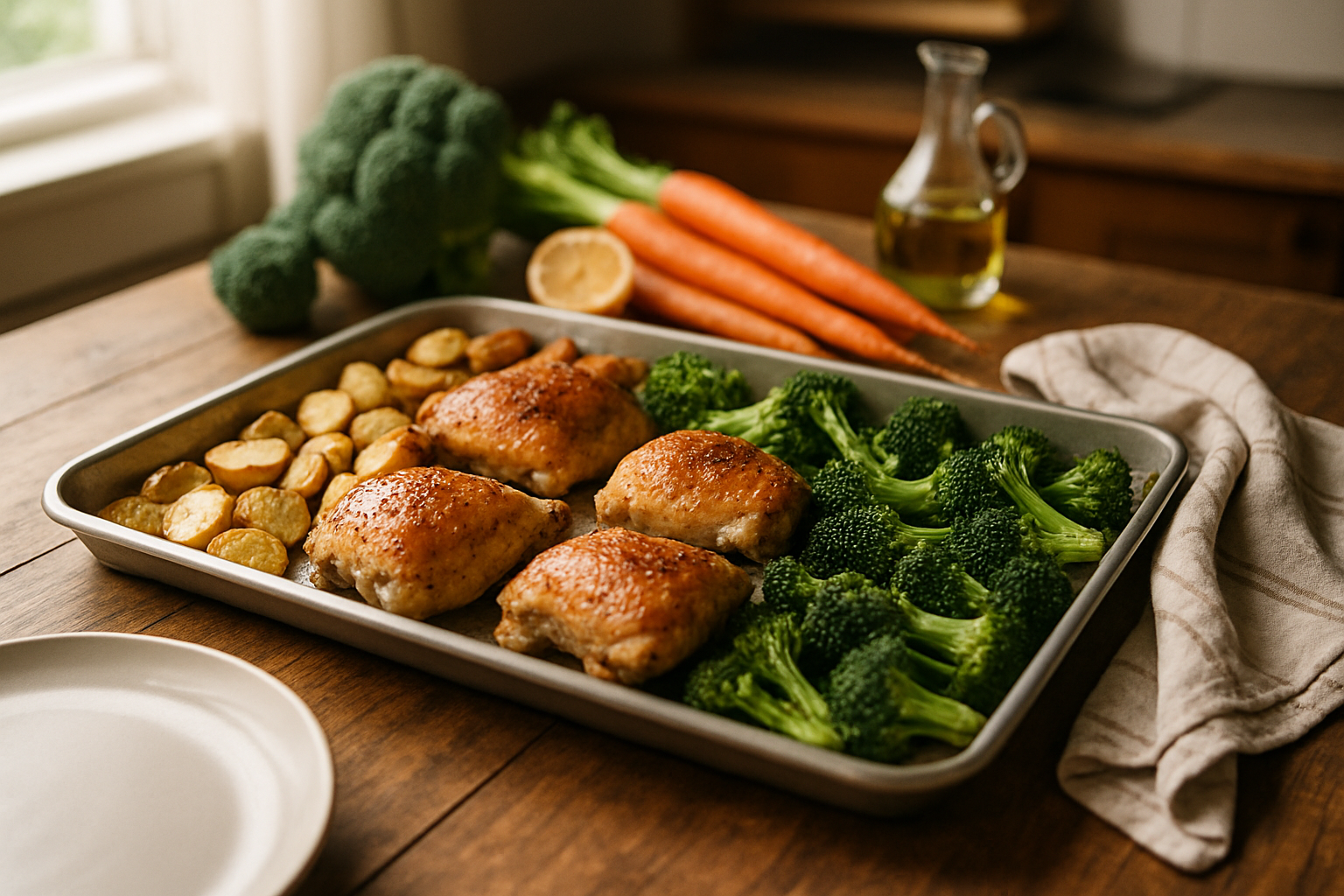
A sheet pan full of chicken, potatoes, and broccoli is the kind of dinner that makes the sink stay empty. That matters on a school night. Sheet-pan dinners for families are simple, flexible, and good at using whatever is already in the fridge or on sale this week.
The idea is plain: put protein, vegetables, and a starch on one tray, season it well, roast it hot, and serve it straight from the pan. No separate pots. No juggling three burners. No pile of dishes that makes you regret cooking at all.
Why sheet-pan dinners work so well
The best family dinners do three things at once. They feed everyone. They fit the budget. They do not create a mess you will still be cleaning after bedtime.
Sheet-pan meals hit all three.
- One tray means fewer dishes.
- One oven means less attention.
- One meal with protein, veg, and starch means fewer complaints about “what else is for dinner?”
They also scale well. If you need a bigger batch, use two trays instead of trying to cram everything onto one. Crowding is the enemy here. When the pan is overloaded, food steams instead of roasts, and dinner turns soft instead of crisp.
The simple formula for a full meal on one tray
A good sheet-pan dinner usually follows the same structure.
- Protein: chicken thighs, sausage, salmon, pork chops, tofu, meatballs, or beans
- Vegetables: broccoli, carrots, peppers, zucchini, green beans, cauliflower, Brussels sprouts, onions
- Starch: potatoes, sweet potatoes, wedges of squash, or sometimes gnocchi or bread on the side
- Seasoning: oil, salt, pepper, garlic, herbs, spice blends, citrus, or sauce
You do not need a fancy recipe every time. Start with what cooks at a similar pace. That is the whole game.
The timing trick that keeps everything done at once
This is the part that makes sheet-pan dinners feel easy instead of random.
Different ingredients need different amounts of time. Potatoes take longer than zucchini. Chicken thighs need more time than shrimp. If you throw everything on the tray at the same moment, something will end up overcooked or underdone.
Use this simple method:
- Start with the longest-cooking food. Usually that is the starch, like potatoes or sweet potatoes.
- Cut everything to similar sizes. Small pieces cook faster. Big chunks lag behind.
- Add quick-cooking ingredients later. Softer vegetables, fish, or delicate greens often go in partway through.
- Stir or flip once. That helps browning and keeps one side from drying out.
- Check for doneness by the slowest item. If the potatoes are still firm, the tray is not ready.
A useful rule: if you are unsure, cut the dense vegetables smaller and the protein a little larger. That helps them finish closer together.
Easy combinations that actually work
You do not need endless new recipes. You need a few repeatable combinations you can rotate.
- Chicken thighs + potatoes + broccoli
- Sausage + peppers + onions + baby potatoes
- Salmon + asparagus + small potatoes
- Pork chops + carrots + cauliflower
- Tofu + broccoli + sweet potatoes
- Meatballs + zucchini + peppers + gnocchi
These are not rules. They are starting points. If your family likes different vegetables, swap them in. If someone hates one ingredient, leave it out and add more of the others.
Swaps based on what’s on sale
This is where sheet-pan dinners become a budget tool instead of just a dinner idea.
If chicken is cheaper this week, use chicken. If sausage is the better buy, build around that. If potatoes are in good shape and carrots are on sale, let those lead the tray. The meal does not need to look the same every time to work.
Try swapping by category:
- Protein swaps: chicken thighs, drumsticks, sausage, pork tenderloin, tofu, chickpeas, salmon
- Starch swaps: potatoes, sweet potatoes, squash, parsnips, corn, bread on the side
- Veg swaps: broccoli, cauliflower, carrots, green beans, Brussels sprouts, peppers, zucchini, onions
- Flavour swaps: Italian seasoning, taco seasoning, curry powder, lemon and garlic, barbecue sauce, soy and ginger
If a vegetable is cheap but your family does not love it roasted, mix it with something familiar. Broccoli plus carrots. Cauliflower plus potatoes. Peppers plus onions. Familiar food gets eaten.
How to keep everything from drying out
A sheet pan can go from perfect to sad if you overcook it. That is usually fixable.
Use enough oil to coat the food lightly, not drown it. Dry vegetables need a bit more oil than you think. Add sauce after roasting if you want strong flavour without burning it in the oven.
A few practical habits help:
- Do not use tiny pieces unless you want them crisp.
- Spread food out in one layer.
- Line the tray for easier cleanup if you want, but still oil the food.
- Use darker pans carefully, since they can brown faster.
- Pull the tray when the protein is done and the veg is tender with some edges browned.
If one item finishes early, move it to the side of the tray or remove it and cover it loosely while the rest finishes.
Make it kid-friendly without making two dinners
Families do not need a separate meal for every person. They need a base meal with a few easy choices.
- Keep the seasoning simple.
- Serve sauce on the side.
- Roast one tray mildly and add heat after serving.
- Use familiar shapes, like wedges, coins, or bite-size pieces.
- Let kids build their own plate from the tray.
A plain roasted potato and chicken dinner can be dressed up with ketchup, yogurt dip, ranch, pesto, salsa, or gravy. That is often enough to keep everyone at the table.
Leftovers are part of the plan
Sheet-pan dinners are especially useful when you want tomorrow handled too.
Leftovers can become:
- Lunch bowls
- Wrap fillings
- Quesadillas
- Fried rice with extra vegetables
- Pasta tossed with chopped roasted veg and protein
- Breakfast potatoes with eggs
If you know you need leftovers, make a little extra starch and protein. Roasted vegetables shrink more than you expect, so do not be shy about loading the tray.
A simple weeknight sheet-pan game plan
If you want this to feel automatic, keep the process the same every time.
- Pick a protein.
- Pick one starch.
- Pick two vegetables.
- Choose one seasoning style.
- Cut the long-cooking items smaller.
- Roast the starch first if needed, then add the rest.
- Serve from the tray and move on with your night.
That is enough. You do not need a complicated recipe binder to make dinner happen.
The real win: dinner without the cleanup spiral
The best part of sheet-pan dinners for families is not just that they are easy to cook. It is that they let you finish dinner without turning the kitchen into a second job. One tray, one meal, fewer decisions, and less to wash later.
That is exactly the kind of supper that holds up when the week gets noisy. If you want help turning sale items into a full family supper plan, CartBrain can build the week around your budget, stores, and flyers so the tray is already half-planned before you start cooking.