 Cart
Stop Buying a New Spice Jar for Every Meal Plan
A five-minute cupboard audit can prevent duplicate spices, unsuitable substitutions, and condiment bottles multiplying in your fridge.
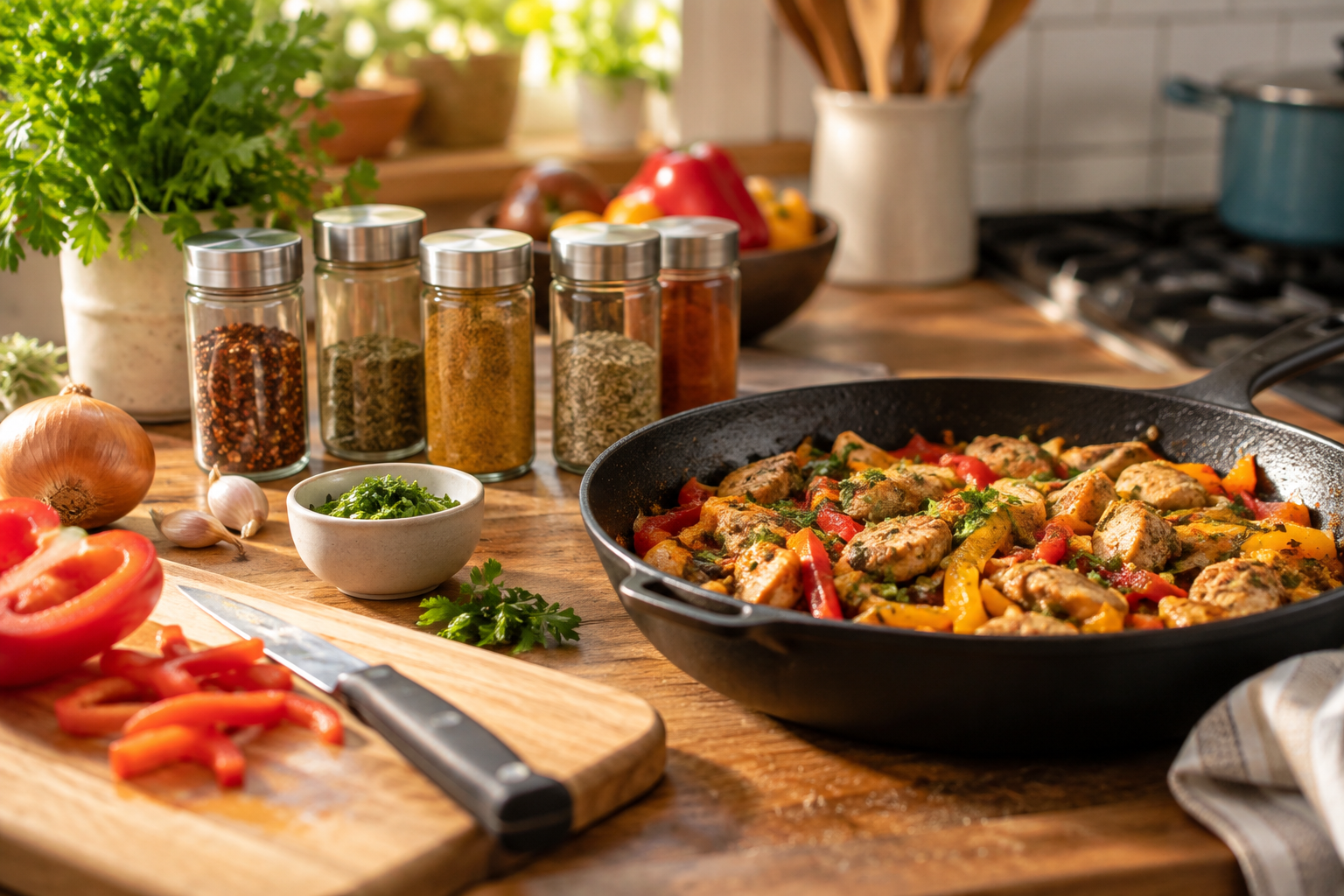
That second jar of smoked paprika is not a meal-planning problem. It is a cupboard-checking problem.
Spices, sauces, pastes, and condiments are easy to miss when you build a grocery list from separate recipes. One recipe says cumin. Another says ground cumin. A third calls for cumin seed. Those are related, but they are not always interchangeable. Meanwhile, the unopened jar is sitting behind the pasta.
A quick audit before shopping helps you avoid duplicate spices on your grocery list, spend less on ingredients you already own, and prevent a half-suitable substitute from ruining dinner. The trick is knowing what to check, what can be swapped, and what should stay on the list.
Start with a proper cupboard audit
Do not audit your spice collection by glancing at the front row. Pull everything out. Check the spice drawer, the shelf above the stove, the baking cupboard, the pantry basket, and any overflow storage.
Then group similar items together:
- Dried herbs, such as oregano, basil, thyme, rosemary, and parsley
- Ground spices, such as cinnamon, cumin, coriander, paprika, and turmeric
- Whole spices and seeds, such as peppercorns, mustard seeds, fennel seeds, and cumin seeds
- Spice blends, such as curry powder, garam masala, Italian seasoning, poultry seasoning, and taco seasoning
- Chilli products, such as chilli flakes, cayenne, hot sauce, and chilli powder
- Condiments, such as mustard, mayonnaise, ketchup, relish, and barbecue sauce
- Cooking pastes and sauces, such as tomato paste, curry paste, soy sauce, hoisin sauce, and tahini
Write down what you have, or take clear photos of the labels. Include the size and whether the container is open. A nearly empty jar matters. It may cover one recipe, but not the next four meals.
Check the label, not just the name
Similar names can hide important differences. Before removing an item from your grocery list, compare the exact product and form.
Cumin and cumin seeds are not the same as ground cumin. Seeds may be toasted and added whole, or ground for a fresher flavour. They will not behave identically in a recipe.
Chilli powder and cayenne can have very different heat levels and uses. In some recipes, chilli powder means a blend with cumin, garlic, oregano, and other spices. Cayenne is generally a concentrated hot pepper powder. Swapping one for the other can make a mild family meal unexpectedly hot.
Paprika, smoked paprika, and hot paprika bring different flavours. Smoked paprika adds a noticeable smoky taste. Sweet paprika is usually milder. Hot paprika adds heat. The label matters more than the shared word “paprika.”
Curry powder and garam masala are both blends, but they are not a direct match. Their spice mix, heat, and usual place in a recipe differ.
Tomato sauce, passata, crushed tomatoes, tomato paste, and ketchup may all be tomato-based, but they have different moisture, sweetness, acidity, and concentration. A spoonful of tomato paste cannot replace a can of crushed tomatoes without adding liquid. Ketchup is rarely a neutral substitute.
Soy sauce, tamari, coconut aminos, and hoisin sauce also need a closer look. They differ in salt, flavour, thickness, and ingredients. A recipe may depend on one of those qualities.
When the wording is slightly different, pause before deleting the item. Read the recipe instructions and the ingredient list together.
Use a three-question substitution test
Before swapping an ingredient, ask three questions.
1. Does it provide the same job?
Ingredients do more than add flavour. They may provide liquid, acidity, salt, sweetness, fat, colour, thickening, or texture.
Dried oregano and fresh oregano both provide herbal flavour, but they are not measured the same way. Dijon mustard and yellow mustard both provide tang and mustard flavour, but Dijon is usually sharper and more complex. Tomato paste adds concentrated savoury flavour and body; tomato sauce adds much more liquid.
If the ingredient changes the structure of the dish, it needs more than a name match.
2. Will the flavour still suit the meal?
A substitute can be technically edible and still be wrong for the dish. Smoked paprika may work in chilli, roasted vegetables, or a bean stew. It may overwhelm a delicate cream sauce. Mint may replace some fresh herbs in a salad, but not if the dish needs a warm, savoury profile.
Think about the meal as a whole. Ask whether the replacement is mild, sweet, bitter, smoky, hot, acidic, or strongly aromatic. If it has a dominant flavour, use less at first and adjust after tasting when the recipe allows.
3. Does it fit the household’s food restrictions?
Check the label every time, especially for blends and bottled sauces. Ingredients and formulations can change. A spice blend may include salt, milk ingredients, mustard, wheat, sesame, or another allergen. A condiment may contain an ingredient that does not suit a vegetarian, vegan, halal, kosher, low-sodium, or gluten-free meal.
For a serious allergy or medically required restriction, do not rely on a generic substitution list. Read the package, check for cross-contact information where relevant, and use the household’s established guidance.
Know when not to substitute
Some ingredients are too central to remove casually.
Keep the item on the list when it is the main flavour of the recipe, when the quantity is large, or when the replacement changes the texture. This often applies to curry pastes, tahini, miso, coconut milk, fish sauce, specialty vinegars, and particular chilli products.
Also keep it when the recipe depends on a specific cooking step. Whole spices that are toasted in oil will behave differently from a late addition of ground spice. A thick paste stirred into a marinade will not act like a thin sauce. A crunchy topping cannot be replaced by a soft ingredient just because both are savoury.
If you are unsure, buy the intended ingredient and save the experiment for a meal where the result matters less.
Build a simple spice inventory
You do not need a complicated spreadsheet. Use a note on your phone with four columns:
- Ingredient name
- Form or variety
- Amount left
- Best-before note
Record “smoked paprika” rather than just “paprika.” Record “whole cumin seed” rather than “cumin.” For condiments, note whether the bottle is open and how much remains.
Use simple status labels:
- Have enough: no need to buy it
- Use soon: plan a meal that finishes it
- Low: buy if the week needs it
- Replace: stale, damaged, expired according to the label, or unsuitable for your household
Best-before dates are useful for quality, but they are not a magic freshness switch. Dried spices gradually lose aroma and strength. If a jar smells like almost nothing, it may not deliver much to the meal even if the date looks fine. Store spices away from heat, steam, and direct sunlight. The shelf beside the kettle or stove is convenient but often rough on flavour.
Add a cupboard check to your weekly planning routine
Make the audit part of meal planning instead of a separate weekend project. Before finalising the grocery list:
- Review the week’s recipes and highlight every spice, sauce, paste, and condiment.
- Match each item against the exact products in your cupboard.
- Check the remaining amount, not just whether the jar exists.
- Mark duplicates caused by different wording.
- Decide which substitutions are suitable and which are not.
- Add only the missing or genuinely low items to the list.
This is especially useful when recipes come from different sources. One may say “garlic powder,” another “granulated garlic,” and another “garlic salt.” They are not automatically equivalent. Garlic salt also adds salt, which affects the rest of the seasoning.
Flyer planning can make this check more important. Grocery flyers from Canadian stores often turn over on Thursday, but the exact offers and product sizes vary by province, city, and store. A cheaper spice blend is not helpful if it contains an ingredient your meal cannot use. Check your own store’s current flyer and package label before treating it as a replacement.
Make duplicate spices work for you
Finding duplicates does not mean you need to throw everything out. Put matching jars together and use the oldest suitable one first. If two jars contain the same product, label one “use first.”
Plan meals around ingredients that are already open. A jar of oregano can support pasta sauce, roasted vegetables, bean dishes, and salad dressing. A bottle of barbecue sauce may work in a glaze, sandwich filling, or slow-cooked meal. This reduces forgotten leftovers and gives the next grocery list a clearer starting point.
For future shopping, keep the exact name in your pantry note. “Paprika” is vague. “Sweet paprika, half a jar” is useful. “Soy sauce, regular, open” is more helpful than “Asian sauce.” Specific notes prevent both duplicate purchases and unsuitable swaps.
A good meal plan does not assume every cupboard is empty. Before you shop, match the week’s ingredients to what is already in the house, then check the labels before making substitutions. CartBrain can help turn that plan into a store-split grocery list with cost tracking; the final cupboard check is still yours, and it is the step that stops another duplicate spice jar from coming home.