 Cart
CartCooking for a Large Family on a Budget That Actually Works
Feed a big crew without turning every supper into a money leak or a second job.
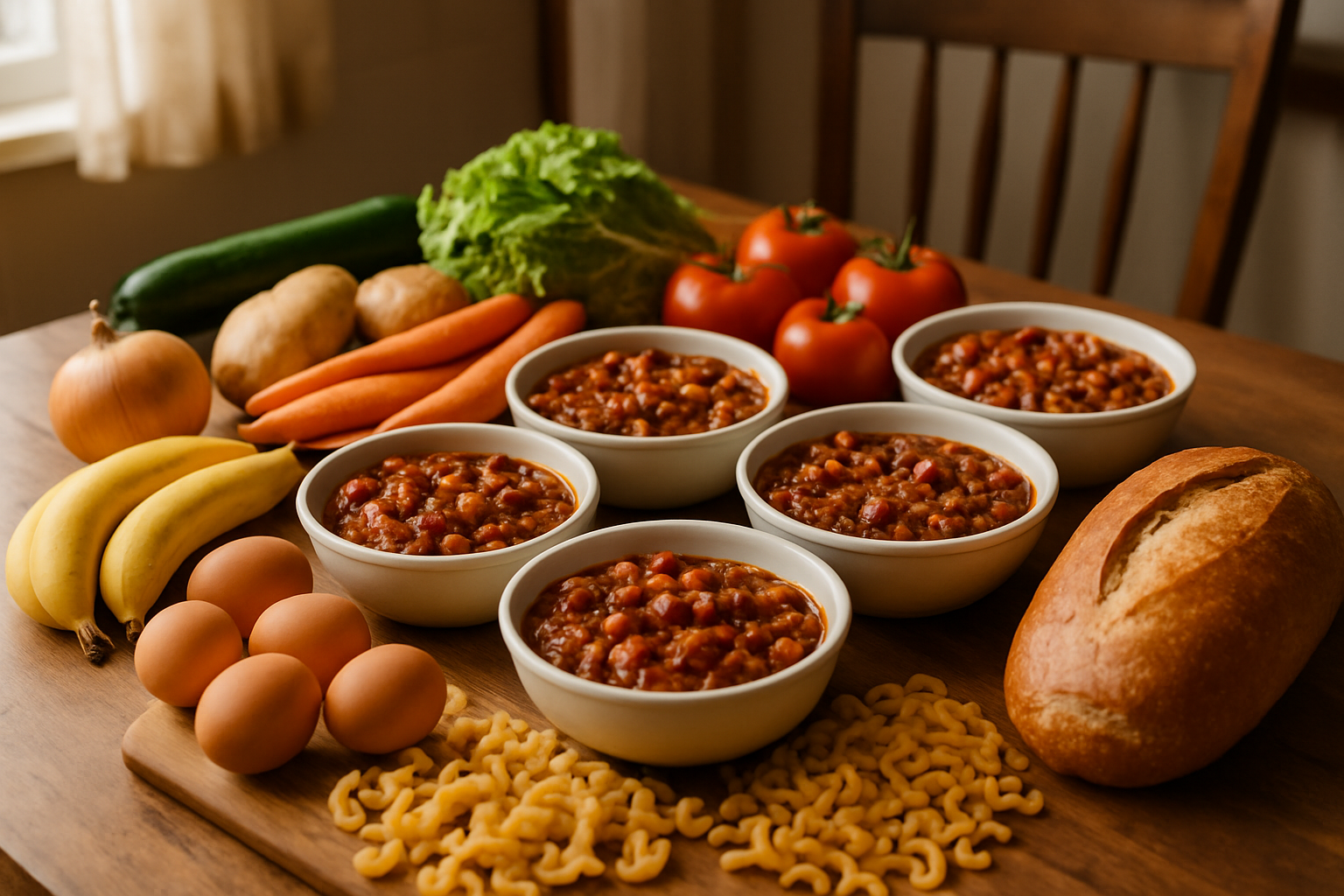
A family-size pack of chicken thighs is not the same thing as a family-size dinner. That’s the trap. Big families do not need fancier food. They need smarter scaling, fewer expensive add-ons, and meals that leave enough for tomorrow.
Start with the cheapest part of the meal
When you are cooking for a large family on a budget, the easiest mistake is to scale everything equally. That gets expensive fast. Instead, scale the cheap stuff first.
Use more of the low-cost base and less of the pricey centrepiece. Think rice, pasta, potatoes, oats, beans, lentils, tortillas, cabbage, carrots, frozen vegetables, and eggs. These are the foods that help a meal cover more plates without making the grocery bill jump every time one more child shows up hungry.
A simple way to think about it:
- Build the meal around one low-cost staple
- Add one protein, but do not make it the whole show
- Add vegetables that hold up well in a big batch
- Use sauce, seasoning, or cheese as support, not the main event
This works because most families do not need four different sides. They need one filling meal that tastes good and keeps everyone fed.
Choose big-batch shapes that are built for volume
Some meals are naturally better for larger households. They scale cleanly. They reheat well. They do not fall apart when you make a double batch.
Good big-batch shapes include:
- Casseroles
- Sheet pan dinners
- Soups and stews
- Chili
- Pasta bakes
- Stir-fries with rice
- Big pots of curry
- Taco bowls or burrito fillings
These meals are useful because they let you stretch ingredients without making the food feel thin. A casserole can take extra vegetables and still feel complete. A sheet pan meal can handle a lot of potatoes and carrots alongside a smaller amount of meat. A big pot of soup can be turned into dinner plus lunch without much extra work.
If you are feeding 5, 6, or more, stop asking every meal to be individually plated and perfect. Start asking whether it can be made in one pan, one pot, or one baking dish.
Stretch meat the right way
Meat is often the most expensive part of the cart, so it should be used with purpose. That does not mean cutting it out. It means making it work harder.
The best stretchers are beans, lentils, grains, and vegetables with enough texture to stand up beside the meat. They add volume, fibre, and substance. They also help the meal feel full without needing a huge amount of protein in every serving.
Good combinations:
- Ground beef with lentils in pasta sauce, chili, or taco filling
- Chicken with rice, beans, and roasted vegetables
- Sausage with potatoes and cabbage
- Turkey mixed into casseroles or soup
- Beans folded into burrito filling or rice bowls
You are not trying to hide the meat. You are trying to make one package of meat feed more people. That is a different job.
A good rule: use meat as the flavour anchor, then build around it with low-cost bulk.
Buy in bulk only when it is actually cheaper
Bulk buying sounds smart because it feels efficient. Sometimes it is. Sometimes it is just a bigger bill.
Buy in bulk when all of these are true:
- You already use the ingredient often
- You have space to store it well
- You can portion and freeze it before it goes bad
- The unit cost is genuinely better than the smaller package
Do not bulk-buy because the package looks economical. It only helps if your family will actually eat it before it spoils.
This matters most with big families because the temptation is to assume every large package saves money. Not always. A giant tub of something nobody finishes is not a bargain. It is waste.
Bulk is best for pantry staples and freezer-friendly foods. Think rice, pasta, oats, dried beans, canned tomatoes, flour, frozen vegetables, and meat you can portion right away. It is less useful for fresh foods that turn fast or for ingredients that only show up in one recipe a month.
Plan for leftovers on purpose
Leftovers are not failure. They are part of the plan.
If you are cooking for a large family on a budget, every dinner should answer two questions:
- Will everyone eat tonight?
- Can this become another meal tomorrow?
That second question saves money and time. A roast chicken can become sandwiches, soup, or quesadillas. Chili can become baked potatoes or taco filling. Rice and roasted vegetables can turn into fried rice or lunch bowls. Pasta sauce can become pizza topping or stuffed peppers.
The trick is to make leftovers useful, not random. When you cook, think about what the food can become next. That way you are not staring into the fridge later and hoping somebody wants the same dinner again.
A few practical habits help:
- Cook a little extra rice, pasta, or potatoes on purpose
- Keep one or two “reheat well” meals in rotation each week
- Store leftovers in family-sized containers so they are easy to see
- Label what needs to be eaten first
If your household is big enough, leftovers should be treated like a backup meal plan, not an afterthought.
Use low-cost flavour so cheap food does not feel boring
Budget meals fail when they taste flat. That is usually a seasoning problem, not an ingredient problem.
You do not need fancy sauces. You need a few reliable flavour builders:
- Garlic and onion
- Chili powder, curry powder, Italian seasoning, paprika, cumin
- Soy sauce or bouillon for depth
- Tomato paste or canned tomatoes
- Lemon juice or vinegar for brightness
- Cheese used sparingly for finish, not bulk
A pot of beans and rice tastes much better when it has onion, garlic, and a real seasoning profile. Roasted vegetables feel more like dinner when they are salted properly and finished with something acidic. A casserole becomes a meal instead of a beige block when it has enough seasoning to hold its own.
Cheap food should not mean bland food. That is how people get tired of the plan and start ordering out.
Build a repeatable weekly structure
Big families do best with a rhythm. Not a perfect menu. A repeatable structure.
Try this kind of pattern:
- One pasta or casserole night
- One sheet pan or tray-bake night
- One soup, stew, or chili night
- One rice or grain bowl night
- One breakfast-for-dinner or egg-based meal
- One leftovers night
- One flexible night for whatever is left
That structure keeps the week from becoming a series of emergency decisions. It also makes shopping easier because you are not trying to invent seven different meals from scratch.
A repeatable plan is especially useful when your household size changes from night to night. Friends show up. Teen appetites grow. Someone eats early. Someone eats twice. A flexible structure absorbs that chaos better than a rigid menu ever will.
Shop with the real household in mind
A family of 6 does not shop like a family of 3. But that does not mean buying everything in giant quantities. It means buying for the meals you actually cook.
Before you shop, ask:
- Which meals use the same staple ingredients?
- Which proteins can be stretched?
- Which vegetables hold up all week?
- What can be frozen if plans change?
Then shop from that plan, not from panic.
If you are in the habit of grabbing random items because the cart looks empty, your budget will disappear in small, forgettable bites. A better approach is to anchor the week with a few repeatable dinners, then fill in the gaps with sale items, pantry staples, and leftovers-friendly foods.
That is also where meal planning helps. A weekly plan keeps you from overbuying one ingredient and forgetting another. It makes it easier to match your meals to what is actually on sale, what store you are shopping at, and what your family will really eat.
Keep the goal simple
The goal is not to make every dinner impressive. The goal is to feed everyone well, keep the cart under control, and not spend your whole evening doing dishes.
When you focus on the right things, cooking for a large family on a budget gets easier:
- Scale the cheap stuff first
- Use meals that work in big batches
- Stretch meat with beans, grains, and vegetables
- Buy in bulk only when it truly helps
- Plan leftovers as part of the week
That is the whole game. Less waste. More structure. Fewer expensive surprises.
If you want help turning that into an actual week of dinners, CartBrain can build a budget-aware supper plan around your stores, sales, and leftovers so you are not starting from zero every Monday.