 Cart
CartCooking for Two on a Budget Without Eating the Same Thing All Week
Plan smaller portions, freeze food in pairs and turn leftovers into deliberately different meals instead of a week of repeats.
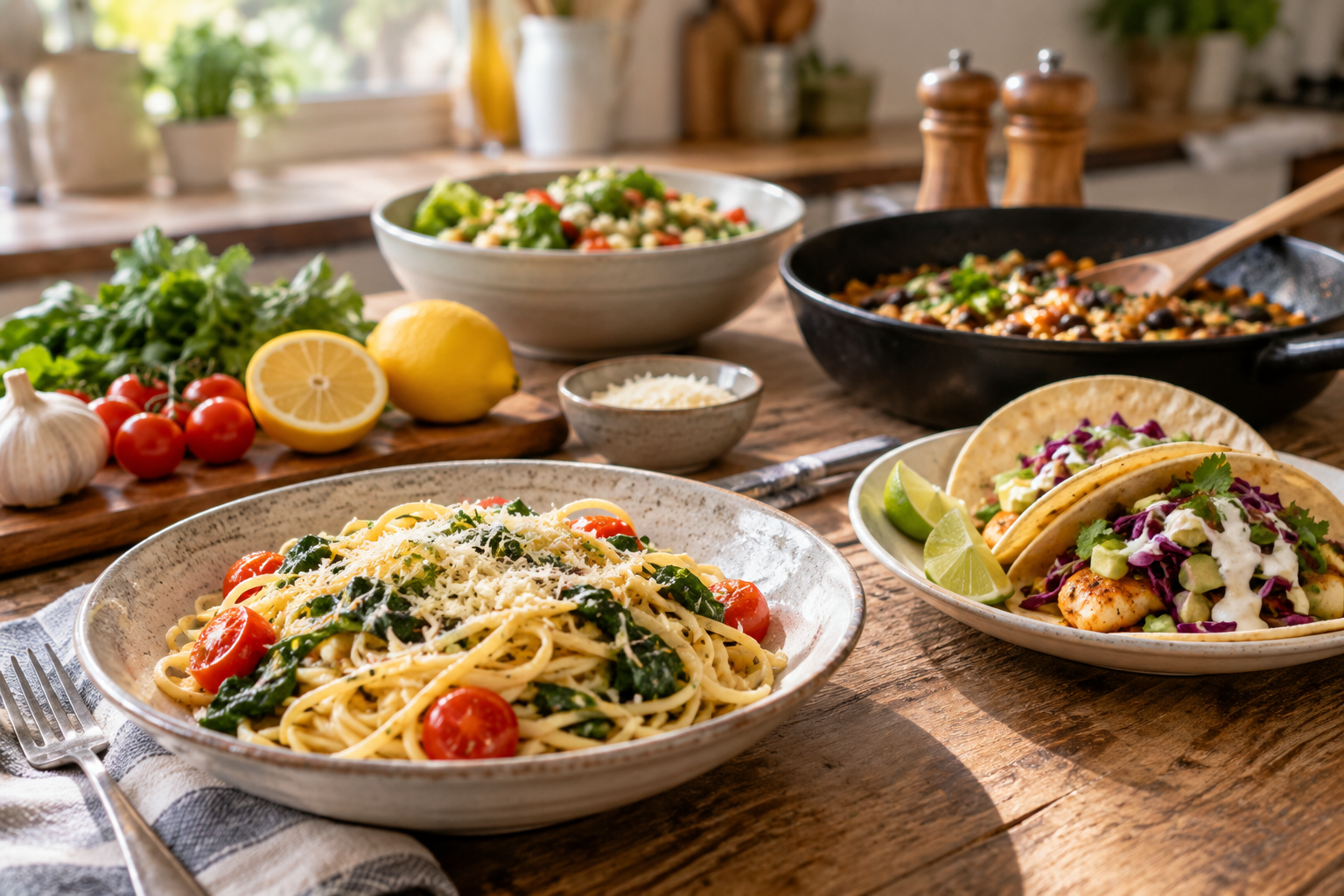
A family-size lasagna can feed two people for days—but by the third reheated square, your budget meal starts feeling like a punishment. Cooking for two on a budget works better when you plan portions, freezer space and leftovers together.
The goal is not to make every dinner from scratch or buy the smallest package of everything. It is to spend your grocery money on food you will actually use, then give leftovers a second job before they become fridge clutter.
Start with the meals, not the package size
Most recipes are written for four, six or more people. That does not mean you need to double your shopping list for two. It means you need to decide what the extra portions are doing.
Before adding a recipe to your week, choose one of three paths:
- Halve it and cook only what you need.
- Cook the full amount and freeze the extra portions.
- Plan a remix that uses the leftovers in a noticeably different meal.
Halving is simple for soups, stews, pasta sauces, casseroles and grain bowls. Be careful with recipes that use one egg, a small amount of yeast or a whole can of something. In those cases, make the full recipe and save the remainder for another meal.
A full recipe is worth cooking when the food freezes well or when the second meal needs very little effort. A pot of chilli can become stuffed baked potatoes, quesadillas or a rice bowl. Roasted chicken can become wraps, soup or a salad. The important part is choosing the second meal before you cook the first.
Plan the remix, not the repeat
“Leftovers” sounds like a meal nobody chose. A remix sounds intentional. Use the same cooked ingredient with a new base, sauce or format.
Try combinations such as:
- Roast vegetables with chicken on the first night, then fold them into a frittata or warm grain bowl.
- Cooked lentils in a tomato stew, then use them in a spiced filling for flatbreads.
- Taco-seasoned beef or beans in tortillas, then serve the rest over lettuce, rice or baked potatoes.
- A batch of tomato sauce with pasta, then use it on naan or English muffins with cheese and vegetables.
- Rice with a stir-fry, then turn the remaining rice into fried rice with an egg and chopped vegetables.
Keep one or two “bridge ingredients” on hand to change the meal. Tortillas, eggs, shredded cheese, salad greens, broth, yoghurt, lemons and fresh herbs can make the same cooked protein feel different.
Do not plan a remix that requires buying a completely separate basket of ingredients. That defeats the point. The second meal should use what you already have, plus one or two small additions at most.
Buy family packs, then freeze in pairs
Larger packs can be useful for two people, but only if you portion them before they disappear into the freezer or fridge.
When you unpack groceries, divide meat, fish or poultry into two-person portions. Put each portion in a freezer bag or container, press out excess air, label it with the name and date, and freeze it flat when possible. Flat packages stack well and thaw more quickly in the refrigerator.
You can use the same approach for:
- Ground meat, portioned for tacos, meatballs or sauce.
- Chicken thighs or breasts, divided by meal.
- Fish fillets, wrapped individually or in pairs.
- Bread, buns and tortillas, separated so you can take out only what you need.
- Grated cheese, frozen in small portions for cooking.
Freeze raw food before its quality starts slipping. Move one portion to the refrigerator the day before you plan to cook it. Do not rely on a large pack to “eventually” become meals. If you cannot name the meals, buy less or freeze it immediately.
A family pack is not automatically cheaper. Compare the price per kilogram, consider trimming and check whether you have the freezer room. A smaller package that gets used is better value than a large one that becomes waste.
Build a small-household produce list
Produce is where good intentions often turn into compost. Two people do not need a full crisper drawer of delicate greens and several kinds of fruit every week.
Choose a mix of quick-use, sturdy and frozen produce.
Use first:
- Salad greens, fresh herbs, berries and ripe avocados.
- Mushrooms, asparagus and other vegetables that lose quality quickly.
- Bananas or other fruit that is already ripe.
Keep for later:
- Carrots, cabbage, onions, potatoes and squash.
- Apples, oranges and other fruit that holds well.
- Frozen peas, corn, spinach and mixed vegetables.
Buy one or two fresh vegetables for the first half of the week, then rely on sturdier produce for later meals. Frozen vegetables are not a backup plan. They are a practical way to keep variety without demanding that every meal happen immediately.
Choose produce that can cross several meals. A bunch of green onions can top eggs, soup and noodles. A cabbage can become slaw, stir-fry and roasted wedges. Carrots work in a tray bake, lunch salad or soup. Look for ingredients with more than one clear use before putting them in the cart.
If a recipe calls for a small amount of an ingredient you rarely use, check for a substitute. Fresh coriander, parsley or dill may be replaced with another herb, or left out when it is not central to the dish. A special ingredient is only a bargain if you have a plan for the rest.
Make a two-person weekly budget realistic
A useful budget starts with your own receipts, not an aspirational grocery number from someone else. Food costs vary across Canada. A household in Toronto may shop differently from one in rural Nova Scotia, northern Ontario or the Prairies. Store choice, transport, dietary needs and access to sales all matter.
Start with this process:
- Review several recent grocery trips and separate food from household supplies, personal care and one-off purchases.
- Work out what you actually spend on groceries for two people in a normal week.
- Set a target that is slightly more deliberate than your current pattern, rather than an extreme cut that makes the plan impossible.
- Leave room for pantry staples, a flexible meal and price changes.
- Track the total as you shop, not only at the checkout.
A realistic week usually needs a balance of fresh food, pantry basics, proteins and meals that can absorb substitutions. Do not spend the whole budget on ambitious recipes and then hope there is enough left for breakfast, coffee or fruit.
Use a price ceiling for flexible items. If the planned protein is not a good fit at your store, switch to eggs, beans, lentils, tofu, canned fish or another option you already know how to cook. Keep the recipe method and change the main ingredient.
Shop the flyer without chasing every deal
Canadian supermarket flyers often turn over on Thursday, but the timing and offers differ by chain, region and store. Check the current flyer for the places you actually use, including discount banners such as No Frills, FreshCo, Food Basics, Maxi or Super C where they operate in your area. Independent shops, Co-op, IGA, Save-On-Foods, Giant Tiger, Bulk Barn and Costco may also fit part of your plan depending on location and package sizes.
Do not build a two-person menu around every sale. Choose a few useful deals, then connect them into meals. A sale on chicken is helpful when you can freeze part of it, roast it once and use it twice. A sale on a large quantity of fragile produce is not useful if you cannot eat or preserve it.
Compare the unit price, check the package size and read your store’s current rules before relying on any price-match or loyalty mechanic. Offers vary between provinces and locations.
A simple weekly structure
A seven-day plan does not need seven complicated dinners. Try a structure like this:
- Two meals cooked in small batches.
- One larger meal with a planned remix.
- One freezer meal.
- One fast pantry meal.
- One flexible meal for leftovers, plans or a changed schedule.
- One meal out or assembled from what remains, if it fits your budget.
This keeps the week from depending on perfect energy. It also stops the classic two-person problem: buying ingredients for seven different recipes, then watching half of them wilt.
Write the portion plan beside each dinner. Mark meals as “cook two,” “freeze two” or “remix tomorrow.” That small note removes the guesswork when you are tired and makes the grocery list more accurate.
For a quicker way to build a week around your household, budget, chosen stores and local Canadian or US flyers, CartBrain can plan the meals and create a store-split, aisle-sorted list with cost tracking; new accounts get a full first week free with no card.