 Cart
Count Freezer Meals in Portions, Not Mystery Containers
A freezer works harder when you can see exactly what meals and portions are available before planning the next shop.
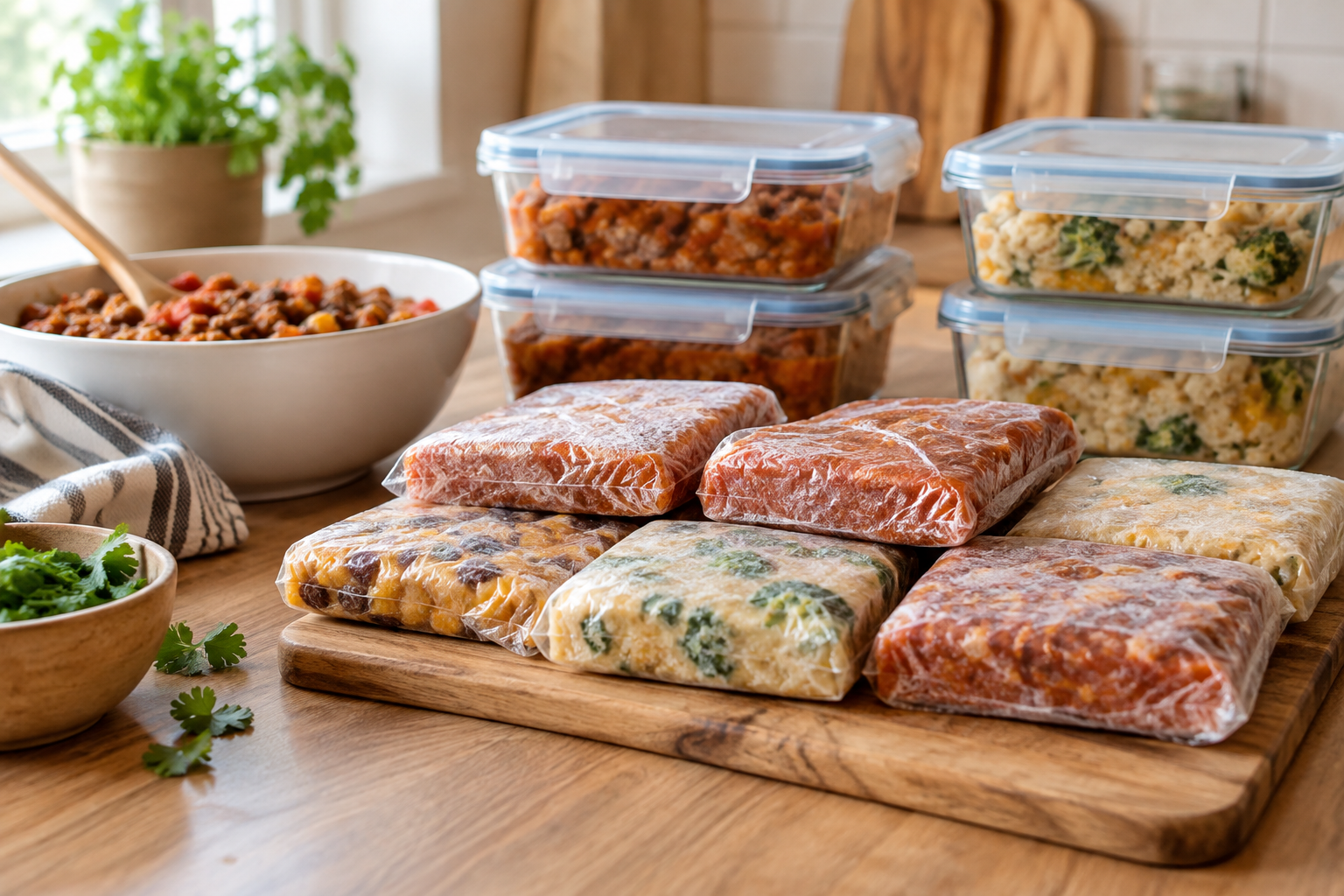
A freezer bag marked “chicken thing” is not a meal plan. It is a future guessing game. A useful freezer meal portions inventory starts with one clear label and one simple question: how many people can this feed?
Freezer meals are easiest to use when you count portions, not tubs, bags or containers. One large container might hold six servings. Three small containers might hold one family supper. The container count alone tells you very little.
The goal is not a perfectly organised freezer. The goal is knowing what is available before you buy more groceries or start cooking from scratch.
Label every freezer meal with three details
Use a freezer-safe label, masking tape or a marker directly on suitable packaging. Keep the label short enough to read without unpacking the whole freezer.
Write:
- Meal name
- Cook date
- Number of portions
For example:
Turkey chilli — cooked March 3 — 5 portions
Or:
Lentil curry — cooked March 3 — 2 portions
The meal name should be specific enough that nobody needs to open the container. “Soup” is less useful than “tomato lentil soup”. “Pasta” is less useful than “beef and tomato pasta bake”.
The cook date gives you context when you are deciding what to use first. It also helps your household avoid treating every frozen item as an unknown. You do not need to turn the label into a full recipe card. Add a note only when it changes how the meal will be used, such as “rice separate” or “add bread”.
Do not rely on colour, container shape or memory. Freezer labels get covered by frost, shifted between shelves and forgotten during busy weeks.
Count portions instead of containers
A portion is the useful unit. It answers the question your household actually asks: can this cover tonight’s supper, part of supper, or one person’s meal?
A practical portion count might look like this:
- Chicken stew: 4 portions
- Bean chilli: 3 portions
- Lasagna: 6 portions
- Cooked pulled pork: 2 portions
That list is more helpful than “four containers in the freezer”. It also handles mixed storage sizes without creating false precision.
A single portion does not have to mean one exact adult plate. Families eat differently. A portion can mean one planned serving for one person in your household. If your children eat smaller servings or your teenager eats more than one, count in the way that supports your own meal planning.
The count can also reflect how you expect to use the food. A container of sauce may cover a family pasta supper when paired with noodles and vegetables. It may cover two smaller meals if served with leftovers. Record the likely use, not an imaginary perfect measurement.
Mixed container sizes are not a problem
Freezer storage rarely looks uniform. You might have a large casserole dish beside a small jar of sauce, two single-serving containers and a flat freezer bag. That is normal.
Do not force every meal into identical packaging. Use the container that suits the food and the amount you have. Instead, make the portion count do the organising.
For mixed sizes, label each item separately when the portions are different:
- Chicken soup — 4 portions
- Chicken soup — 1 portion
- Chicken soup — 1 portion
You can also group the same meal in one inventory line:
- Chicken soup — 6 portions total; stored as one four-portion container and two single portions
The first approach is better when the items are on different shelves or likely to be used for different people. The second is faster when you only need a broad view.
Flat bags are useful for making small or large amounts easier to stack. Small containers can be useful for one-person meals, sauces or ingredients that will be added to something else. Large containers can suit a family supper. The storage shape matters less than labelling the amount.
Keep a short freezer inventory
Your inventory does not need to be a spreadsheet. A note on the fridge, a page in a household notebook or a shared phone note can work.
Use four columns or lines:
- Meal
- Portions available
- Storage note
- Use or update note
For example:
- Beef and bean chilli — 5 portions — one large container — serve with rice
- Vegetable soup — 2 portions — two small containers — good for quick lunches
- Shepherd’s pie — 4 portions — one baking dish — family supper
The storage note helps you find the food. “Top drawer” or “small freezer” may be enough. If your freezer has shelves or baskets, use simple locations that everyone understands.
The use note prevents you from forgetting what needs to be added. “Add sour cream” or “serve with salad” can make a freezer meal feel planned rather than improvised.
Update the inventory when the freezer changes
An inventory only works if it reflects reality. Update it when you add a meal, remove a container or change the number of portions.
When you eat two portions from a five-portion container, change the line to three portions if the remaining food is still stored together. If you divide the rest into smaller containers, record the new format.
When a meal is moved to the refrigerator to thaw, mark it as reserved or remove it from the available count. Otherwise, someone may plan it for supper and discover that it is already in use.
When you finish a container, cross it off immediately. This takes seconds and prevents the familiar freezer problem: shopping for food you already have, then finding it months later behind a bag of frozen peas.
A weekly check is enough for many households. Choose a regular point that already exists, such as meal planning day or the day before the main grocery shop. In Canada, many supermarket flyers turn over on Thursday, so a midweek freezer check can help you compare what is already available with the next round of offers. Flyer schedules and store choices vary by province, community and banner, so use the routine that fits your household.
Plan meals around what is already frozen
Start weekly planning by counting freezer portions before choosing recipes. Sort the list into three groups:
- Enough for a full family supper
- Useful as part of a meal
- Single portions or small amounts
A four-portion stew might become one supper for a smaller household. A two-portion sauce might pair with pasta, vegetables and a simple side. A single portion can cover one person while the rest of the family eats something else.
This approach reduces duplicate cooking. It also lets you buy only the missing pieces. If the freezer has chilli but no rice, vegetables or toppings, add those items to the grocery list rather than planning an entirely new main dish.
Be specific about what the freezer item can do. “Three portions of cooked chicken” could become wraps, rice bowls or soup. “Three portions of chicken curry” already has a clearer role. A good inventory supports decisions instead of creating another puzzle.
Build a freezer routine that lasts
Keep the system small enough to maintain. A label with three details and a short inventory is better than a detailed system that nobody updates.
Use these habits:
- Label food before it goes into the freezer.
- Count portions when the meal is packed.
- Store newer items behind older ones when practical.
- Keep similar meals together.
- Leave a little visible space for the inventory to stay useful.
- Review portions before making the grocery list.
- Cross off finished meals right away.
You can also choose a freezer rule for your household, such as using one frozen meal before cooking a new batch. That keeps the inventory moving without requiring a major cleanout.
The point is not to make the freezer look like a catalogue. It is to make the next supper easier to choose.
Once your freezer meal portions inventory is clear, weekly planning gets simpler: count what can become supper, add the fresh items it needs, and shop for the gaps. CartBrain can help turn that plan into a budget-aware weekly menu and a store-split grocery list on the web, iPhone and Android.