 Cart
CartWhy a Low-Cost Recipe Can Still Mean a Bigger Grocery Trip
The recipe may use only part of each ingredient, but the checkout still charges for every package you need to buy.
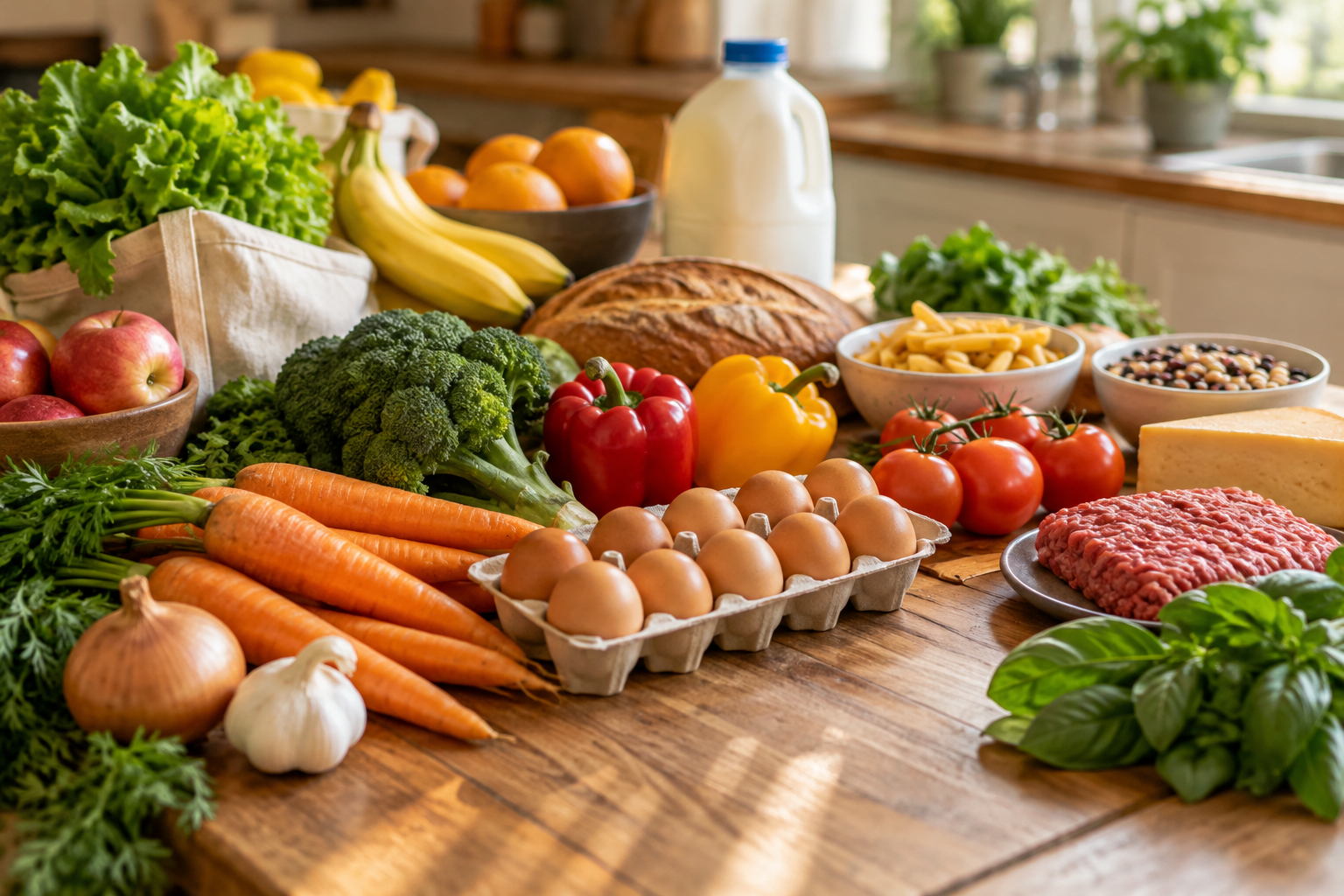
A recipe that uses 250 g of chicken can still send you to the till with a full 1 kg tray, a jar of sauce, and a bag of rice. That gap is the heart of recipe cost vs grocery bill confusion.
The recipe cost asks, “How much of the food used in this dish?” The grocery bill asks, “How much did I need to buy today?” Those are different questions. Both matter when you are feeding a family on a plan.
Recipe cost is based on portions
A recipe usually measures what goes into the pot. It might call for:
- 250 g of chicken
- 500 g of potatoes
- 1 onion
- 125 mL of cream
- 30 mL of cooking oil
If you already have most of those items, the meal may add very little to your next shop. If you have none of them, you may need to buy several complete packages.
The recipe uses portions. The shop sells packages.
That is why a dish can have a low ingredient cost on paper while the first grocery trip needed to make it feels much larger. The difference is not necessarily waste. Much of what you buy remains available for another meal.
A hypothetical checkout example
Suppose a recipe calculator estimates that one family meal uses ingredients worth $14 in total. That is a useful estimate of the food used in the dish. It is not automatically a prediction of what you will pay at the store.
Now suppose you have none of the ingredients. The store trip might require:
- A 1 kg package of chicken instead of the 250 g used tonight
- A full bag of potatoes instead of the 500 g needed
- A bottle of oil instead of the 30 mL poured into the pan
- A full carton of cream instead of 125 mL
- A complete package of spices or stock if the cupboard is empty
For this hypothetical example, the checkout could be $38 even though the portions used in tonight’s meal add up to $14. Those figures are only an illustration. Actual totals depend on your store, package sizes, brands, province, sales, and what is already in your kitchen.
The remaining chicken, potatoes, oil, cream, and stock are not automatically part of tonight’s food cost. They are ingredients you now own. They may support several future meals, depending on how quickly your household uses them.
The remainder is part of your food plan
A bigger first trip can become a cheaper sequence of meals if you use the remainder deliberately.
The extra chicken could become:
- A stir-fry with frozen vegetables
- Chicken wraps or sandwiches
- A soup or pasta dish
- A freezer portion for another week
The potatoes could work in:
- A frittata
- A sheet-pan meal
- Mashed potatoes with another protein
- A lunch or side dish later in the week
The oil, spices, rice, pasta, flour, and other cupboard staples may last much longer. Their cost should not be charged entirely to one recipe when the household will use them over time.
This is the practical difference between a meal plan and a collection of recipes. A meal plan asks what else can use the package you are buying.
Why package size changes the picture
Package size affects both the checkout total and the chance of leftovers going unused.
Buying a larger package can make sense when your family already eats that ingredient often, you have room to store it, and you can use or freeze it safely. A smaller package may be the better choice when the ingredient is unfamiliar, perishable, or unlikely to appear in another meal.
Do not compare a recipe’s ingredient portion with the cheapest package on the shelf and assume the difference is savings. Compare the package cost, the amount you will use, and the amount you can realistically use later.
For example, a large tub of yoghurt may look better value per kilogram. But if your household will not finish it before it changes, the cheaper unit price does not guarantee a cheaper food plan. The same applies to big bags of greens, fresh herbs, berries, and other foods with limited shelf life.
Pantry inventory changes the grocery bill
The same recipe can create a very different shopping trip in two households.
One family may already have flour, oil, salt, garlic, rice, and frozen vegetables. They may only need to buy fresh protein and produce. Another family may be starting with an empty cupboard after moving, a busy season, or a change in eating habits.
Before pricing a recipe, check four places:
- Fridge and freezer
- Cupboards and pantry shelves
- Bulk or partially used packages
- Items that need using soon
A half-full bag of rice still has value. So does the last 200 g of frozen peas or the jar of tomato paste hiding behind the tins. Inventory prevents you from buying a second package and helps you build around what is already paid for.
Compare the trip against the budget, not one recipe
A weekly food budget applies to the whole shopping cycle. It may include several suppers, breakfasts, snacks, drinks, staples, and household choices. A single recipe cannot show whether the full trip is on track.
Use this simple check:
- Start with the amount you planned to spend for the week.
- List the packages needed for all planned meals.
- Mark what is already in the kitchen.
- Identify ingredients that will carry into later meals.
- Separate food you need now from optional extras.
- Compare the expected checkout total with the weekly budget.
If the first trip is higher because you are stocking a staple, look at the following week too. You may not need to buy that staple again. If the higher total comes from several ingredients that will spoil before you can use them, change the meal plan now.
A budget is not only about making one recipe look inexpensive. It is about controlling the whole flow of food and money through the week.
Account for stores and flyers carefully
Canadian grocery costs vary by province, community, store, package size, and the week’s offers. A meal that fits easily around a sale at No Frills, FreshCo, Food Basics, Maxi, Super C, Save-On-Foods, Co-op, or another local store may look different elsewhere. Rural and Northern households may also face different selection and travel costs.
Most supermarket flyers turn over weekly, so check the current flyer for your own stores before building the plan. Treat sale pricing as an opportunity, not a permanent baseline. Store rules for substitutions, price matching, loyalty offers, and limits can change, so confirm them directly before relying on them.
The best comparison is not always the lowest sticker price. It is the combination of package size, usable quantity, storage space, and how many planned meals can use the purchase.
Make the first shop work harder
When a recipe creates a high checkout total, do not immediately remove the meal. Try reshaping the week.
Choose a second meal that uses the same protein or vegetable. Swap a one-use ingredient for a flexible staple. Freeze what will not be eaten soon. Plan a leftovers night. Use a whole bunch of herbs across two dishes instead of buying herbs for one garnish.
You can also compare a “buy everything” week with a “use what we have” week. The first may require more cash at checkout. The second may rely more heavily on pantry inventory. Both can be sensible, depending on your kitchen and your budget.
The goal is not to make every recipe appear cheap. The goal is to make every package earn its place.
A meal planner that prices portions alongside the packages you actually need can make this distinction easier to see. CartBrain can build a weekly plan around your budget, household, chosen Canadian or US stores, and current local flyers, then show a store-split grocery list with cost tracking. The weekly meal planner is free to start, with a full first week free and no card required.