 Cart
CartGrocery Strategy for a Tight Month When Money Runs Out First
Start with the food already in your home, build around cheap staples, and make every supper do more work without judgement.
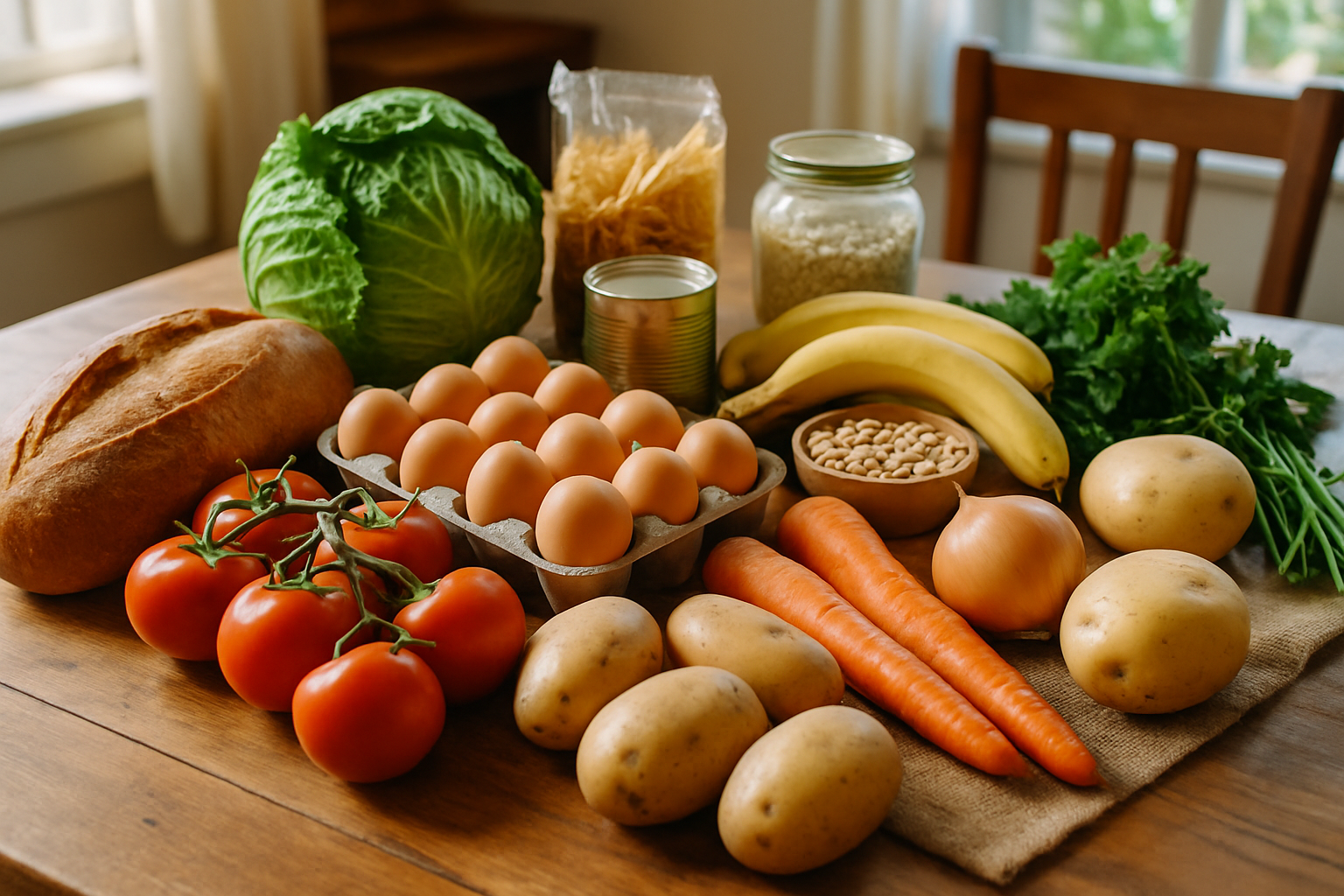
A nearly empty bank account and a freezer full of half-used food call for a different kind of grocery plan. This is not the month for ambitious recipes, perfect meal prep, or shopping from a blank list. It is the month to use what you own, buy a few dependable staples, and make supper predictable.
Start with a food inventory, not a shopping list
Before opening a flyer or grocery app, check the kitchen properly. Look in the pantry, freezer, fridge, baking cupboard, and any shelf where food gets forgotten.
Write down:
- Dry goods such as oats, rice, pasta, flour, barley, lentils, split peas, canned beans, and canned tomatoes
- Frozen vegetables, frozen meat, bread, fruit, and leftovers
- Eggs, cheese, yoghurt, milk, carrots, onions, potatoes, and other foods that need using soon
- Sauces, stock, spices, oil, peanut butter, and other ingredients that can change a plain meal
- Open packages that are too small to become a meal alone but useful in a soup, casserole, omelette, or fried rice
Do not judge the odd combinations. A small amount of rice, two frozen chicken thighs, half a bag of peas, and a jar of sauce can still become part of several meals.
Group what you find by use. Mark items as use first, good for the week, or save for later. This prevents buying another bag of rice while one is already hiding behind the cereal.
Build the week from what is already there
Choose meals based on your inventory. Do not start with recipes and then try to buy every ingredient.
A useful question is: What can this food become?
- Cooked rice can become a bowl, fried rice, soup thickener, or filling for stuffed vegetables.
- A roast, chicken, or batch of beans can become supper, wraps, sandwiches, soup, or a pasta sauce.
- Extra vegetables can go into an omelette, curry, stew, tray bake, or pasta.
- Oats can become breakfast, baked oatmeal, oat pancakes, or a savoury topping for a casserole.
- Lentils and split peas can make soup, dhal, pasta sauce, or a filling for potatoes.
Plan the main ingredient across more than one meal. For example, cook a large pot of lentils on Monday. Serve them with rice on Monday, turn the leftovers into a tomato-based pasta sauce on Wednesday, and add the rest to soup later in the week.
This is not eating the exact same plate every night. It is giving one cooking job several uses.
Use a cheap backbone
When the budget is tight, build meals around foods that are flexible, filling, and easy to combine. The exact price and availability will vary by province, community, and store, but these are useful foundations:
- Oats for breakfasts and simple baking
- Rice, pasta, potatoes, and barley for meal bases
- Lentils, split peas, and beans for soups, stews, curries, and fillings
- Eggs for quick suppers, baking, and adding protein to leftovers
- Cabbage and carrots for slaws, stir-fries, soups, roasted trays, and stews
- Frozen vegetables for meals when fresh produce is limited or likely to spoil
- Onions, garlic, canned tomatoes, stock, and basic seasonings to make simple food taste like a meal
You do not need to buy every item on this list. Start with what you have. Add only the missing pieces that unlock several meals.
A cabbage may look like a boring purchase. It can become a side dish, soup ingredient, stir-fry vegetable, taco filling, or slaw. Carrots work in lunchboxes, soups, stews, rice dishes, and snacks. Frozen vegetables are useful because you can take only what you need and keep the rest for another meal.
Plan every supper before you shop
A tight month is not the time to leave three blank spaces on the meal plan. Blank spaces often turn into an expensive convenience meal, an extra store trip, or delivery when everyone is tired.
Make a seven-day supper plan, even if several meals are built from leftovers. Keep it simple:
- List the food you already have.
- Choose two or three main cooking projects for the week.
- Assign the leftovers to specific nights.
- Add one flexible meal for food that needs using.
- Make a short shopping list for only the gaps.
A sample structure might look like this:
- Monday: lentil and tomato stew with rice
- Tuesday: leftover stew with eggs or flatbread
- Wednesday: cabbage, carrot, and egg fried rice
- Thursday: potato and bean soup
- Friday: leftover soup with toast or sandwiches
- Saturday: pasta with vegetables and tomato sauce
- Sunday: freezer meal or a clean-out-the-fridge omelette
Adjust the meals for your family, allergies, culture, and what is available. The point is the structure: cook something substantial, reuse it deliberately, and leave one flexible meal to prevent waste.
Cook big, but do not create a week of identical leftovers
Batch cooking saves effort only when your household will actually eat the food. A huge pot of one meal can become unpopular by day three.
Instead, cook components that can change shape. Make rice, roasted potatoes, cooked beans, boiled eggs, chopped vegetables, or a mild pot of lentils. Store them safely and combine them differently.
You can also freeze portions before the food becomes boring. Label containers with the meal and date. Freeze flat bags of soup or stew when possible so they stack and thaw more quickly.
Use leftovers early in the week. Keep the most perishable cooked food near the front of the fridge, and move the plan when necessary. A meal plan should help you use food, not punish you for changing it.
Skip the middle aisles when they are not helping
The middle aisles are not automatically bad. Canned tomatoes, beans, oats, rice, pasta, stock, and spices may be exactly what you need. The problem is wandering through them without a plan.
Shop from a written list. Avoid buying small treats, single-serve items, ready-made snacks, and ingredients that serve only one recipe unless they fit the budget and will definitely be used.
Check unit prices where they are shown, and compare package sizes carefully. A larger package is not a bargain if it will spoil or sit unused. Store brands, discount banners, bulk bins, and frozen options may help, but availability differs across Canada. A No Frills, FreshCo, Food Basics, Maxi, Super C, Giant Tiger, Bulk Barn, Costco, Co-op, or local independent shop may have different strengths depending on where you live. Check your local flyer and store rules rather than assuming every deal applies everywhere.
Most supermarket flyers turn over on Thursday, but timing varies. Use flyers to check what fits your plan, not to invent a new plan around every promotion.
Keep the emergency meals visible
Write down five meals that can be made from your regular staples. Keep the list on the fridge. Examples include:
- Eggs with potatoes and frozen vegetables
- Bean and tomato pasta
- Lentil soup with toast
- Fried rice with an egg and cabbage
- Oats, yoghurt, and fruit for a simple breakfast-for-supper meal
This matters on the night when cooking feels impossible. You should not have to search for inspiration while hungry and stressed.
Keep one or two low-effort foods available if you can: frozen vegetables, bread, eggs, canned soup ingredients, tortillas, or a prepared freezer portion. The goal is not a perfect pantry. It is a cheaper alternative to making a rushed purchase when the plan falls apart.
Be practical about a genuinely hard month
One short month where the budget is too small is a planning problem. You can respond by taking inventory, reducing waste, cooking from staples, and planning every supper.
If this keeps happening, it is not just a meal-planning problem. It deserves real support. Consider speaking with a trusted person, community food centre, food bank, school or daycare support worker, settlement agency, local 211 service, or government benefits office. Asking for help is not a failure. Food costs, rent, childcare, transport, debt, and income can make a budget impossible even when someone is careful.
You do not need to make a tight month look cheerful. You need enough food, a workable plan, and less decision-making. Start with the freezer and pantry, build around a few cheap staples, cook with leftovers in mind, and put every supper on the calendar. A weekly meal planner such as CartBrain can help turn your budget, household, chosen stores, and local Canadian or US flyer options into a practical grocery plan, but the core strategy starts with the food already in your home.