 Cart
When One Person Is Away, Adjust the Meals—not the Whole Week
A short-term change in who is home does not require rebuilding your entire meal plan or buying a second set of groceries.
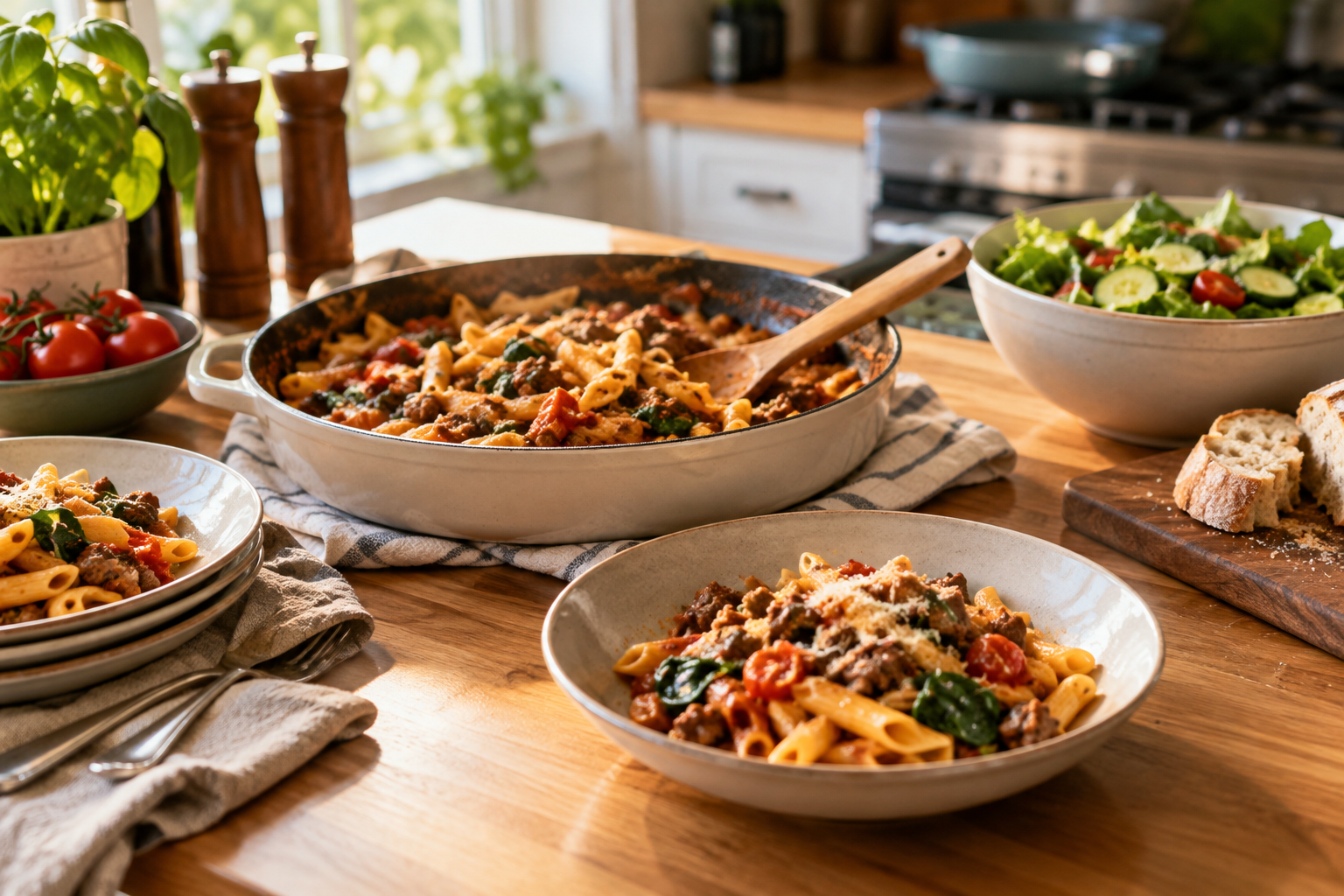
A packed school bag, an empty bedroom, and one fewer plate at dinner can throw a meal plan off faster than a missing ingredient. The fix is not to erase the week. It is to map who is actually eating each meal, then scale only what needs scaling.
A changing household size affects breakfast, lunch, dinner, snacks, and leftovers differently. Some ingredients shrink neatly. Others come in fixed packages, so you will buy the same amount whether one person is away or not. Planning around that difference keeps the week practical and helps prevent food from sitting untouched in the fridge.
Start with an eating map
Before changing recipes, write down who is eating each meal for each day. Keep it simple. Use names, initials, or household roles.
- Monday breakfast: everyone
- Monday lunch: adults at work, children at school
- Monday dinner: one adult and two children
- Tuesday dinner: everyone
- Wednesday dinner: one person away, others home
This map is more useful than changing the household count from four to three for the whole week. A person may be away for dinner but still need breakfast food before leaving. Someone working late may miss the family meal but eat leftovers later. A child at a sleepover may be absent for one dinner but still need a packed lunch the next day.
Treat every meal as its own small headcount. You are not planning for a smaller household. You are planning for a household with gaps.
Divide the week into meal groups
Look at the week in three groups:
- Meals everyone will eat
- Meals only some people will eat
- Meals where attendance is uncertain
Keep the meals for the full household mostly unchanged. Those are the recipes least likely to cause trouble. Adjust the meals with a reduced headcount. For uncertain meals, choose something flexible that can be served in different portions.
Good flexible choices include tacos, rice bowls, pasta with separate toppings, sheet-pan dinners, soup with bread, and baked potatoes. These meals let you cook a base amount and add more to individual plates without creating a completely separate dinner.
A fixed casserole is less forgiving. If you cut it too sharply and the missing person comes home, you may not have enough. If you make the full recipe and they stay away, the extra may become another planned meal or go to waste. Match the recipe to how certain the headcount is.
Scale the ingredients that actually scale
Not every ingredient should be reduced by the same amount. Start with ingredients that are directly tied to each serving.
- Chicken, fish, tofu, or other main proteins
- Rice, pasta, noodles, or grains
- Tortillas, buns, and pitas
- Eggs in a scramble or omelette
- Salad greens and cut vegetables
- Sauce, dressing, and toppings used at the table
If one person is away, reduce the number of protein portions first. Then adjust the starch and vegetables based on how the meal is served. A tray of roasted vegetables may still need a reasonable amount to cook properly, especially if smaller quantities would burn or dry out.
Use the recipe as a starting point, not a command. A recipe written for four people may not divide perfectly into three. One less chicken breast is easy. One less can of tomatoes may not be. Keep the ingredients that form the structure of the dish, and reduce the parts that are easy to portion.
Know which packages will not shrink
Grocery packaging often decides the real size of a meal plan. You may need one full package even when fewer people are eating.
Common examples include:
- A carton of milk
- A tub of yoghurt
- A bag of rice or pasta
- A bunch of bananas
- A package of tortillas
- A jar of pasta sauce
- A tin of beans or tomatoes
- A loaf of bread
- A bag of frozen vegetables
- A tray of eggs
Do not treat the unused portion as a planning failure. Treat it as an ingredient for another meal. The half-used jar of sauce can become pizza topping, a pasta base, or part of a soup. Extra tortillas can become quesadillas or freezer wraps. Remaining yoghurt can go into breakfast, a dip, or a marinade.
The important question is not, “Can I buy a smaller package?” It is, “Where will the rest go?” If you have an answer, the full package belongs in the plan. If you do not, choose a different meal or a more versatile ingredient.
Plan the next use before you shop
When one person is away, leftovers can multiply quickly. Assign them before they enter the fridge.
For example:
- Extra cooked chicken becomes sandwiches or a salad lunch.
- Remaining roasted vegetables go into wraps or grain bowls.
- Leftover rice becomes fried rice or a side for another dinner.
- Extra pasta becomes a lunch portion with a different sauce.
- A partial tin of beans goes into quesadillas, chilli, or soup.
Label the container with the intended meal if your household tends to forget what is available. “Wednesday lunch” is more useful than “leftovers.” Put the container where it can be seen, not behind a large pot that will be ignored until the food is no longer appealing.
If the returning person is likely to eat the leftovers, reserve a portion clearly. Otherwise, count it as available for the people who are home. This avoids planning the same food twice.
Use the freezer for uncertainty
A short absence can turn a fresh-food plan into a guessing game. Freeze the parts that hold well when you are unsure about the return date or appetite.
Bread, cooked grains, burger patties, grated cheese, chopped herbs, and many soups can be portioned for later use. Freeze in meal-sized amounts rather than one large container. Small portions thaw faster and are easier to fit into a revised plan.
Do not freeze every leftover automatically. Lettuce, cucumber, creamy sauces, and some cooked vegetables may not come back with the texture you want. Keep those ingredients in a meal planned for the next day, or buy less of them if you have a choice.
Adjust lunches separately from dinners
Lunch is often where a changing household creates the most confusion. The person who is away from dinner may still need a lunch packed for work, school, or travel. The person who is home may eat something different from the family dinner leftovers.
Make lunch a separate line on your eating map. Count packed lunches, meals bought away from home, and leftover portions independently.
For school or daycare, think in components: a main item, fruit or vegetables, and a snack. If one child is away, you may still need the full package of crackers or fruit. Plan how the extra will be used by the other children or in the next few days. Keep food safety and your school’s allergy rules in mind when preparing packed meals.
Shop by the revised plan, not by the old routine
Once the eating map is complete, change the shopping list in three passes.
- Remove portions that no one will eat.
- Keep full packages that serve another planned meal.
- Add ingredients needed for the meals that use those leftovers.
Then check the list by store section or aisle. This helps you notice duplicate ingredients, especially when a smaller dinner has left half a package available for later. It also makes it easier to compare the cost of buying a replacement package with using what is already at home.
Canadian households do not all shop the same way. A family in Halifax may have different nearby stores and flyer options from one in Edmonton, Vancouver, or a smaller northern community. Check the current selection and package sizes at your own stores. Flyers commonly turn over on Thursday, so a short absence that crosses a flyer change may affect which version of the plan makes sense.
Keep the week intact where you can
The goal is continuity. Do not rebuild seven dinners because one person misses two meals. Change the headcount for those specific meals, use flexible recipes, and give every opened package a next job.
When the household returns to its usual size, return to the original plan rather than starting over again. CartBrain can help map the week around who is eating, your budget, selected Canadian or US stores, and current flyer items; it is available on the web, iPhone, and Android, with a full first week free for new accounts and no card required.