 Cart
Build a Flexible Week When Your Evenings Keep Changing
Plan the meals, ingredients, and portions that can move with your week instead of letting one cancelled supper derail the whole grocery shop.
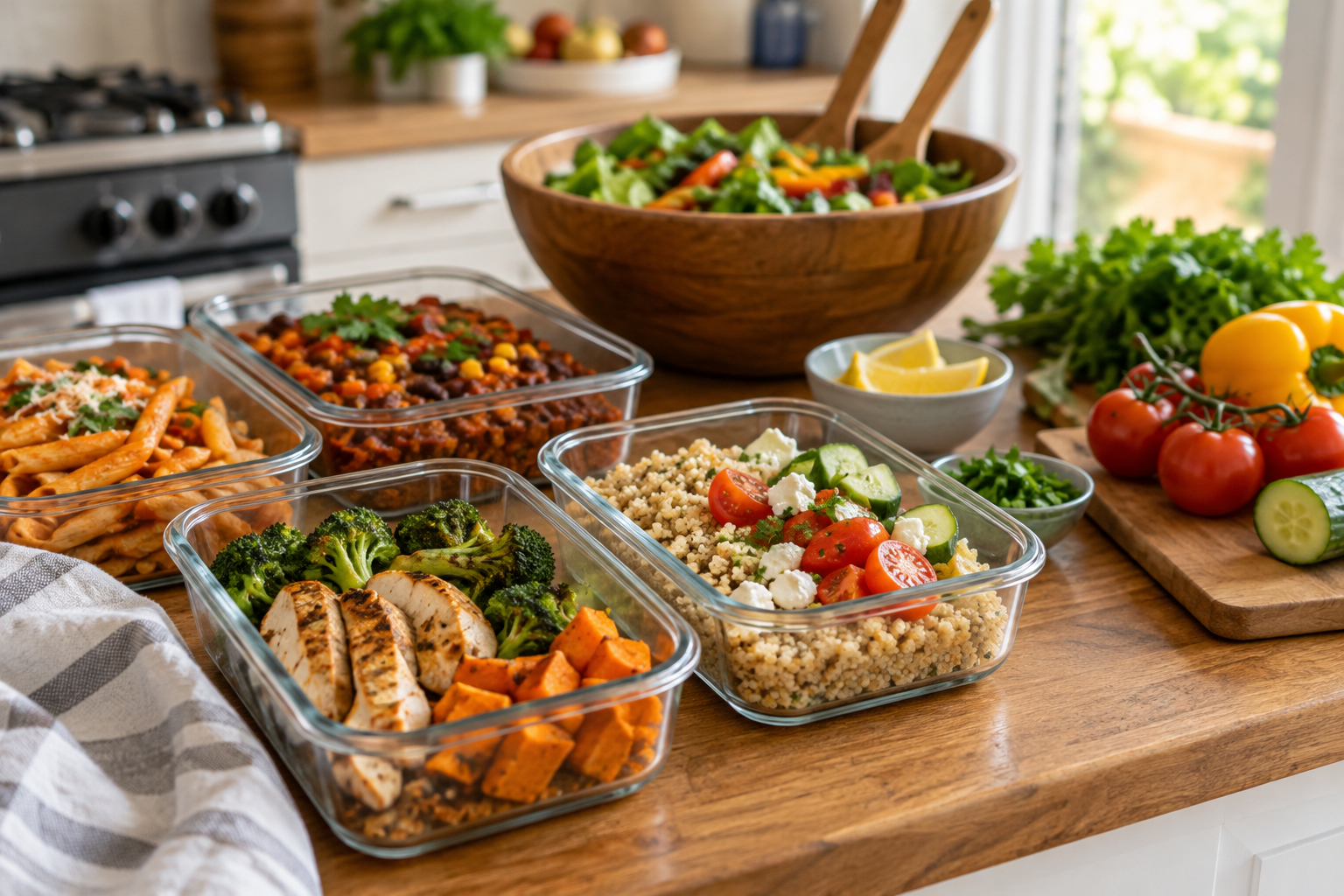
A chicken tray bake planned for Tuesday can still be the right meal on Thursday, but only if its ingredients and leftovers move with it.
A flexible weekly meal plan is not a vague list of dinner ideas. It is a plan with room to shift. You decide which meals have fixed timing, which can move, which ingredients need attention first, and what happens when the day goes sideways.
That small amount of structure protects your grocery budget and reduces the dreaded second shop for one missing ingredient.
Start with the week, not the recipes
Before choosing meals, mark the parts of the week that are already known.
Look for:
- Late workdays
- Children’s activities
- Appointments
- School events
- Nights when someone eats earlier or later
- Days when you expect to be home with little cooking time
- A weekend meal that may involve guests or a longer cook
You do not need a perfect schedule. You need a rough map of pressure points.
Divide the week into three useful categories:
- Fixed meals: Meals that need to happen on a particular day, such as food for guests, a planned roast, or something using a time-sensitive ingredient.
- Movable meals: Meals that can shift by a day or two without creating a problem.
- Emergency meals: Simple options that can take over when the planned meal no longer fits.
A fixed meal belongs on the day it makes sense. A movable meal belongs in a flexible slot. An emergency meal should be easy enough that it does not become another project.
This approach works whether you shop at No Frills, FreshCo, Metro, IGA, Save-On-Foods, Costco, or an independent shop. The best fit depends on your local availability, household, and current flyer offers.
Match cooking effort to your actual evenings
Do not assign your most involved meal to the night that is usually the least predictable.
Instead, pair meal types with the amount of attention you can realistically give them.
Low-attention meals
Use these on evenings when you may be interrupted:
- Sheet-pan meals
- Pasta with a prepared or quick sauce
- Quesadillas with vegetables and beans
- Eggs with toast and cut vegetables
- Soup with bread or a simple sandwich
- Rice bowls using prepared components
Moderate-attention meals
These work when you have some cooking time but not much spare capacity:
- Stir-fries
- Tacos with a few toppings
- Curry with rice
- Burgers with a simple salad
- A one-pot pasta or stew
Longer meals
Save these for the evenings that are most reliable:
- A roast or braise
- Homemade pizza
- Recipes with several separate components
- Meals that need marinating, resting, or slow cooking
The goal is not to cook only easy food. It is to stop pretending every evening has the same amount of time and energy.
Identify what can move and what cannot
A meal is movable when its ingredients remain usable and its quality does not suffer from a short delay.
For example, a dry pasta dish, frozen fish, canned-bean chilli, or vegetable curry may move easily. A salad built around delicate greens, fresh berries, ripe avocados, or opened dairy may need to stay near the front of the week.
For every planned meal, ask three questions:
- Can the main ingredients wait until later in the week?
- Will the meal still be good if it moves by one or two days?
- Does moving it change another meal or use up a reserved portion?
If the answer to the first question is no, give the meal a fixed place. If the answer to the second is no, treat it as a priority meal. If the answer to the third is yes, record the knock-on effect before changing the plan.
This is where many meal plans quietly fail. The dinner moves, but the spinach, fresh fish, opened yoghurt, or cooked chicken remains attached to the old day in someone’s head.
Give time-sensitive ingredients a job
A flexible plan still needs an order of operations.
Make a short list of ingredients that should be used early. This can include:
- Leafy greens
- Fresh herbs
- Soft fruit
- Fresh fish or seafood
- Opened fresh dairy
- Very ripe produce
- Bakery items without a long storage life
Then build meals around those ingredients first. A bag of spinach might serve in an early-week omelette, then in a later pasta dish only if it is still in good shape. A bunch of coriander could be used in tacos, then folded into a soup or grain bowl.
Choose meals that share ingredients, but avoid forcing the same ingredient into every dinner. Repetition can make the plan feel punishing, and unused ingredients are not saved money if nobody wants to eat them.
Storage also matters. Keep delicate produce visible and put longer-lasting ingredients where they will not be forgotten. If you freeze an ingredient, write the intended meal beside it. Otherwise, it may become an unlabelled mystery in the freezer.
Build one backup meal from the same shop
Your backup should not require a separate grocery trip. It should use ingredients that are already on the list or that keep well.
Good backup combinations include:
- Eggs, toast, and frozen vegetables
- Pasta, canned tomatoes, and beans
- Tortillas, cheese, canned beans, and frozen corn
- Rice, frozen vegetables, and eggs
- Soup, bread, and a simple protein
Keep the backup deliberately plain. Its job is to protect the evening, not win a cooking competition.
Choose one backup for the week and write it down. Do not rely on remembering that there is “something quick” in the cupboard. A named backup is easier to use when everyone is tired and the original plan no longer fits.
Move the meal and its grocery needs together
When a meal changes days, move more than the recipe name.
Move these items with it:
- The ingredients needed only for that meal
- Any preparation task, such as thawing or marinating
- The planned side dishes
- The leftover purpose
- Any portion reserved for lunch or another person
A simple meal card can help. Write the meal at the top, followed by its ingredients, prep note, and leftovers. If the meal moves from Wednesday to Friday, the whole card moves from Wednesday to Friday.
This prevents the common mistake of moving the dinner but forgetting that the chicken needed to thaw, the tortillas were meant to be used first, or half the recipe was reserved for another meal.
If you keep a paper calendar, use arrows. If you use a notes app, cut and paste the complete meal entry. The tool matters less than keeping the connected details together.
Protect reserved portions
Reserved portions are part of the plan, not accidental leftovers.
Before moving a meal, check whether any portion was intended for:
- An adult who works late
- A child eating at a different time
- The next day’s lunch
- A second dinner
- A night when cooking will be difficult
If a recipe was meant to provide four servings and one serving was reserved, moving it may affect the next day’s food. You may need to shift the second meal, increase another portion, or use the backup option instead.
Label containers with their purpose, not only their contents. “Wednesday dinner” is more useful than “chicken,” especially when the week changes. If the purpose changes, relabel it. This keeps a planned portion from disappearing into the general leftovers pile.
Recheck the plan before you shop
Do a short review before finalising the grocery list.
Ask:
- Which meals are fixed?
- Which meals can swap places?
- Which ingredients need to be used first?
- What is the single backup meal?
- What portion is reserved, and for when?
- If one meal moves, what else moves with it?
Also check whether the ingredients are available at your chosen stores. Flyer offers and stock differ across Canada, and supermarket flyers often change on Thursday. Your town, province, and preferred banners may not line up with another household’s shop, so use your own current flyers and store rules.
A quick review can also reveal duplicate ingredients. Perhaps two recipes both call for the same herbs, or one meal can use the remaining vegetables from another. Adjust quantities before shopping rather than hoping the extras will find a purpose.
Make flexibility the default
The strongest weekly meal plan does not depend on every evening behaving perfectly. It has a few fixed points, several movable meals, one clear backup, and a visible plan for ingredients and portions.
Start small. For your next week, choose two movable meals, identify three ingredients that need early attention, and write down one backup. When plans change, move the complete meal and its related notes instead of improvising from scratch.
That is the practical aim of a flexible weekly meal plan: not fewer changes, but fewer consequences when the changes arrive. CartBrain can help organise a week around your household, budget, chosen stores, and local flyers in Canada and the US, with a grocery list that keeps the plan together.