 Cart
CartDinner Is Covered: Reserve a Meal for an Evening Away
Plan one family dinner backwards from the evening you will be away, then cook, portion and label it so it is still there when needed.
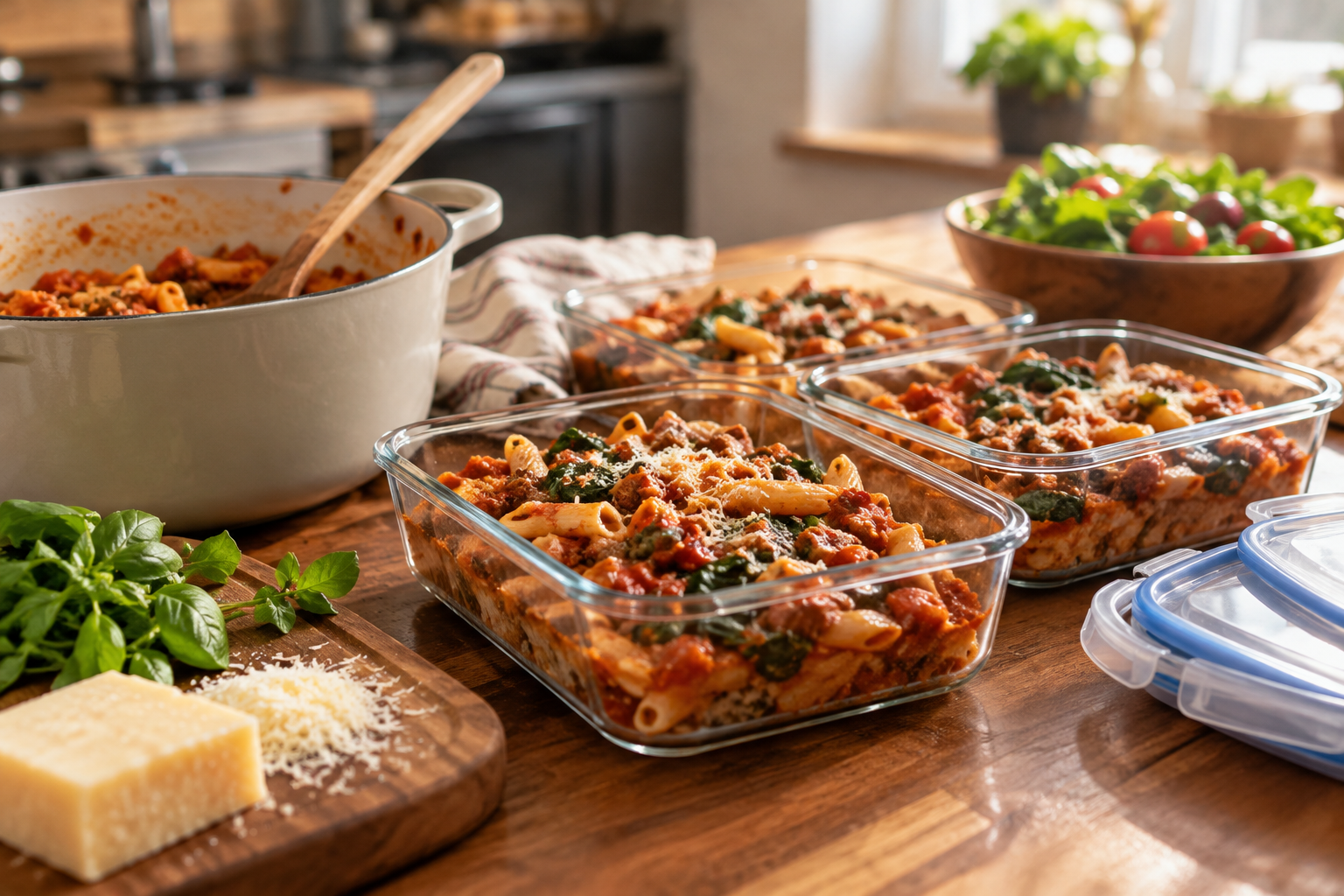
A casserole marked “Friday dinner — do not eat” can be the difference between a calm evening at home and a last-minute grocery run for the people staying behind.
When one parent is travelling, working late, at an appointment, or taking a child to an activity, the food plan needs to cover more than the cook. It needs to answer four plain questions: who will be home, which evening needs dinner, when will the meal be prepared, and how will everyone know it is reserved?
A little planning keeps the meal from disappearing into an earlier lunch. It also gives the person at home a dinner they can heat without making decisions from scratch.
Start with the evening, not the recipe
First, name the evening that needs coverage. Do not start by choosing a meal and hoping it fits. Start with the household calendar.
Write down:
- Who will be home for dinner
- Who will be away
- Whether the person staying home can cook, reheat, or only assemble food
- What time dinner needs to be ready
- Whether anyone has allergies, food preferences, or a smaller appetite
- Whether the meal needs to cover leftovers for another person
This matters because “dinner for the family” can mean very different things. One adult and two children need different portions from two adults and a teenager. A family arriving home after hockey may need something ready to heat. A younger child may need the same meal separated into familiar parts.
Check the day before and the day after, too. A reserved dinner should not create a pile of extra cooking on either side. If the evening away is Thursday, the cooking day might be Wednesday, the weekend before, or a day when another meal is already being prepared.
In Canada, many supermarket flyers turn over on Thursday, but the useful planning day depends on your store, province, and shopping routine. Use the schedule that matches your household rather than forcing a national rule onto a local one.
Work backwards from the cook day
Once the evening is clear, count backwards.
If dinner needs to be reheated on Friday, decide whether it will be cooked on Friday morning, Thursday evening, or earlier in the week. Then check whether the meal will be stored in the fridge or freezer and how much thawing or reheating it will need.
A simple backward plan looks like this:
- Choose the dinner evening.
- Confirm how many people will eat.
- Pick a meal that holds up well after cooking and reheating.
- Choose the cook day.
- Add any cooling, chilling, thawing, or reheating time.
- Pack the portions in the containers that will actually be used.
- Label the meal clearly and tell the household where it is.
The best meal is not always the one that sounds most exciting. It is the one that remains pleasant after storage and does not require a full kitchen operation at the busiest point of the evening.
Good candidates include baked pasta, chilli, soup, stew, curry, meatballs with sauce, cooked shredded chicken, shepherd’s pie, and roasted vegetables with a grain or potato. Keep crunchy toppings, fresh herbs, sauces, and grated cheese separate when they will improve the finished meal.
Some foods are better made fresh. Delicate salads, crisp fried coatings, and meals that depend on a precise texture may need a different plan. You can still prepare part of the dinner ahead, such as a sauce, cooked grain, chopped vegetables, or marinated protein.
Portion for the people who will actually eat
Do not cook according to the number of people normally at home. Cook according to the number who will be there that evening, plus any planned leftovers.
A practical portion plan might be:
- One container for the first dinner
- A separate smaller container for a child who eats less
- One clearly marked portion for the next day, if needed
- Extras only if they have a specific use
Separate portions can make serving easier. They also prevent one hungry person from opening a large container and taking more than the evening’s share. This is particularly useful when an older child or babysitter is reheating the meal without the usual cook present.
Think about what the meal needs beside it. Add bread, rice, pasta, tortillas, fruit, raw vegetables, or a simple dessert only if those items make dinner easier. Put them together where possible. A reserved main dish hidden behind three shelves of unrelated containers is not a complete plan.
For a freezer meal, include enough information for the person preparing it. State whether it should be thawed first, what temperature to use, whether the lid comes off, and how to tell when it is hot throughout. Keep those instructions simple and follow current food-safety guidance for storage, thawing, and reheating.
Label the meal like someone else has to find it
A vague label is an invitation to eat the food early. “Pasta” is not enough when the fridge contains several containers.
Use a label with:
- The day it is reserved for
- The meal name
- The number of servings
- Reheating instructions
- Any important allergen or ingredient note
- The date it was prepared, if useful for your household
For example: “THURSDAY DINNER — chicken curry, 4 servings. Reheat until hot. Rice in blue container. Keep for Thursday.”
Use large writing or a bright reusable container. Put the meal at eye level in the fridge if it will be eaten soon. If it is frozen, add a reminder to move it to the fridge on the correct day. A note on the kitchen calendar or shared phone calendar can reinforce the plan.
Most important: tell the people at home. A label helps, but a short message is better. Say exactly what is reserved, where it is, and what needs to happen before dinner.
Protect the reserved dinner from accidental lunches
This is the part many meal plans miss. If the food is available but not protected, it may be gone before the intended evening.
Create a separate “eat first” area for lunches and older leftovers. Keep the reserved dinner in its own spot. If several people use the fridge, send a direct message: “The green container is Thursday dinner. Please do not use it for lunch.”
You can also reserve a meal that is less tempting to snack on early, such as a frozen portion that needs thawing. Another option is to prepare lunch portions and dinner portions in different containers, with different labels.
Ask one person to be responsible for checking the plan. That could be the parent at home, an older child, or a caregiver. The job is not to cook everything. It is simply to move the meal, read the instructions, and make sure the right people get fed.
Make the plan easy for a non-cook
If someone else will handle dinner, remove as many decisions as possible.
Put the meal, side dish, serving utensils, and instructions together. Use a familiar appliance if possible. Avoid a recipe that requires several pans, a complicated sauce, or precise timing unless the person at home is comfortable with it.
Include a backup. Keep one low-effort option in the pantry or freezer, such as eggs, canned soup, frozen vegetables, tortillas, or pasta. This is not a sign that the plan failed. Plans meet real life: a child may refuse dinner, a meeting may run late, or the prepared meal may have been forgotten in the freezer.
The backup should be visible and labelled too. “Emergency dinner” is clearer than leaving someone to search through cupboards while hungry.
Shop for the reserved meal before the week gets crowded
Add the reserved dinner to the same weekly grocery plan as the other meals. Check what is already in the kitchen before buying. Then choose the store or stores that make sense for your area and current flyer options.
Canadian households do not all shop the same way. A family near Halifax may use Atlantic Superstore or Sobeys, while another household may rely on No Frills, Maxi, Metro, FreshCo, Save-On-Foods, Co-op, IGA, Super C, Costco, Bulk Barn, or a local independent store. Availability and prices vary by province, city, and community, especially in smaller towns and the North.
Treat flyer savings as a planning prompt, not a promise. Check your local store’s current selection, limits, substitutions, and rules before relying on a particular ingredient. Build the meal around flexible ingredients when possible. For example, a chilli can use whichever suitable beans, tomatoes, vegetables, or protein fit your shop and budget.
Use a small routine every time you leave
A repeatable routine prevents the reserved dinner from becoming another forgotten task.
Before you leave, check:
- The correct people are listed for the evening.
- The food is cooked or safely stored.
- Portions are separated.
- The label names the evening and meal.
- Reheating instructions are clear.
- Sides and utensils are easy to find.
- The household knows the plan.
- A backup meal is available if needed.
This takes less effort than solving dinner from a distance while travelling or managing an appointment. It also gives children a predictable meal plan when the usual parent is away.
The aim is not a perfect freezer stocked with elaborate recipes. It is one dependable dinner, prepared at the right time, in the right portions, with a label nobody can misunderstand. For help planning the full week around your household, budget, stores, and local Canada or US flyers, CartBrain can build the meal plan and grocery list; you still choose which dinner to reserve and label for the evening away.