 Cart
CartOne Family List, Different Snacks: Plan for Who Actually Eats Them
A family grocery list works better when every snack has a name, a quantity, and a clear plan for what can be shared.
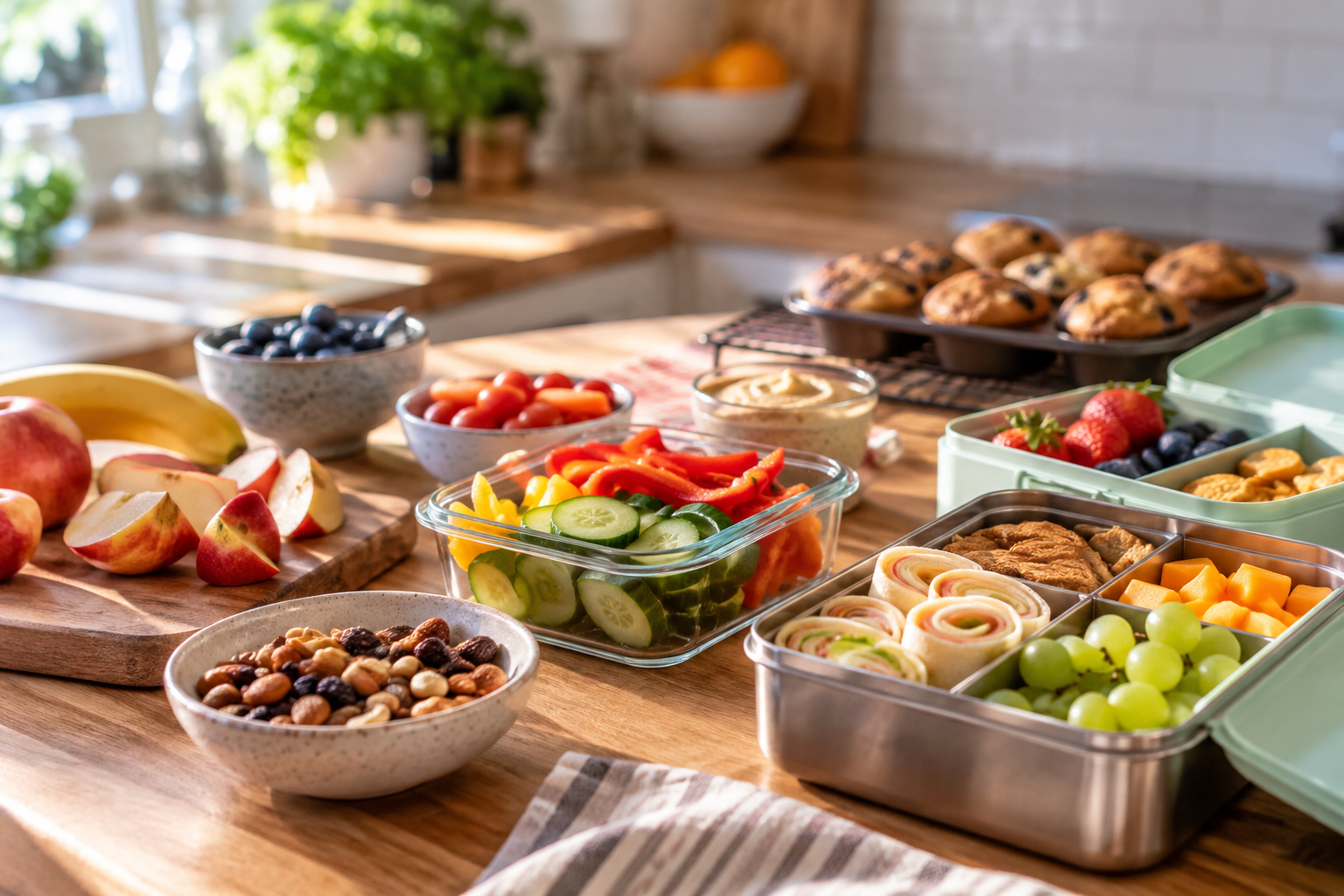
A box of packaged granola bars can disappear before the child they were bought for gets one, while an adult’s “healthy snack” quietly becomes everyone’s emergency supper. A personal snacks family grocery list needs more detail than one line saying “snacks.”
Families do not eat identical food. One child may want crackers packed in a lunch bag. Another may only eat apples sliced at home. One adult may reach for yoghurt after a workout, while another wants popcorn during a late work shift. Planning for the actual eaters makes the list more useful and cuts down on food bought with good intentions.
Stop treating snacks as one shared category
“Snacks” is a shopping category. It is not a plan.
A useful list answers three questions:
- Who is this for?
- How much do they need?
- Is it personal, shared, or flexible?
Without those details, a family can buy plenty of food and still run out of the one item someone depends on. The problem is not always the total amount. It is often that the right food is assigned to the wrong person, or that shared food gets eaten before it is needed.
Start with names or simple labels such as “Maya,” “Sam,” “adult work snacks,” and “family share.” This does not mean every item needs a separate package. It means the list reflects real eating habits.
Use one child’s packaged snack as the test
Take a common example: one child eats a packaged snack at school or daycare most weekdays. They prefer individually wrapped oat bars and will not reliably eat the homemade muffins everyone else likes.
That snack should not appear as a vague line such as “bars.” Add the details that affect the shop:
- The child’s name
- The type or flavour they will actually eat
- The number needed for the week
- Whether the snack is for school, daycare, activities, or home
- Any storage or packing requirement
The quantity should match the plan, not a guess. Count the days the child needs the snack, then allow for the occasional extra if that fits the household budget and package size. If the child attends care only three days, do not automatically plan five portions. If sports practice adds another snack, include that separately.
This also helps when a package cannot be divided neatly. You may need to buy one box even if the weekly plan uses fewer portions. The unused snacks can be assigned to the same child for the following week, or moved into the family-share category if everyone agrees.
A named item also prevents a common mistake: replacing a reliable packaged snack with a cheaper alternative that the child will not eat. A lower shelf price is not useful if the food comes home untouched.
Give the adult snack equal planning attention
Adults often get the least specific treatment on a family grocery list. Their snacks become “something for work” or “more fruit,” which leaves the person choosing food at the store or standing in front of the cupboard.
Use the same method for an adult’s preferred snack.
Suppose one parent wants plain Greek-style yoghurt with berries after work. Another prefers roasted chickpeas, cheese and crackers, or a handful of almonds. Those are different shopping needs, even if all of them fit under “quick snack.”
Name the recipient and the use:
- Parent A: yoghurt for post-work snacks
- Parent B: crackers and cheese for evening snacks
- Family share: apples, bananas, and cut vegetables
Then decide how often each snack is expected. A person who eats yoghurt four times a week needs a different quantity from someone who reaches for it once. You do not need perfect precision. A reasonable weekly estimate is enough to make the list more grounded.
This is especially helpful when an adult has dietary preferences, allergies, texture issues, or a schedule that makes certain foods more practical. Personal planning is not being fussy. It is acknowledging that the food has a job to do.
Separate personal groceries from shared groceries
Some foods are best assigned to one person. Others should stay flexible.
Personal groceries
These are foods with a clear recipient or a strong preference:
- A child’s preferred packaged bar
- An adult’s dairy-free yoghurt
- A teen’s post-practice snack
- A parent’s workday nuts or crackers
- A food needed for a personal dietary restriction
Personal items deserve their own quantity. If everyone assumes they are shared, the intended eater may lose out.
Shared groceries
These are foods most household members can use:
- Bananas and apples
- Carrots, cucumbers, and other easy vegetables
- Plain popcorn kernels
- Hummus, if the household eats it
- Bread, tortillas, or crackers used in more than one meal
- Cheese or yoghurt that works across snacks and recipes
Shared groceries can stretch further because they serve more than one purpose. A block of cheese might cover adult snacks, children’s lunches, and a dinner recipe. Tortillas might become quesadillas, wraps, or a quick snack. The list should show those connections so you do not buy separate versions of everything.
Still, do not force a shared label onto a food that only one person will eat. A large tub is not automatically better if half the household avoids it.
Build quantities from routines, not wishful thinking
A personal snack list becomes more accurate when it follows the week’s routine.
Check:
- School and daycare days
- Work-from-home and office days
- Sports, lessons, and other activities
- Weekend outings
- Days when meals are likely to run late
- Foods already in the cupboard or freezer
Then estimate portions by person. For example, a child may need one packaged snack on each care day, while an adult may need a snack only on office days. A shared fruit bowl may cover everyone at home, but it will not help if nobody has time to wash and pack the fruit.
Pay attention to package size. If a package contains several portions, record the number of packages required rather than pretending you will buy exactly the number of individual snacks needed. Mark the extra portions for the next week or for family use.
Do the same with bulk purchases. Buying a large bag at Costco or Bulk Barn may make sense for a food several people eat regularly. It may be a poor choice for a personal snack with one reluctant eater. Storage space, freshness, and actual use matter as much as the unit cost.
Use substitutions without ignoring preferences
Prices, stock, and flyers change from store to store and province to province. A good list needs room to adapt.
Create a substitution rule for each personal snack:
- Preferred packaged bar, then a similar bar with a familiar texture
- Plain yoghurt, then another plain cultured dairy option
- Apples, then pears or another accepted fruit
- Crackers, then a similar unsweetened crispbread
The important part is knowing what can change and what cannot. “Any snack” is too broad. “Another oat-based bar without the flavour they dislike” is practical.
For shared foods, substitutions can be wider. If the weekly flyer makes one fruit more appealing, swap it into the shared category. If a vegetable is unavailable, choose another one that works with the same dip or meal. Keep personal replacements closer to the person’s actual preference.
Check the current rules at your own store before relying on a promotion, points offer, or price-match policy. These details vary and can change.
Make the list readable in the aisle
A list is easier to use when it is organised by store and aisle, but recipient labels should remain visible. Try a structure like this:
- Produce: family share — bananas, apples, cucumbers
- Dairy: Maya — yoghurt cups; Sam — plain yoghurt
- Snacks: Maya — packaged oat bars; parent work snacks — crackers
- Pantry: family share — popcorn kernels; parent B — roasted chickpeas
This reduces the chance that a personal item gets mixed into a general snack section and forgotten. It also makes it easier to check whether one item is serving several meals or people.
Before shopping, ask each person one blunt question: “Will you actually eat this in the week we are planning?” If the answer is uncertain, buy a smaller amount, choose a proven option, or leave it off the list.
Review what was really eaten
At the end of the week, look at the leftovers without turning it into a lecture.
- Which personal snacks ran out first?
- Which ones were ignored?
- Did a shared item become a personal favourite?
- Did someone need more food on activity days?
- Did package sizes create too much waste?
Use those answers to adjust the next list. A child’s preferences may change. An adult’s schedule may shift. The goal is not a perfect prediction. It is a grocery plan that learns from the household.
The easiest way to keep these details together is to assign people, quantities, and shared items while building the week, rather than trying to remember them in the shop. CartBrain can help organise a weekly plan and grocery list around your household; new accounts get a full first week free with no card, on the web or in the iPhone and Android apps.