 Cart
How to Plan a Grocery Trip for a Small Fridge
A small fridge can handle a family shop if you plan around its actual capacity, not the size of your recipe list.
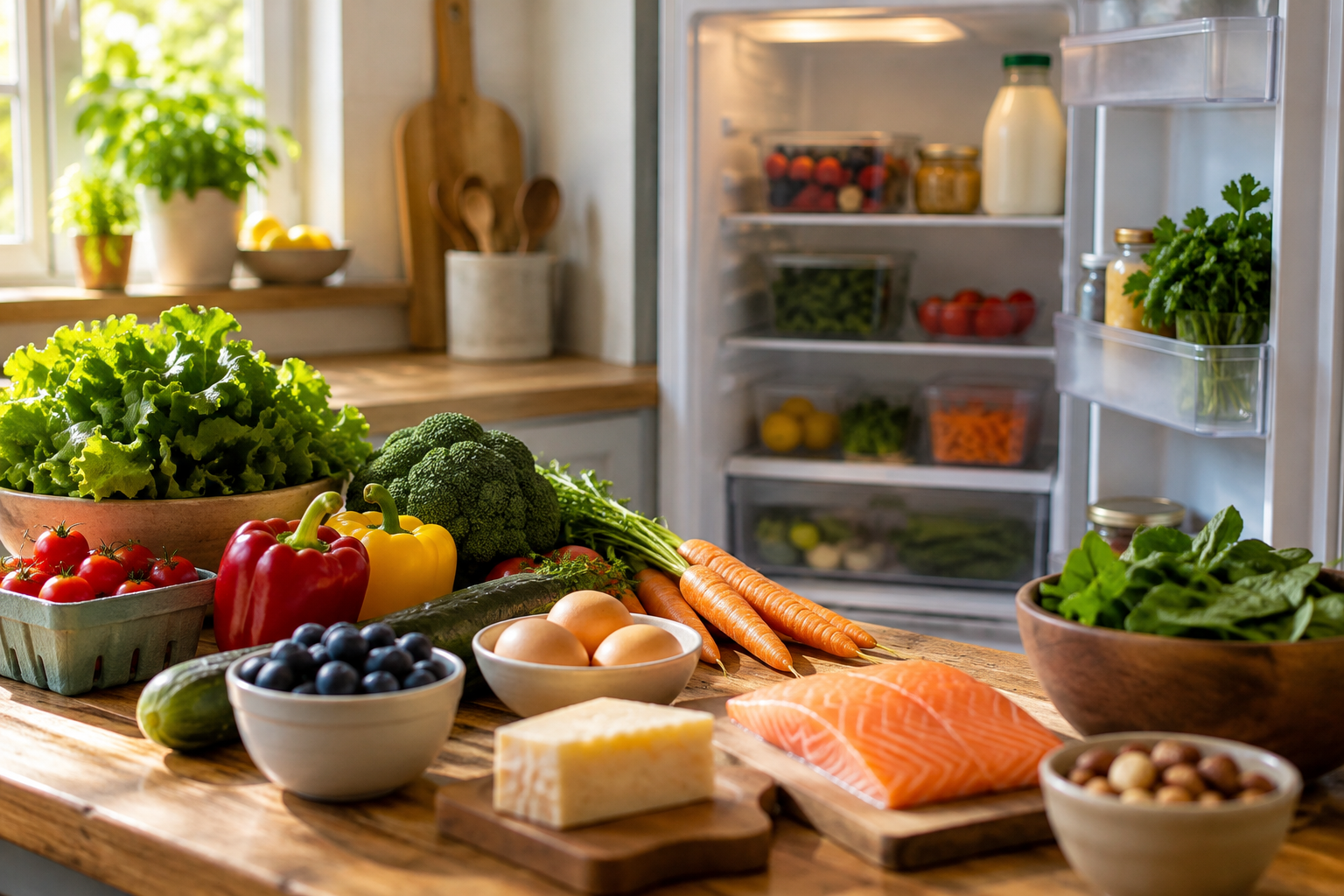
A 30 cm-wide fridge shelf does not care how appealing that family-size tub of yoghurt looks on the grocery list. Small fridge grocery planning starts with the space you actually have, then builds meals around it.
A compact fridge can still support balanced family meals. The trick is to stop treating one large shop as the only sensible option. Buy what fits, use fragile foods in the right order, and leave enough room for safe cooling.
Measure before you plan
Before choosing meals, check the fridge itself. Open the door and look at every shelf, drawer, door bin, and awkward corner. Measure the usable space, not just the outside dimensions of the appliance.
Pay attention to:
- Shelf width and depth
- Clearance between shelves
- The height of door bins
- Drawer space for produce
- Freezer capacity
- Whether shelves can be moved
- Space around vents and the back wall
A narrow shelf may hold several small containers but struggle with a large roasting pan. A shallow door bin may fit jars but not a tall bottle. These details should shape the shop.
Do not plan to fill every centimetre. Cold air needs to circulate, and food should not be packed so tightly that the fridge cannot cool properly. Crowding also makes it easier to forget what you bought.
Use a quick test before shopping. Place a few empty containers, bottles, or bags in the fridge to represent the food you expect to buy. If the shelves already look cramped, reduce the plan or split the shop.
Plan meals by storage demand
Start with the foods that need the most room. A large lettuce, carton of milk, family pack of meat, tub of cottage cheese, and leftover container can consume a small fridge quickly.
Then choose meals that share ingredients without requiring several bulky packages. For example, one bunch of herbs might work in soup, eggs, and a pasta sauce. A cooked chicken could become dinner, wraps, and a rice bowl. The point is not to make every meal identical. It is to make the ingredients earn their space.
Build the week around a mix of storage needs:
- One or two meals using fresh, delicate ingredients early
- Meals based on shelf-stable foods such as pasta, rice, oats, canned tomatoes, and beans
- Frozen ingredients where freezer space allows
- A later meal using longer-lasting produce such as cabbage, carrots, onions, or apples
- Flexible meals that can absorb leftovers
Avoid stacking several high-volume recipes in the same part of the week. A big salad kit, a tray of fresh vegetables, a large container of berries, and multiple dairy tubs may sound manageable on paper but take over a compact fridge.
Choose smaller packages when the larger format will not be used quickly. A lower unit price is not useful if the food spoils before the household can finish it. Check the cost and the likely use together.
Stagger perishables where practical
The easiest way to reduce pressure on a small fridge is to split the shop. Buy the foods that will be used first, then pick up more delicate or bulky items later when practical.
This may mean:
- Buying a smaller amount of salad greens for the first few days
- Picking up berries closer to when you will serve them
- Purchasing fresh fish or other short-life proteins near the meal date
- Getting milk, yoghurt, or fresh bread in smaller quantities if storage is tight
- Delaying a large produce purchase until there is room
This approach depends on your location, transport, schedule, and local store access. A second trip is not always sensible, especially for rural, northern, or car-free households. In that case, use more shelf-stable and frozen foods, and plan the shop around what can safely last.
Canadian flyers often turn over on Thursday, so some households may choose to do a main shop around the weekly flyer and a small top-up later. Do not assume the same rhythm works everywhere. Store availability, travel distance, weather, and local promotions vary between provinces and between cities and smaller communities.
If you can only shop once, separate the plan into “use soon” and “use later” foods. Buy delicate items in modest quantities and let sturdier ingredients carry more of the week.
Create a visible use-first shelf
A use-first shelf is a simple place for food that needs attention before the rest. It could be the front section of the middle shelf, a labelled bin, or one clear area at eye level.
Put items there such as:
- Opened packages
- Cut fruit and vegetables
- Cooked leftovers
- Soft berries
- Leafy greens that need using
- Dairy or deli items nearing their use-by date
Use a washable label such as “eat first” or “use next”. The label matters less than consistency. Everyone in the household should know that food in this area belongs in the next meal or two.
Keep raw meat, poultry, and seafood sealed and stored safely according to the package guidance. Raw items should not drip onto ready-to-eat food. The use-first shelf is for visibility, not for ignoring safe storage rules.
When putting groceries away, move older items forward and place newer items behind them. Use clean, lidded containers for leftovers and label them with the date they were stored. If you cannot see what is inside a container, it is much easier to forget it.
Use the freezer without overloading it
A small freezer can help, but only if it has room and can maintain safe temperatures. Do not force in a large bulk purchase just because freezing is technically possible.
Useful freezer choices include:
- Flat portions of cooked food
- Frozen vegetables
- Bread or wraps in manageable quantities
- Small packs of meat or fish, if there is room
- Frozen fruit for breakfasts and baking
Freeze food in thin, stackable portions rather than one large container. Mark the contents and date so you can find it later. Leave enough room for air movement, and follow the food’s packaging or reliable food-safety guidance for freezing and thawing.
If the freezer is already full, do not count it as extra storage. Plan the week using the fridge and cupboard space you have now.
Shop with a storage-first list
A standard grocery list groups items by recipe. A small-fridge list should also consider where each item will live.
Before leaving home, sort the list into:
- Fridge items that must be used soon
- Fridge items that can last longer
- Freezer items
- Cupboard items
- Items for a later top-up
Next to each bulky item, note the meal it belongs to. If the meal is flexible, write the possible replacements too. This helps you skip a large item when the fridge is already full.
Do not buy duplicate condiments, drinks, or dairy products without checking the fridge first. Small appliances often hide food behind taller containers. A two-minute inventory can prevent both overcrowding and unnecessary spending.
At the shop, consider the order of the trip. Put cold foods into your basket later where possible, and get them home promptly. Once home, refrigerate perishable food without leaving it out while you reorganise the kitchen.
Build a small-fridge weekly rhythm
A repeatable rhythm makes this easier than starting from scratch every week. You might inventory the fridge before planning, choose the first meals around fragile foods, shop for the core ingredients, and reserve a small space for leftovers.
At the end of the week, note what caused trouble. Was there too much produce? Did the milk take up the only tall shelf? Did leftovers have nowhere to go? Adjust the next plan instead of simply trying to pack better.
The best small-fridge system is not the one that fits the most food. It is the one that leaves enough room to see what you have, cool it safely, and use it before quality drops.
For a more structured weekly shop, CartBrain can plan family suppers around your household, budget, selected Canadian or US stores, and local flyer items, then organise the list by store and aisle. New accounts get a full first week free with no card.