 Cart
CartThe Snack Budget: Feeding Hungry Kids Without Going Broke
Build a snack system around filling basics, not pricey little packages, so hungry kids can serve themselves without draining the grocery budget.
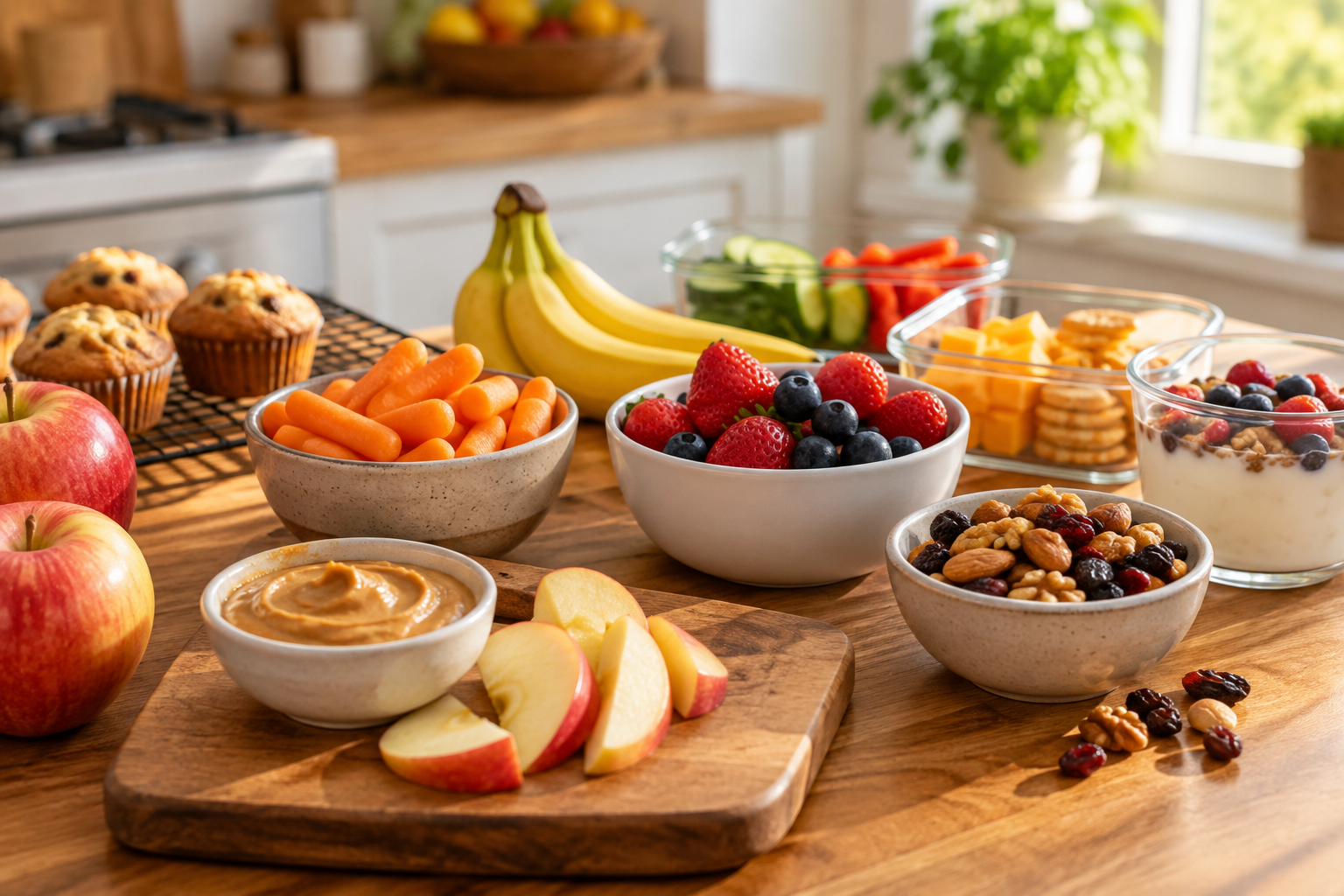
A family snack shelf can turn a tub of yogurt, a bag of apples and a box of crackers into a week of food—or turn the grocery budget into a trail of empty wrappers. The difference is usually not fancy recipes. It is what you buy, how you portion it and whether hungry kids can reach it without asking for a packaged treat every time.
Cheap healthy snacks for kids need to do three jobs: fill them up, take little effort and survive actual family life. If a snack requires five minutes of cooking, three separate containers and a clean kitchen, it will not become a reliable habit.
Start with a snack budget, not a snack ban
Snacks are easy to ignore when planning groceries. Supper gets a list. Breakfast gets a list. Snacks get added to the trolley when someone is hungry. That makes small purchases hard to see until the receipt is longer than expected.
Set a weekly snack amount that fits your household. Keep it separate from treats if that makes the numbers easier to follow. The goal is not to make every snack perfect. The goal is to stop convenience food from quietly taking over the budget.
For one week, notice what disappears first:
- Individually wrapped bars and crackers
- Small bags of chips or popcorn
- Single-serve yogurt and applesauce
- Juice boxes and flavoured drinks
- Bakery items bought during errands
- Cheese sticks and pre-cut produce
Single-serve packaging can cost much more per gram or portion than a larger pack. It is convenient, but you are paying for the wrapper, the branding and the fact that no one has to portion it at home. Check the unit price where your store shows one, and compare the cost of the food itself rather than the sticker price of the package.
Do not eliminate every convenience item. Keep a few for car trips, sports days or genuinely chaotic evenings. Just stop treating them as the default snack at home.
Build every snack around staying power
A snack that is mostly quick carbohydrate may disappear fast, followed by another request ten minutes later. That does not mean fruit or crackers are bad. It means they often work better with something that adds protein, fat or fibre.
Use this simple formula:
- Produce plus protein: apple and cheese, pear and yogurt, banana and nut or seed butter
- Grain plus protein: whole-grain crackers and cheese, toast and egg, popcorn with a side of yogurt
- Dairy plus fruit: plain or lightly sweetened yogurt with berries, sliced banana or thawed frozen fruit
- Leftovers plus produce: a small portion of rice and vegetables, pasta salad or roasted potatoes with cucumber
You do not need to hit the formula at every snack. Some children will eat only one item. Offer a filling pairing without turning it into a negotiation. The food still has to be acceptable to the child in front of you.
Cheap snacks that actually fill kids up
The best budget snacks are ordinary foods you can buy in larger formats and use several ways. Availability and price vary by province, store and season, so use what is sensible at your local No Frills, FreshCo, Food Basics, Super C, Save-On-Foods, Co-op, IGA, Costco or independent grocer.
Popcorn
Plain kernels are inexpensive compared with individual snack bags. Pop a batch on the stove or in an air popper, then store it in a sealed container for a few days. Add a little butter or oil and seasoning if your family likes it.
For younger children, follow current choking-safety guidance and use your judgement about whether popcorn is appropriate. It is not a suitable snack for every age.
Fruit in season
Buy the fruit that looks good, fits your budget and will actually get eaten. Apples, bananas, oranges and pears are often practical because they travel well. In season, local berries, peaches, plums or other fruit can add variety. Frozen fruit works for smoothies, yogurt bowls and quick thawed portions.
Wash and prepare only what your family will use soon. A full container of cut fruit that goes soft is not a saving.
Yogurt from a tub
A larger tub usually gives you more control than individual cups. Spoon it into small reusable containers, then add fruit, oats or a little cereal when serving. Plain yogurt can be used for both sweet snacks and savoury dips.
Portion a few containers after shopping if that makes the food easier for children to grab. If no one wants to do that, leave the tub in the fridge and accept that this option may need adult help.
Cheese and crackers
Buy a block of cheese and cut portions as needed, or look for the larger format that has the best unit price at your store. Pair it with crackers, apple slices, cucumber or leftover vegetables.
Crackers vary widely in price and nutrition. Choose a type your children will eat, then serve a reasonable portion beside the cheese rather than leaving the box open on the counter.
Hard-boiled eggs
Eggs are useful for snacks because they can be cooked ahead and kept chilled. Serve one with fruit, toast or crackers. If your children dislike plain eggs, try chopped egg on toast or a simple egg salad made for the next day.
Cook only what you can safely store and use. Label the container so the prepared food does not become a mystery at the back of the fridge.
Other dependable options
Rotate in foods already bought for meals:
- Hummus with carrots, peppers or pita
- Toast with peanut or seed butter, where safe for your household
- Leftover pancakes cut into strips
- Oatmeal with banana
- Homemade muffins with fruit or yogurt on the side
- Edamame, if your children enjoy it
- Cold cooked vegetables with a dip
- Leftover chicken, beans or pasta in a small portion
The cheapest snack is often a planned use for food you already have, not a separate product marketed as a snack.
Make a snack shelf kids can reach
A reachable snack shelf reduces the number of times you become the vending machine. It also makes the available choices visible.
Use one cupboard section, fridge bin or basket for approved snacks. Put sturdy foods within reach and keep chilled foods in a clearly marked low shelf or drawer if your fridge allows it. A small step stool may help, but only if the setup is safe for your child.
Stock it with a short rotation:
- One or two fruits
- Crackers or popcorn
- Portion-sized cheese
- Yogurt
- A prepared protein such as egg or hummus
- One planned treat, if you use them
Teach a simple rule such as “choose one filling food and one extra item.” Keep the rule flexible for appetite, activity and age. Younger children may still need help with opening packages, cutting food and judging portions.
Do not put the whole week’s supply out at once if it will vanish immediately. Refill the shelf daily or keep backup food elsewhere. The point is independence, not letting a child eat through every snack before lunch.
Prep once, then stop over-prepping
Choose one short snack reset after your main grocery shop. Wash fruit, cook eggs, portion cheese and refill the snack shelf. Stop there. You do not need a refrigerator full of matching containers.
Keep a few emergency options for days when preparation fails. Shelf-stable crackers, applesauce, canned fruit in water, whole-grain cereal and nut-free seed butter can help, depending on your family’s allergy needs and school or daycare rules.
Use a “first in, first out” habit. Put older yogurt, fruit and cut vegetables at the front. Plan them for the next snack before opening something new.
Shop for snacks with the week in mind
Before shopping, count the snack occasions you realistically need to cover. Include school days, weekends, activities and days when children are home. Then choose a small mix of staples rather than buying every option.
Check flyers before you leave, especially when most supermarket flyers turn over on Thursday. Promotions differ across Canada, and the best choice in a city may not be available or worthwhile in a smaller community or the North. Compare the current price at your own stores, including discount banners and bulk options, before changing your plan.
Buy larger formats only when your household will use them before quality drops. A bargain that becomes waste is not a bargain. The same applies to bulk shopping: calculate the portion cost and storage space, not just the package size.
A simple weekly snack list might include fruit, yogurt, eggs, cheese, crackers, popcorn kernels and one flexible leftover. That is enough variety for many families without turning snacks into a second meal plan.
The aim is not perfect eating or zero treats. It is a snack routine that keeps hungry kids fed with food you can afford and serve without starting from scratch. CartBrain can help you plan the week’s meals and grocery list around your household, budget, chosen stores and current Canadian flyers, so snack staples fit into the same shop instead of appearing as surprise purchases.