 Cart
Choose the Next Recipe Around the Package You Already Opened
Plan the second meal before the first one goes on the table, so an opened tub, bag, or bunch has somewhere useful to go.
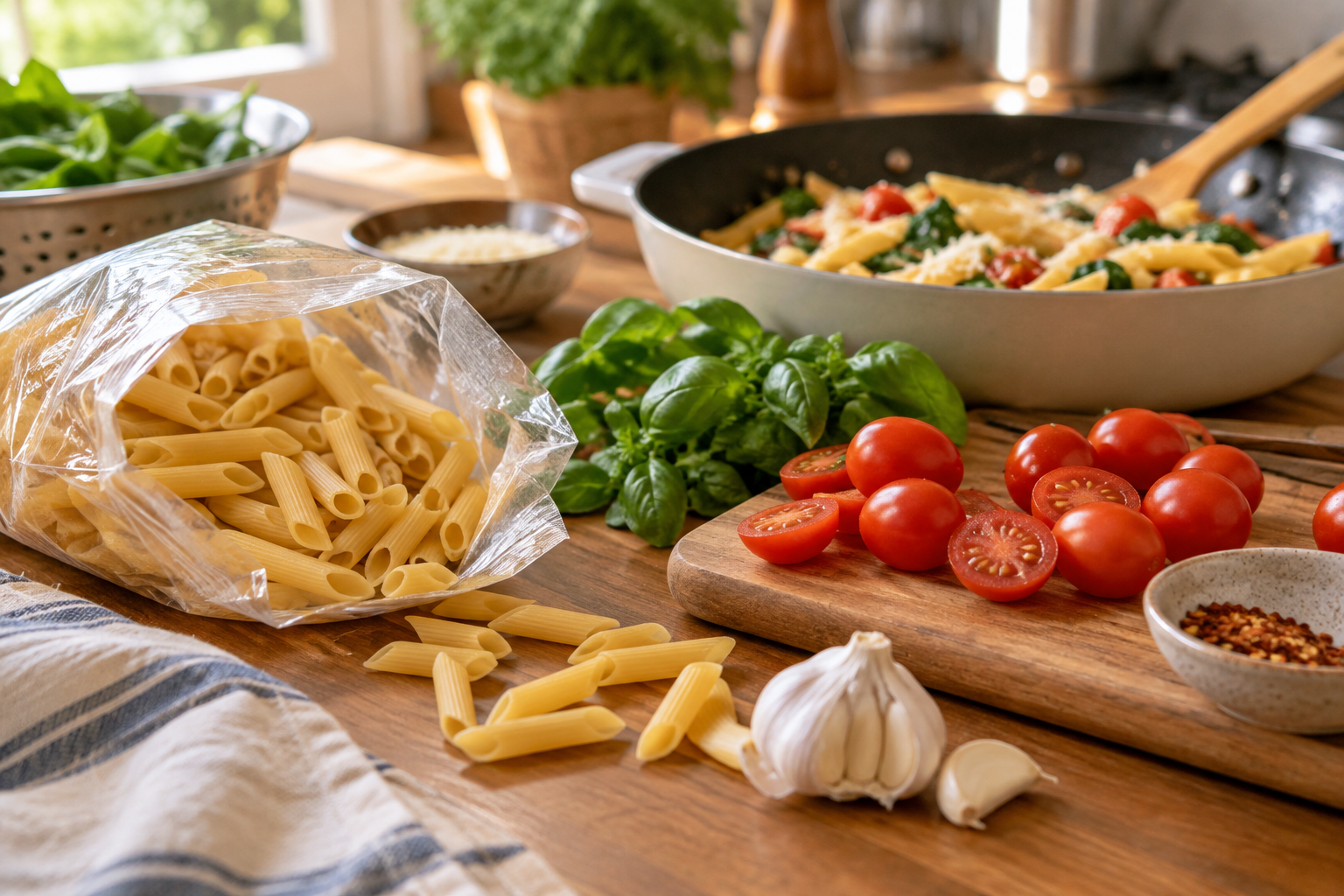
An opened 500 g tub of yoghurt, a half-used bunch of coriander, or a bag of spinach can quietly turn into three separate shopping decisions. The cheaper move is often choosing the next recipe around the package already in your fridge.
This is not about forcing your family to eat the same meal twice. It is about building two different meals that share one ingredient, then buying only what the pair actually needs.
Start with the package, not the recipe
Before choosing supper, look through the fridge for ingredients that are already open. Focus on perishables and part-used packages first. These are the items most likely to be forgotten because they are no longer neatly sealed or stored in their original place.
Make a short list such as:
- Half a tub of plain yoghurt
- A bag of baby spinach
- Two peppers from a larger pack
- A bunch of green onions
- An opened pack of tortillas
- Half a cabbage
- A container of cooked rice
- A jar of pasta sauce with some left inside
Then choose one item as the anchor. Do not try to use every leftover at once. A plan with one clear anchor is easier to shop for and easier to cook.
The anchor should be something that can work in two noticeably different meals. Plain yoghurt could become a marinade or sauce for one meal and a topping for another. Spinach could go into pasta, then into omelettes or a soup. Tortillas could hold chicken one night and beans or eggs another night.
The goal is variety with overlap, not two plates that taste identical.
Separate opened perishables from unopened pantry stock
This distinction prevents a common planning mistake: treating every leftover as if it needs urgent attention.
An opened perishable package needs a deliberate next use. That includes cut vegetables, leafy greens, dairy, cooked meat, fresh herbs, and opened refrigerated sauces. Check the product label and your own storage conditions. If the package gives storage guidance, follow it. If the food looks questionable, has an unusual smell, or has been stored poorly, do not try to rescue it by inventing a recipe.
Unopened pantry stock is different. A sealed tin of tomatoes, dry lentils, rice, pasta, flour, or spices can support the plan without being the priority. You do not need to force an unopened item into the next meal simply because it is already in the cupboard.
Use this simple order:
- Identify opened perishables that need a clear plan.
- Check whether any cooked food is already available for a safe, practical second meal.
- Add unopened pantry items only when they make the two recipes easier or more complete.
- Buy the missing ingredients in the smallest sensible package for your household.
This keeps the plan grounded in what is actually at risk of being wasted, without treating every cupboard item like a countdown.
Build a two-meal pairing
A useful pairing has one shared package and two different cooking methods. Here are some patterns to borrow.
Tub to sauce, then topping
Use plain yoghurt in a spiced marinade for chicken, fish, or chickpeas. Use the rest as a cool sauce with roasted vegetables, wraps, or baked potatoes on another day.
A tub of sour cream can work in a taco-style supper, then be stirred into a dip or used to finish a soup. Cream cheese can go into a pasta sauce and later into a spread for toast or bagels.
Bag to main, then side
A bag of spinach can be wilted into a pasta dish, then folded into eggs or added to a lentil soup. Frozen peas can support a rice bowl, then become part of a blended soup or savoury pie filling.
For greens, plan the meal where they are most visible first. A salad or fresh side usually benefits more from crisp leaves than a cooked dish does. Use the less delicate portion in the cooked meal when that fits your storage situation.
Bunch to garnish, then base
Green onions, parsley, coriander, and mint can make one meal feel finished, then become part of the next meal's base. Chop only what you need at first if the rest will be easier to store whole.
Green onions can top noodle bowls and then flavour fried rice. Parsley can finish fish or potatoes and later go into a grain salad. Coriander can top tacos and then become part of a chutney, salsa, or soup garnish.
Pack to filling, then breakfast
Tortillas, pitas, naan, and buns are easy to overlook after the first meal. Use them for a planned filling one night, then make a different breakfast or lunch with eggs, beans, leftover roasted vegetables, or cheese.
This works especially well when the second meal needs to be quick. Keep the format different enough that it does not feel like a repeat. A wrap followed by quesadillas may feel too similar for some households; a wrap followed by a breakfast bake or soup with toasted bread may work better.
Write the next recipe before you shop
Once you know the first meal, choose the second one immediately. Do not leave the remaining package as a vague intention.
Write down three things:
- The ingredient being shared
- The second recipe that will use it
- The fresh ingredients needed to complete that recipe
For example:
- Shared package: plain yoghurt
- First meal: yoghurt-marinated chicken with rice
- Second meal: chickpea wraps with yoghurt-herb sauce
The shopping list might then need chickpeas, wraps, cucumber, and herbs, depending on what is already at home. The list should not include another tub of yoghurt unless the recipes genuinely need more than the open one provides.
Do the same check for the first recipe. If it uses only part of a large package, plan a second meal that uses the rest. If the package size is awkward for your household, change the recipe rather than pretending the leftovers will disappear on their own.
Match the plan to your household
A package-saving plan still has to work for real people. If one child refuses spinach, do not make spinach the centre of both meals. Put it in a blended sauce, offer a plain component, or choose a different shared ingredient.
If your household eats leftovers for lunch, count those portions before planning the second supper. The package may already have a job in tomorrow's lunchboxes or work lunches. Do not buy extra food because the plan assumed every portion would be used at dinner.
Flexible recipes help. Grain bowls, tacos, pasta, frittatas, soups, and tray bakes can absorb small changes. They let you use what you have without requiring an exact amount of every ingredient.
Keep the flavour profile broad enough for substitutions. A lemon, garlic, and herb base can move between chicken, beans, fish, and vegetables. A tomato-based sauce can support pasta, stuffed peppers, or a baked bean dish. This is more useful than planning two recipes that depend on one precise brand or package size.
Check the package before adding it to the plan
Read the label and look at how the food was stored. Check whether the package is open, how much remains, and whether it is still in a condition you are comfortable serving. Do not rely on a made-up freshness deadline or assume that a familiar ingredient is automatically safe.
For foods with a use-by or best-before label, understand that the wording matters and follow the package guidance. Best-before wording generally relates to quality, while a use-by instruction may be more directly tied to safety. When in doubt, discard the questionable food rather than building a meal around it.
Also check for duplicate open packages. Two partly used bags of shredded cheese or two jars of sauce may be hiding behind newer groceries. Combine only when the products are compatible and safe to combine. Otherwise, give each one a clear job.
Make this a weekly habit
At the start of your meal-planning week, scan the fridge before browsing recipes. On many Canadian grocery flyers, the next cycle starts around Thursday, but the exact timing and offers vary by store and province. Use the flyer to support the plan, not to replace the fridge check.
Choose one or two open perishables. Pair each with a different recipe. Then add unopened pantry goods and sale items only when they fit the meals your household will actually eat.
That small change turns leftover planning from a clean-up task into a recipe-selection rule: the next meal earns its place by helping finish what is already open. CartBrain can help turn that two-meal plan into a week of family suppers and a store-split grocery list, with a full first week free for new accounts and no card required.