 Cart
Keep One Backup Dinner Without Buying a Second Menu
Build one flexible fallback from ingredients already in your weekly plan, then move the bumped meal instead of adding extra groceries.
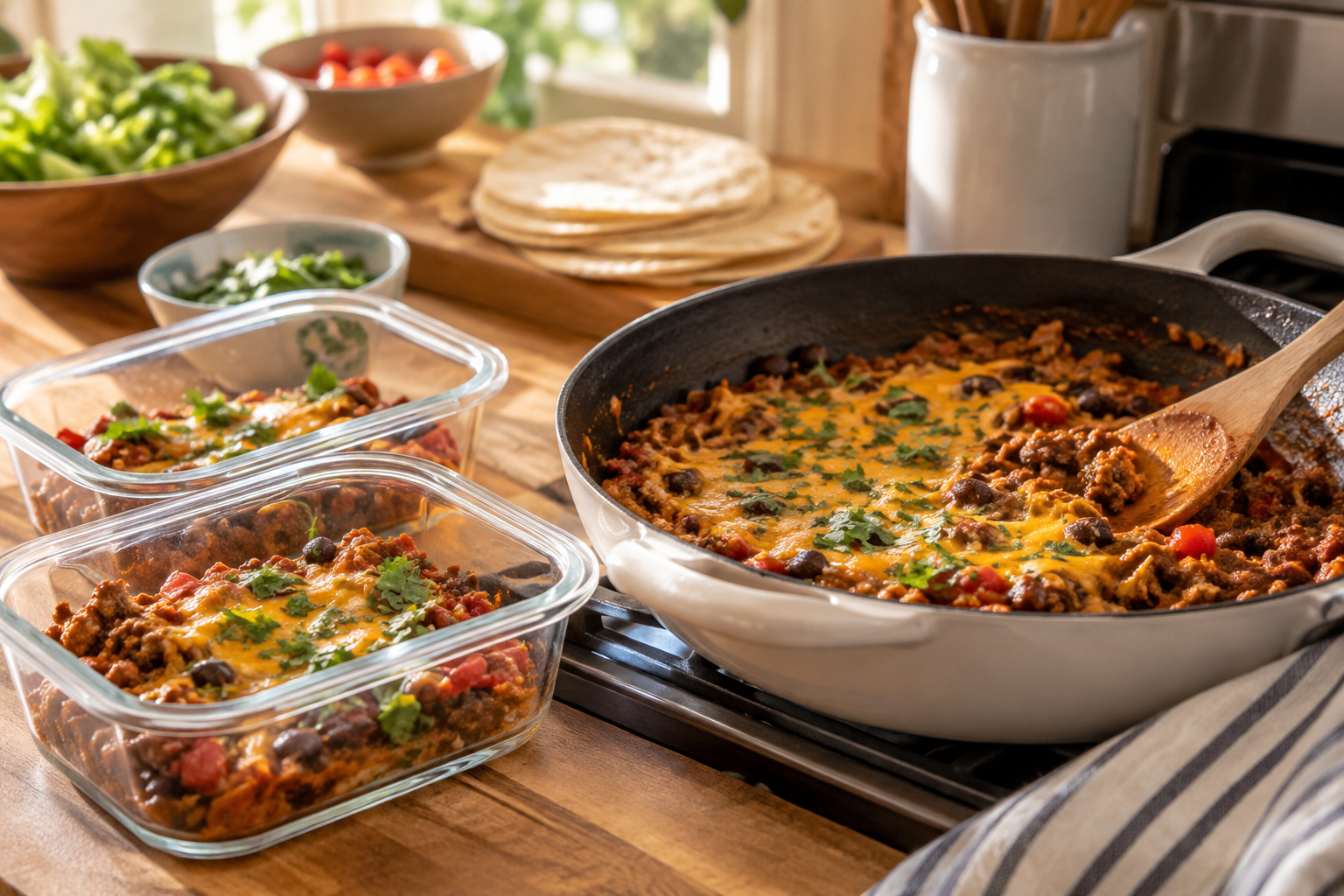
A forgotten lunch container, a late practice, or a fridge ingredient that did not thaw can knock out the dinner you planned. Without a backup dinner pantry plan, the usual response is another grocery run or takeout.
The fix is not keeping a second week of meals in the cupboard. It is choosing one flexible fallback that uses ingredients you already planned to buy, plus a few shelf-stable basics. When dinner changes, you make the fallback and move the displaced meal to another day.
That keeps the backup useful without quietly turning your grocery list into two menus.
What a good backup dinner needs
A backup meal has a different job from your regular dinners. It does not need to be exciting or perfectly balanced every time. It needs to be dependable when the original plan no longer fits the day.
Choose a meal that is:
- Fast enough for the kind of evening that usually causes a change
- Familiar to the people in your household
- Flexible if one ingredient is missing
- Built from food with a long shelf life
- Easy to portion, store, and reheat
- Compatible with at least one planned ingredient
The best options are usually simple combinations rather than detailed recipes. Think pasta with jarred sauce and frozen vegetables, rice and beans with a fried egg, canned tuna pasta, lentil soup with toast, or a quesadilla-style meal using tortillas, cheese, and a planned vegetable.
Your household may prefer a different format. The important part is that the meal has a clear base, a protein or filling ingredient, and something that adds flavour or texture.
Build it from the week you already planned
Start with your normal Monday-to-Sunday meal plan. Look for ingredients that can work in more than one dinner.
A bag of rice may support a stir-fry, a rice bowl, or a simple egg-and-vegetable dinner. Tortillas may be planned for tacos but also work for bean-and-cheese wraps. A block of cheese can finish pasta, soup, toast, or quesadillas. Frozen peas, corn, spinach, and mixed vegetables can stretch several meals without needing to be used immediately.
Then add only the shelf-stable pieces your fallback requires. Common examples include:
- Pasta, rice, couscous, or noodles
- Canned beans, lentils, tuna, salmon, or chicken
- Canned tomatoes, broth, or soup
- Jarred pasta sauce, salsa, curry sauce, or coconut milk
- Stock cubes, dried herbs, spices, and cooking oil
- Tortillas, crackers, or another long-lasting starch
Do not buy every possible version of these ingredients. Pick one fallback and list its components once. If the same pasta, rice, cheese, or frozen vegetables already appear in another planned meal, count them once in the total quantity you need for the week.
For example, if your plan uses rice for a chicken bowl and your fallback is beans and rice, the shopping list should show the combined amount of rice required for both meals. It should not create a second line for a separate backup portion unless you genuinely need more.
Pick the right trigger for using it
A backup meal works best when you decide in advance when it is allowed. Otherwise, it can become an excuse to skip any dinner that feels slightly inconvenient.
Use it when:
- A planned ingredient is still frozen and cannot be prepared safely in time
- A family member’s schedule changes the number of people eating
- You are short on energy and the planned recipe has too many steps
- A planned ingredient has spoiled or is unavailable at your store
- The household needs dinner earlier or later than expected
- You have more leftovers than expected and want to shift the plan
The backup is not automatically for every craving or minor change. If the planned dinner can be simplified, simplify it first. Use the fallback when the original meal no longer fits the practical needs of the evening.
A useful rule is to ask: can this dinner be made with the ingredients on hand, in the time available, without creating another shopping trip? If not, use the backup.
Move the displaced meal instead of replacing it
This is the step that prevents double-counting. The backup dinner is a swap, not an addition.
When you use it, record three things:
- The dinner that was originally planned
- The backup meal you made instead
- The new day for the displaced dinner
Move the original meal to the next suitable spot in the week. Choose a day when its fresh ingredients will still be in good condition and when the cooking time makes sense.
For example, suppose you planned salmon with potatoes on Wednesday but the fish is still frozen. You make a pantry pasta dinner instead. The salmon meal can move to Thursday, if the potatoes and other ingredients are still suitable. If Thursday already has a meal that uses delicate produce, move that meal instead or swap the order of two dinners.
The goal is not to preserve the original calendar perfectly. The goal is to use what you bought before it spoils and avoid buying a replacement menu.
Track ingredients by quantity, not by meal name
Meal plans can make the same ingredient look like separate purchases. A backup plan makes this especially easy to miss.
Keep a single running quantity for ingredients that appear in multiple meals. If beans are used in a planned chilli and the backup, add the cans or cooked amount together. If cheese appears in tacos, pasta, and quesadillas, check the combined quantity before shopping. Do the same for rice, pasta, tortillas, onions, frozen vegetables, and broth.
Also separate ingredients into three groups:
- Already at home: pantry and freezer items you can use now
- Planned purchases: ingredients already needed for the week’s regular meals
- Backup-only purchases: the small number of shelf-stable items needed to make the fallback possible
This makes the real cost of the backup visible. If most of the meal uses items already in your plan, you may only need to add one or two pantry products. If the backup requires a completely separate protein, starch, sauce, and vegetable, it is probably another menu in disguise.
Choose a fallback that can change with the plan
A rigid backup creates waste. A modular one can absorb changes.
Build your fallback around parts that can be replaced:
- Use rice, pasta, or toast as the base
- Choose beans, eggs, canned fish, or leftovers for the filling
- Add frozen or long-lasting vegetables
- Finish with one sauce, seasoning blend, grated cheese, or pickled item
This lets you use what is available without redesigning dinner. Beans can replace canned tuna. Frozen spinach can replace fresh greens. Noodles can replace rice. A jarred sauce can replace a more elaborate seasoning mixture.
Keep food safety in mind. Use your judgement with leftovers, follow package storage guidance, and do not keep pushing a perishable meal further down the week if it is no longer in good condition. Moving a meal is useful only when the food remains safe and appealing.
Review the backup after each use
Your fallback should earn its space. After making it, note what worked and what did not.
Ask:
- Did it take as little effort as expected?
- Did everyone have enough to eat?
- Which ingredient ran out first?
- Did the household accept the substitutions?
- Did the displaced meal move smoothly?
- Did any backup ingredients sit unused?
If nobody wants the meal, replace it. If it needed too many fresh ingredients, simplify it. If it left you with awkward leftovers, change the quantities or choose a different format.
A backup dinner does not need to be exciting. It needs to be reliable enough that you can use it without panic and organised enough that it does not inflate the week’s shopping.
Keep the plan visible
Write the fallback at the bottom of your weekly meal plan, not on a separate list that gets forgotten. Include the trigger, the ingredients, and the meals most likely to move if you use it.
For example:
- Fallback: tomato and bean pasta with frozen vegetables
- Use when: the planned dinner cannot be made safely or simply tonight
- Move: shift tonight’s planned meal to the next suitable day
- Check first: pasta, sauce, beans, frozen vegetables, and cheese
That small note turns a vague emergency option into a workable system.
A weekly plan that includes one flexible pantry fallback can handle real family life without asking you to buy a second menu. CartBrain can help organise the main week around your household, budget, selected stores, and local Canadian or US flyer items; use the first week free with no card, then keep your backup tied to the same ingredient list rather than treating it as an extra plan.