 Cart
CartOne Rotisserie Chicken, Three Dinners: A Small Plan That Works
Turn one cooked chicken into a roast dinner, a fast second meal, and a useful soup without buying three separate proteins.
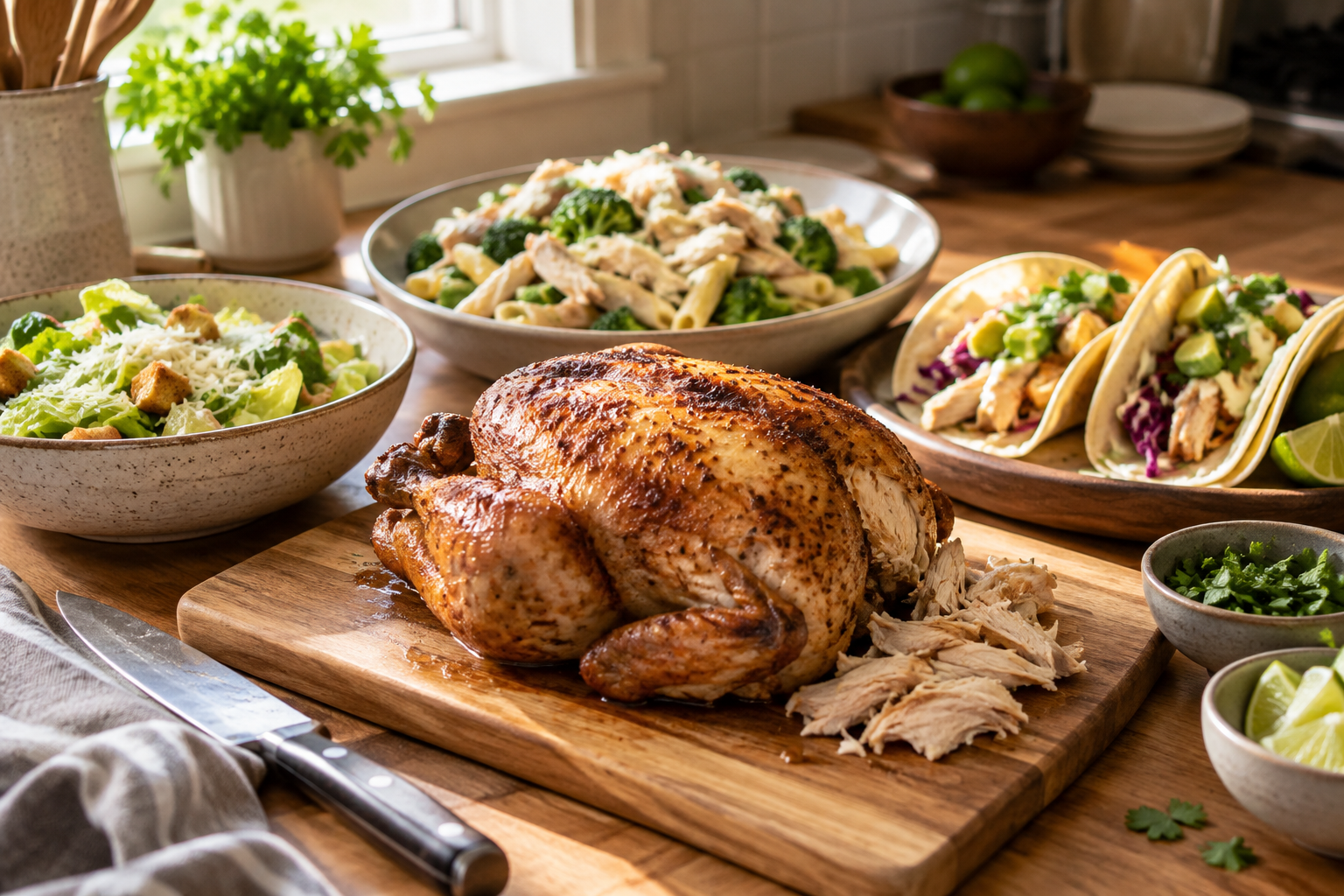
A hot rotisserie chicken can cover three dinners if you stop treating it as one meal and start treating it as a small weekly plan.
The trick is not magic. It is portioning the meat before everyone picks at the bird, choosing meals that use different flavours, and saving the carcass for broth or soup. This works especially well when the cooked chicken is priced competitively with a raw whole chicken in your local store.
The three-dinner plan
This version keeps the work low and the ingredients flexible.
- Dinner one: roast chicken plates. Serve sliced chicken with potatoes or rice, a vegetable, and gravy or a quick sauce.
- Dinner two: chicken tacos or fried rice. Use the smaller pieces and leftovers with tortillas, rice, vegetables, and a strong sauce.
- Dinner three: chicken soup. Use the carcass for broth, then add the last bits of meat, vegetables, and noodles, rice, or beans.
You do not need to serve the same flavour three nights in a row. That is the point. The first meal feels like a roast dinner. The second is fast and flexible. The third turns scraps and bones into something warming.
Shop once for all three dinners
The exact list should match your household, but this is a useful starting point.
Main item
- One cooked rotisserie chicken
For dinner one
- Potatoes, rice, or another easy starch
- One or two vegetables, such as carrots, broccoli, green beans, or frozen mixed vegetables
- Gravy, salad dressing, yoghurt, or another simple sauce
For dinner two
- Small tortillas, cooked rice, or both
- One onion
- Bell peppers, corn, shredded cabbage, or frozen vegetables
- Salsa, shredded cheese, sour cream, or plain yoghurt
- Optional: canned black beans or kidney beans
For dinner three
- Two carrots
- Two celery stalks, or another soup vegetable
- One onion
- Noodles, rice, potatoes, barley, or canned beans
- Stock, if you do not want to make a full broth from the carcass
- Optional herbs, garlic, lemon, or a bay leaf
Check your fridge and pantry before shopping. You may already have rice, onions, stock, tortillas, or frozen vegetables. The best version of this plan uses what is already in the house.
Dinner one: make the chicken feel like a proper meal
Start by serving the best pieces while they are at their most appealing. Slice the breast meat and pull meat from the thighs. Add a starch and a vegetable. Keep the sauce simple.
A few combinations:
- Chicken, mashed potatoes, peas, and gravy
- Chicken, rice, roasted carrots, and a yoghurt-herb sauce
- Chicken, baked potatoes, broccoli, and a quick pan sauce
- Chicken over salad with crusty bread, if you want a lighter dinner
Do not put the entire bird on the table unless you are confident the leftovers will be portioned afterwards. A picked-over chicken is harder to use well. Instead, remove the meat you expect to need for dinner one and set aside the meat for dinners two and three.
If your household has different preferences, separate the components. Plain chicken, rice, and vegetables can become a taco bowl or soup later. This is more useful than making one heavily seasoned dish that nobody wants to repurpose.
Portion the leftovers before they disappear
Once dinner one is served, pull the remaining meat from the bones. Separate it into two containers:
- One container for tacos or fried rice
- One container for soup
You do not need equal portions. Give the second dinner enough chicken to make it satisfying, then use a smaller amount in the soup alongside vegetables, noodles, rice, or beans.
Label the containers if your fridge is busy. It takes a few seconds and prevents the soup chicken from becoming tomorrow's unplanned snack.
For food safety, refrigerate cooked chicken promptly in shallow containers rather than leaving it on the counter. Keep the refrigerator cold, use leftovers within the usual safe storage window for cooked poultry, and freeze any portion you will not use soon. When in doubt, follow your local food-safety guidance.
Dinner two: change the format, not just the side dish
Tacos are the easiest route. Warm tortillas and fill them with shredded chicken, onion, cabbage, corn, beans, salsa, and cheese. Add lime or hot sauce if you have it.
You can also make a quick chicken fried rice. Start with oil, onion, and any firm vegetables. Add cold cooked rice, then stir in shredded chicken near the end so it warms without drying out. Finish with soy sauce or another savoury sauce. If your family eats eggs, scramble one or two into the pan before adding the rice.
Other useful options include:
- Chicken quesadillas with salsa
- Chicken wraps with salad vegetables
- A baked potato topped with chicken, beans, and cheese
- A quick pasta with chicken, frozen peas, and a creamy or tomato sauce
Use the vegetables that need eating first. The goal is not to follow a perfect recipe. It is to make the second dinner distinct enough that nobody feels they are being served leftovers again.
Dinner three: use the carcass properly
The carcass still has useful flavour and small pieces of meat attached. Put it in a large pot with onion, carrot, celery, and enough water to cover. Add herbs or a bay leaf if you have them. Bring it to a gentle simmer, then strain the liquid and remove any bones before returning the broth to the pot.
You can make this on the stove, or use a slow cooker if that fits your routine. A pressure cooker can also speed up the process. Keep the simmer gentle rather than aggressively boiling, which helps reduce splashing and keeps the process easier to manage.
For a faster version, skip the full broth step. Pick the remaining meat from the carcass and add it to store-bought stock with vegetables and noodles. You will still get a useful third dinner.
Good soup combinations include:
- Chicken, carrot, celery, and noodles
- Chicken, potato, corn, and green beans
- Chicken, rice, lemon, and parsley
- Chicken, tomato, white beans, and Italian herbs
If you make broth ahead, cool it quickly in shallow containers before refrigerating. Keep bones out of the finished soup, and reheat servings until properly hot.
When the rotisserie chicken is a good deal
A cooked bird is worth considering when its price is close to, or lower than, what you would pay for a raw whole chicken after accounting for cooking time, oven use, seasoning, and the risk of wasting leftovers.
It is also useful when:
- You need dinner without cooking a whole bird
- Your household will actually eat the meat
- You can use the carcass for soup
- You already have the side dishes at home
- The store's cooked chicken is larger than the amount of raw meat you would normally buy
The important comparison is not simply the sticker price. Compare usable cooked meat, convenience, and what else you would need to buy. A cheap raw chicken is not the better choice if it sits in the fridge uncooked or requires ingredients and effort you do not have available.
Check the cooked bird's size and condition too. A smaller chicken may not stretch as far for a larger household. If there is very little meat left after dinner one, the soup may need beans, noodles, or extra vegetables to make it a full meal.
When raw whole chicken wins
Raw chicken may be the better buy when your local store has a strong sale, you have time to cook, and your household prefers a larger roast dinner. It can also win when you want to control the seasoning or avoid a bird that is too salty for your family.
You still need to count the full cost. Include potatoes or rice, vegetables, oil, seasoning, and anything needed for the second and third meals. Then compare that total with the cooked chicken plan.
Store rules and prices vary across Canada. A cooked bird that makes sense at one store may not make sense at another. Check your own flyer and shelf label, including the discount siblings and banners available in your area. Flyers often change around Thursday, so that is a useful point to review the next week's options, but your local schedule may differ.
A simple weekly prep routine
When you get home, do three things before putting your feet up:
- Remove the meat you need for all three dinners.
- Refrigerate the portions in labelled containers.
- Put the carcass in the fridge or freezer for soup.
That small pause is what turns one purchase into a plan. Without it, the chicken becomes dinner one, a few cold bites, and a bag of bones forgotten in the fridge.
For households shopping across different Canadian regions, the best store and price will vary. CartBrain can help plan the week around your household, chosen stores, and local flyer items, then build a grocery list for the supporting ingredients. The weekly meal planner is free to start, with a full first week free and no card required.