 Cart
CartSquash, Roots and Cabbage: Cheap Fall Dinners From What’s in Season
A Sunday tray of roasted fall vegetables can become several different dinners without making your family eat the same plate all week.
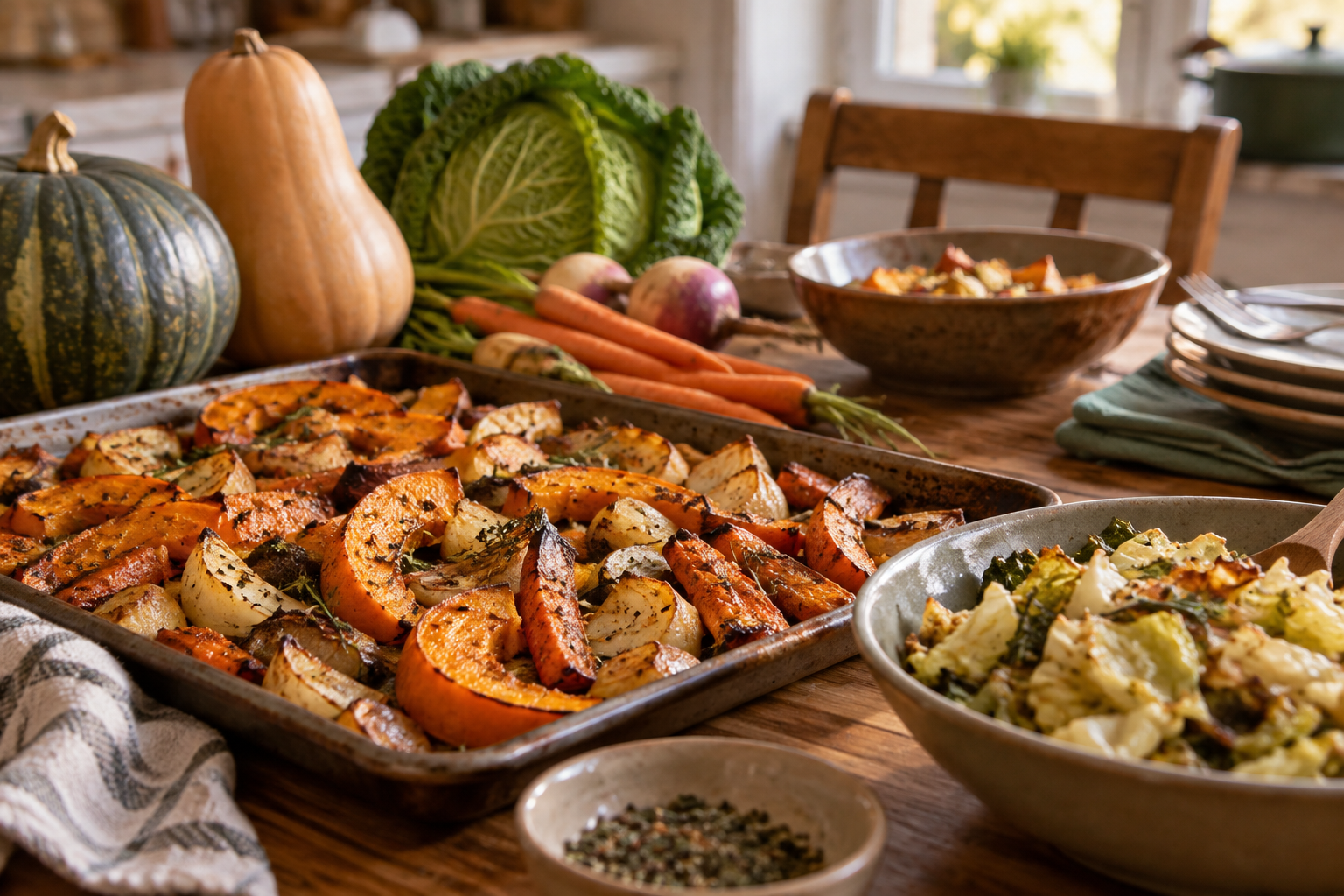
A whole butternut squash, a cabbage, and a 2 kg bag of potatoes can carry more dinners than a fridge full of expensive convenience food. Fall vegetables are sturdy, flexible, and often easier on the grocery budget when you buy them in their simplest form.
The trick is not to serve roasted vegetables night after night. Roast a useful batch once, then change the format: soup one night, hash the next, grain bowls after that, and a sheet-pan dinner when everyone needs food fast.
Why fall vegetables work so hard
Squash, carrots, beets, cabbage, and potatoes are useful because they can handle several jobs:
- They work as the main part of a meal, not just a side dish.
- They pair with beans, lentils, eggs, chicken, sausage, tofu, and grains.
- They store well compared with delicate greens and soft berries.
- They can be roasted, boiled, sautéed, simmered, or shredded.
- Leftovers usually reheat well.
Availability and pricing vary by province, town, and store. A household in Atlantic Canada will not see exactly the same selection as one in Ontario, the Prairies, British Columbia, or the North. Check the current flyers at the stores you actually use. Supermarkets such as No Frills, FreshCo, Food Basics, Maxi, Super C, Giant Tiger, Save-On-Foods, Co-op, IGA, and Costco can all have different pack sizes and promotions.
In many parts of Canada, fall is a useful season for these vegetables because local harvests and stored crops are widely available. That does not mean every item is cheapest everywhere. It means you have more options to compare.
Buy the whole vegetable when it makes sense
Pre-cut squash, peeled carrots, shredded cabbage, and ready-to-roast vegetable trays charge you for labour, packaging, and convenience. A whole squash can cost much less than the same vegetable prepared in a plastic tray, though the exact difference depends on the store and the week.
That lower price comes with work. You need a sharp knife, a stable cutting board, and a few extra minutes. For many families, that trade is worthwhile if you prepare a large batch instead of chopping one small portion every evening.
Choose the version you will actually use. A whole squash is not a bargain if it sits untouched until it spoils. Buy pre-cut when time, mobility, or kitchen safety makes it the better choice. Budget cooking should reduce waste, not create another task you cannot fit in.
For storage, keep potatoes, onions, and winter squash in a cool, dry, dark place with airflow. Keep cut vegetables refrigerated in sealed containers. Cabbage usually keeps well in the fridge, but remove damaged outer leaves and use it before it becomes soft or dry.
Start with one Sunday roast
You do not need to roast every vegetable in the house. Pick three or four that cook at a similar pace. A practical mix could include:
- Cubed squash
- Carrot chunks
- Potato wedges
- Beet wedges
- Thick cabbage pieces
Beets can stain everything around them, so roast them separately or use a lined pan. Cabbage can cook faster than large potato pieces, so add it later or cut the potatoes smaller.
Toss the vegetables with oil, salt, pepper, and one flavour direction. Try garlic and dried herbs, smoked paprika, curry powder, or a simple blend of cumin and coriander. Roast until browned and tender. Let the vegetables cool before packing them into shallow containers.
Keep some plain. Strong seasoning can limit your options later. You can add hot sauce, lemon, grated cheese, yogurt, herbs, gravy, or a different sauce when you turn the leftovers into dinner.
Do not pack the entire batch in one deep container. Smaller portions cool and reheat more evenly. Save enough for the next couple of meals in the fridge and freeze anything you will not use soon.
Five cheap fall dinners from the same vegetables
1. Squash and lentil soup
Simmer roasted squash with onion, stock or water, canned tomatoes, and red lentils. Add curry powder, ginger, or smoked paprika. The lentils make the soup more filling without requiring meat.
Blend part of the pot for a creamy texture, or leave it chunky. Serve with toast, bannock, or leftover rice. If the soup becomes too thick in the fridge, loosen it with water or stock while reheating.
2. Root vegetable hash
Chop roasted potatoes, carrots, and beets. Fry them in a wide pan until crisp. Add cabbage near the end so it softens but keeps some texture. Stir in black beans, chickpeas, leftover chicken, or a fried egg.
A spoonful of mustard, salsa, or plain yogurt can change the whole meal. Hash is also a good way to use small leftover portions that are not large enough to serve on their own.
3. Grain bowls with cabbage
Build bowls with rice, barley, couscous, or another grain already in your cupboard. Add roasted vegetables and shredded raw cabbage for crunch. Top with chickpeas, tofu, a boiled egg, or leftover meat.
Use a quick dressing made from oil, vinegar or lemon juice, mustard, and a little maple syrup. A tahini dressing works too. Keep the dressing separate if you are packing portions for later, so the cabbage does not soften too much.
4. A flexible sheet-pan dinner
Spread remaining potatoes, squash, and carrots on a pan with a protein. Use sausages, chicken thighs, seasoned tofu, or drained canned beans added later in the cooking process. Add cabbage wedges for the final stretch if there is room.
Choose one sauce after cooking rather than trying to season everything for every person. Gravy, pesto, barbecue sauce, or a garlicky yogurt sauce can make the same basic ingredients feel different.
Check the cooking time for the protein you choose. Vegetables should not be treated as proof that the protein is safe to eat; use the appropriate food-safety guidance for it.
5. Cabbage and potato skillet
Slice cabbage thinly and cook it with onion, potatoes, and carrots in a large pan. Add beans, leftover meat, or an egg for more staying power. Finish with vinegar or lemon juice to cut through the sweetness of the vegetables.
This is one of the best meals for using odds and ends. A lonely carrot, half a pepper, a few mushrooms, or a small amount of cooked rice can all join the pan.
Make the week easier with flavour changes
The vegetables can stay similar while the meal changes around them. Try these combinations:
- Roast vegetables with garlic and herbs, then serve them with gravy.
- Add curry powder and lentils for soup or a warm bowl.
- Use cumin, paprika, and lime with beans and cabbage.
- Add mustard and vinegar to a potato-and-cabbage skillet.
- Serve squash with cinnamon and yogurt as a sweeter side, then use the rest in soup.
Keep a few low-cost flavour builders on hand: onions, garlic, canned tomatoes, vinegar, mustard, dried herbs, stock cubes, and plain yogurt. They often do more for leftovers than buying another main ingredient.
Shop the plan, not the recipe
Before shopping, check what needs using first. If potatoes are already in the pantry, look for a cabbage or squash that can join them. If you have cooked rice, plan bowls. If you have eggs, plan hash. This prevents buying five separate recipes that all need different ingredients.
Compare the price per kilogram when pack sizes differ. A large bag is not automatically cheaper if part of it will be wasted. Frozen vegetables can also be useful, especially when fresh options are poor or your household cannot use a large amount quickly.
Flyers often turn over on Thursday, but the exact schedule and offers vary by retailer. Check the current flyer, store rules, and stock in your area before building the week around one item.
A weekly plan can also help you match meals to the vegetables already on sale and split the list across the stores you actually visit. CartBrain can build that kind of week around your household, budget, chosen stores, and current local flyers. New accounts get a full first week free with no card, so you can test whether a planned roast-and-repurpose week makes supper easier.