 Cart
CartHow to Eat Well on a Family Road Trip Without Blowing the Budget
Feed the family from a cooler, shop once at the destination, and save room in the budget for one meal everyone actually wants.
A drive-through meal for four can turn a carefully planned holiday budget into a bag of wrappers and a very expensive receipt. The fix is not packing a cooler full of complicated recipes. It is deciding what the car needs, what the destination needs, and where you actually want to spend.
A family road trip food budget works best when food has three jobs: keep everyone comfortable on the drive, cover easy meals once you arrive, and leave room for one deliberate treat.
Start with the food plan, not the snacks
Before buying anything, map the trip by eating occasion. Count the travel breakfasts, lunches, dinners, and snack windows. Then separate them into three groups:
- Food you will eat in the car
- Food you will prepare or assemble at the destination
- Meals you plan to buy out
This stops the common road-trip mistake of packing plenty of snacks but no actual lunch. It also stops the opposite mistake: buying a huge range of ingredients for a short stay and bringing most of them home.
Keep the plan flexible. A delayed departure, motion sickness, hot weather, or a child who refuses the planned sandwich can change the day. Pack familiar backups rather than relying on one perfect menu.
If you are travelling with a baby, toddler, allergy, or medical dietary need, treat safe food as a priority rather than a place to cut costs. Bring the food you know works, plus any containers, wipes, and medication your family needs.
Pack a cooler with real breakfasts and lunches
A cooler should replace the most expensive and least satisfying stops. It does not need to be fancy. It needs enough space for cold food, drinks, ice packs, and easy access without unpacking the entire boot.
For breakfast, pack foods that can be eaten without plates or cooking:
- Yogurt tubes or small containers, kept properly chilled
- Hard-boiled eggs in a sealed container
- Cheese, whole-grain crackers, and fruit
- Overnight oats in leakproof jars if you can keep them cold
- Muffins or banana bread made before the trip
- Bagels with cream cheese packed separately
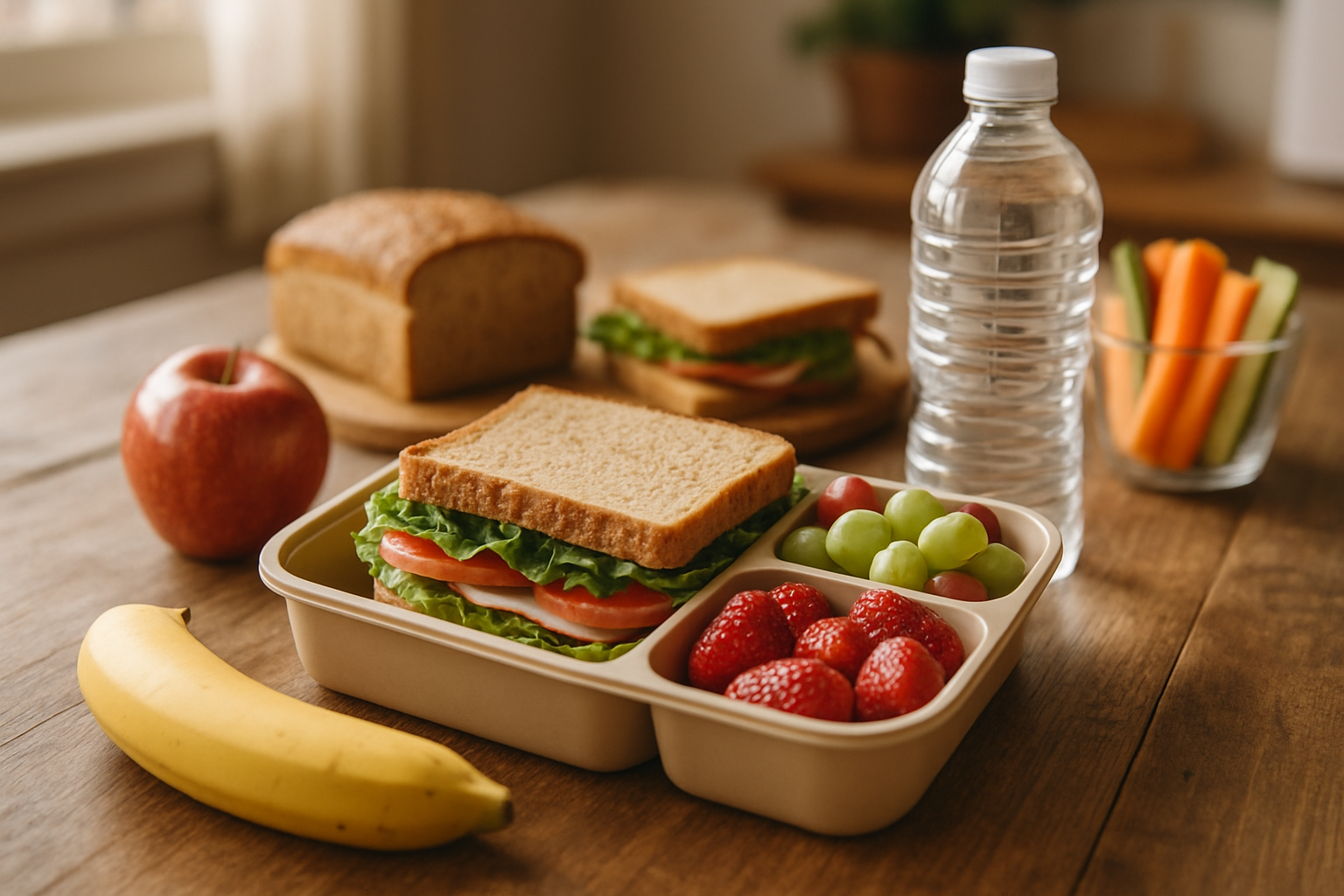
For lunch, think in components. Sandwiches are useful, but they are not the only option. Try wraps, pita pockets, cheese and turkey rolls, cold pasta salad, leftover roast chicken, or hummus with vegetables and crackers. Pack sauces and wet ingredients separately when possible so food does not turn soggy.
Use individual portions for small children. Larger containers look efficient but create more spills and arguments in a moving vehicle. A few small containers also make it easier to offer food without passing around one open bag.
Keep the cooler in the passenger area if it is safe and practical, rather than buried under luggage. Pack the first meal near the top. Put drinks in their own bag if that helps you avoid opening the cooler repeatedly.
Food safety matters on warm travel days. Use frozen ice packs, keep cold food cold, and do not keep perishable food in a warm car for an uncertain length of time. When in doubt, throw it out. A small insulated lunch bag can hold the food for the next stop while the main cooler stays closed.
Choose no-cook, no-mess car food
Car food should survive bumps, small hands, and limited space. It should not require a knife, a fork, or a napkin emergency every ten minutes.
Good options include:
- Whole apples, clementines, grapes, and berries in sturdy containers
- Vegetable sticks with a small portion of dip
- Dry cereal or pretzels in spill-resistant cups
- Cheese strings or cubes
- Granola bars with a short ingredient list your family already accepts
- Rice cakes, crackers, or popcorn
- Homemade muffins or oat bars
- Dry sandwiches or wraps cut into small pieces
- Refillable water bottles
Choose food that is appropriate for the children’s ages. Whole grapes, nuts, popcorn, and other foods can be choking hazards for young children. An adult should handle foods that need close supervision, and children should not eat while running around at a stop.
Avoid foods that melt, crumble into every seat seam, or leave sticky fingers unless you are happy to clean the car afterwards. Chocolate, heavily sauced sandwiches, and open yogurt are rarely worth the trouble on a long drive.
Bring a rubbish bag, paper towels, wet wipes, and a spare change of clothes. These are not glamorous supplies, but they protect the budget from an emergency stop for cleaning supplies or replacement clothing.
Make one grocery stop at the destination
The first supermarket near your accommodation is usually more useful than several drive-through stops along the highway. Buy only what matches the remaining days and your storage space.
Look for a short list of flexible ingredients:
- Eggs or another easy breakfast protein
- Bread, wraps, or bagels
- Yogurt and milk
- Fruit and vegetables that need little preparation
- Deli chicken, canned tuna, beans, or cooked lentils
- Cheese
- A simple salad kit or pre-washed greens
- Tortillas, hummus, and crackers
- One or two easy dinners, such as pasta, soup, rotisserie chicken, or frozen pizza
The exact best shop depends on where you are staying. A kitchen-equipped rental, hotel room with a mini-fridge, campsite, and family cabin all need different foods. Check the fridge, freezer, microwave, kettle, barbecue, and cooking equipment before you shop.
Do not buy a full pantry for a weekend. Choose ingredients that can appear in more than one meal. Eggs can cover breakfast and a quick dinner. Tortillas can become breakfast wraps, lunch rolls, or quesadillas. Fruit can go into breakfasts, snacks, and picnic lunches.
If you cross into a different province or region, expect store selection, pack sizes, and prices to vary. A No Frills, FreshCo, Food Basics, Super C, Atlantic Superstore, IGA, Save-On-Foods, Co-op, Costco, or independent grocer may all be useful, depending on where you are. Check the local flyer and the store’s current rules rather than assuming the same deal or price follows you from home.
Plan the splurge meal on purpose
A budget trip should still feel like a holiday. The answer is not refusing every restaurant meal. Pick the meal that matters most and build around it.
It might be fish and chips by the water, a local specialty, breakfast at a well-loved café, or dinner at the restaurant the children have been asking about. Decide before the trip when it will happen and what the meal needs to include.
On the other days, keep meals simple. Eat breakfast from the cooler, pack lunch for an outing, and make an easy dinner where you are staying. If the family wants a second restaurant meal, make that a conscious swap rather than an accidental add-on after everyone is hungry.
A planned splurge also reduces resentment. Parents are not trying to say no to every treat, and children know when the special meal is coming. Keep a small buffer for an ice cream, coffee, or unexpected stop so the plan does not collapse over one reasonable request.
Use a simple road-trip food budget
Split the food money into separate buckets:
- Food packed from home
- Destination groceries
- Planned restaurant meals
- Snacks and drinks bought on the road
- A small contingency amount
The last bucket matters. Travel rarely follows the spreadsheet perfectly. Someone may be sick, a cooler may leak, or a planned picnic may become impossible in the rain.
Use the same payment or note-taking method throughout the trip so you can see what remains. Keep a running total after each grocery shop and paid meal. You do not need a complicated system. You need enough information to decide whether tomorrow’s lunch is a packed meal or a restaurant meal.
Do not confuse low cost with good value. A large pack is not a bargain if it will be wasted. A slightly more expensive food that your family will reliably eat may be the better choice. The goal is to reduce rushed spending and food waste, not to make every meal feel like a punishment.
For the next trip, save the menu that worked. Note which foods travelled well, what went untouched, and how much cooler space you actually used. Your second road-trip plan will be faster because it is based on your family, not a generic packing list.
A practical weekly meal planner such as CartBrain can help you build the home week around your budget and local flyer deals before you leave, then turn the plan into a store-split grocery list. Start with the meals your family will actually eat, pack the car food first, and spend the holiday money where it creates a good memory.