 Cart
Craving Mexican Food? Add a Theme Without Repeating All Week
A cuisine theme should give your week direction, not trap your family in the same taco dinner seven nights in a row.
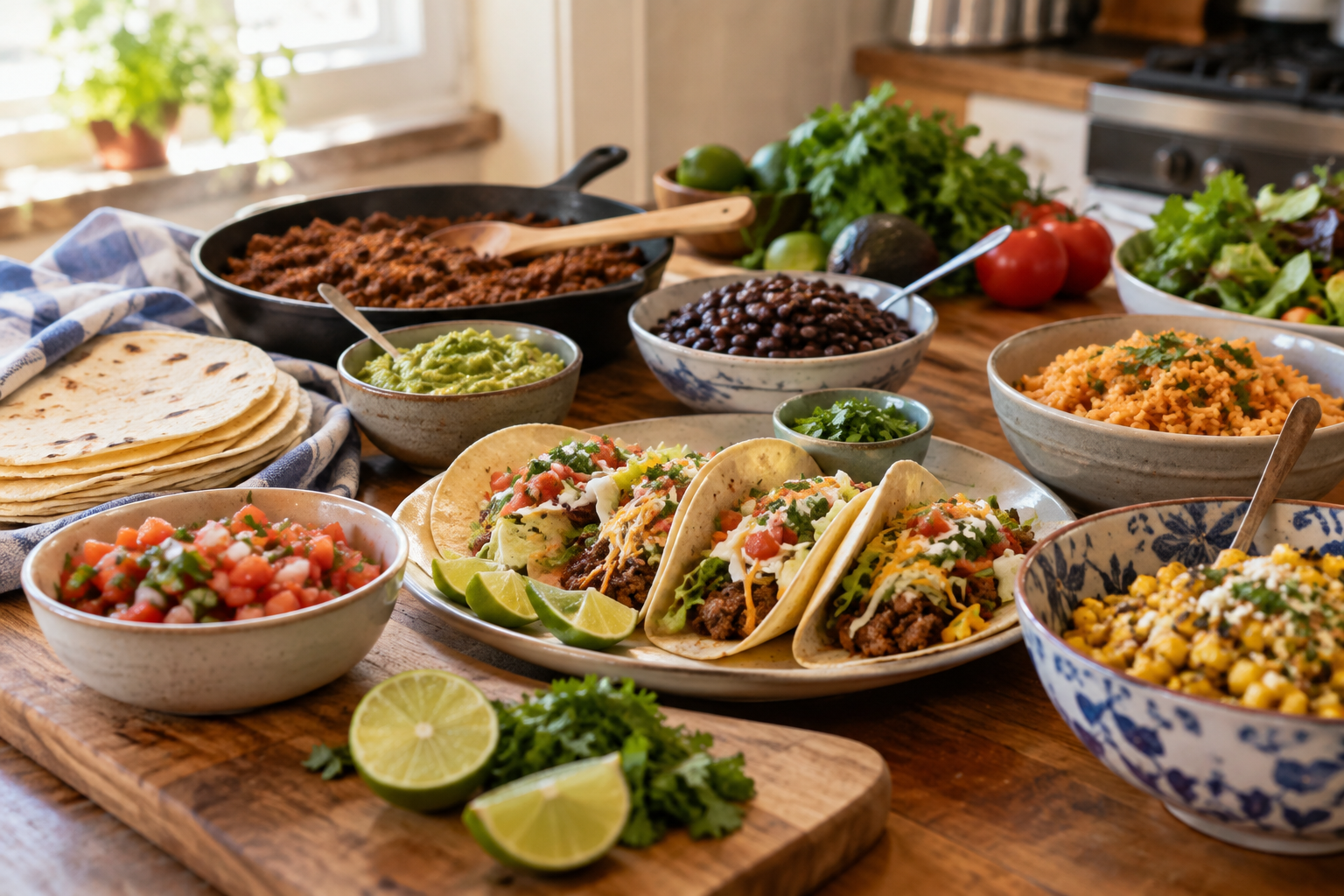
A half-used bunch of cilantro, one tin of black beans, and a family asking for tacos can become a useful meal-plan clue—not a reason to make the same dinner all week.
A cuisine preference works best as a loose thread. It can guide a few meals, help you reuse ingredients, and make grocery decisions easier. It should not turn Monday to Sunday into one long parade of tortillas and rice.
The goal is simple: keep the flavours your household wants while changing the format, protein, texture, and level of effort.
Use a cuisine theme as a filter, not a rule
When someone asks for Mexican food, they may mean several different things. They might want smoky spices, lime, salsa, beans, corn, avocado, or a warm, filling meal. They may not be asking for tacos every night.
Start by translating the request into flavour and ingredient preferences:
- Bright flavours such as lime, tomato, fresh herbs, and pickled onions.
- Warm spices such as cumin, paprika, oregano, or chilli.
- Flexible staples such as beans, corn, rice, potatoes, tortillas, and eggs.
- A preferred protein, or a meat-free option that can carry the meal.
- A format the family enjoys, such as bowls, soup, wraps, baked dishes, or salads.
This gives you more room than searching for seven recipes from one narrow category. It also makes weekly meal plan cuisine suggestions more useful. You are choosing a direction, not signing a contract with one dish.
Pick two or three theme meals
For a normal family week, two or three Mexican-inspired dinners may be enough to satisfy the craving. The remaining meals can use different cuisines or neutral family favourites.
For example, a week could include:
- Sheet-pan chicken or tofu with peppers, onions, and tortillas.
- A bean and vegetable soup with lime and toasted bread.
- A baked rice dish with salsa, cheese, and a simple cabbage salad.
- A pasta dinner with a tomato sauce.
- Fish, potatoes, and frozen vegetables.
- Breakfast-for-dinner with eggs, fruit, and toast.
- Leftovers or a low-effort freezer meal.
That is a theme without repetition. The shared ingredients support a few meals, but the formats feel different. If your household only wants three planned suppers, stop there. A meal plan should match real life, not fill every square on a calendar for the sake of it.
Change the format before changing the whole shop
One of the easiest ways to avoid repetition is to keep a few ingredients and change how you serve them.
A seasoned filling can become:
- Tacos with shredded cabbage and yoghurt or sour cream.
- A rice bowl with beans, corn, salsa, and sliced vegetables.
- Quesadillas with a side salad.
- A baked tortilla casserole.
- A topping for baked potatoes.
- A filling for a lunch-sized wrap.
The seasoning can stay in the same family while the meal changes shape. This helps with picky eaters, too. One person can build a bowl, another can use a tortilla, and someone else can eat the filling with rice.
Do not buy every topping for every possible variation. Choose a small set that can work across meals. For example, cabbage can go into slaw, a bowl, or tacos. Plain yoghurt can become a topping or a quick lime sauce. Extra rice can become the base for another dinner or a side for eggs.
Build the grocery list around overlap
A cuisine theme can reduce waste when you plan the ingredient handoffs before shopping. It can also increase waste if you buy a separate jar, spice blend, cheese, and garnish for every recipe.
Choose a practical core:
- One main protein, such as chicken, eggs, beans, lentils, tofu, or fish.
- One grain or starchy base, such as rice, potatoes, or tortillas.
- Two or three vegetables that can be cooked or served raw.
- One sauce or condiment, such as salsa.
- One fresh accent, such as lime, coriander, or cabbage.
- A few pantry seasonings your household already uses.
Then check what you have before adding anything. Ground cumin, dried oregano, chilli powder, garlic, and canned tomatoes may already be in the cupboard. A theme is not a reason to replace your spice drawer.
Fresh ingredients need a little planning. Buy sturdy vegetables for later in the week and use delicate herbs earlier. If fresh coriander is not practical in your area, use another herb, skip it, or choose a shelf-stable flavour boost. Mexican-inspired food does not depend on one garnish.
Prices and selection vary between provinces, cities, and smaller or northern communities. Check your local flyer and store inventory before committing to a specialty ingredient. No Frills, FreshCo, Food Basics, Maxi, Super C, Giant Tiger, Costco, independent grocers, and other stores may have very different options depending on where you live.
Keep budget and dietary needs in the plan
A theme should fit the household budget, not override it. Start with the ingredients that give you the most meals per purchase. Beans, lentils, eggs, rice, potatoes, frozen vegetables, and canned tomatoes can provide a useful base, depending on your family’s preferences and dietary needs.
For dietary restrictions, decide on the boundaries before choosing recipes:
- For vegetarian meals, use beans, lentils, eggs, tofu, or cheese where suitable.
- For vegan meals, check sauces, tortillas, stock, and toppings for animal ingredients.
- For gluten-free meals, verify tortillas, spice blends, canned goods, and shared preparation surfaces.
- For dairy-free meals, use a suitable alternative or leave cheese and sour cream off.
- For lower-sodium needs, compare labels and season more of the meal yourself.
- For allergies, check every packaged ingredient and prevent cross-contact in the kitchen.
A flexible build-your-own dinner can help a mixed household. Put the shared filling and vegetables on the table, then offer separate bases or toppings where needed. But do not assume every substitution works for every person. Read labels and follow the person’s medical guidance.
Add one non-theme night on purpose
Variety is easier when it is planned, not left to chance. Add at least one dinner that has nothing to do with the cuisine theme.
This could be a familiar roast, a simple soup, a tray of sausages and vegetables, or a freezer meal. It gives everyone a flavour reset and uses up ingredients that do not belong in the theme. It also prevents the weekly shop from becoming a long list of niche items.
You can also vary the effort level. A theme meal does not have to mean a complicated recipe. One night might involve chopping and simmering. Another can be assembled from leftovers. A third can use store-bought salsa, pre-cut vegetables, or cooked grains when that makes the week manageable.
The best plan has a mixture of quick meals, flexible meals, and one meal with enough leftovers to reduce work later.
Let leftovers change jobs
Plan leftovers as an ingredient, not as a repeat plate. Extra seasoned beans can fill quesadillas one day and top a salad the next. Cooked chicken can move from tacos to soup. Rice can become a bowl base, side dish, or breakfast hash.
Store leftovers promptly and label them if your household tends to forget what is in the fridge. Keep wet toppings separate when you want the food to hold its texture. If a cooked ingredient will not be used safely within the usual storage window for your household, freeze it or choose a different plan.
A leftover only saves money and effort if someone will actually eat it. Ask whether the family prefers the food reheated, cold, tucked into a wrap, or mixed into something new.
Use the theme to make planning easier
When you search for weekly meal plan cuisine suggestions, look for prompts that combine a cuisine preference with constraints. Try requests such as:
- Mexican-inspired dinners for three nights, with one vegetarian meal and no repeated format.
- Family meals using beans, rice, chicken, and vegetables, with leftovers for one night.
- Budget-conscious dinners with mild seasoning and toppings served separately.
- Gluten-free or dairy-free meals with ingredients available at local stores.
Specific requests produce a more useful plan than “make every meal Mexican.” Include your household size, foods to avoid, available cooking time, preferred stores, and whether leftovers are welcome.
CartBrain can turn those preferences into a full-week plan around your household, budget, selected stores, and local Canadian or US flyer options, then organise the shopping by store and aisle. A new account gets a full first week free with no card required.
A cuisine theme should leave your family with more options, not fewer. Pick a few shared flavours, reuse ingredients sensibly, change the meal format, and leave room for familiar food. That is how a craving becomes a practical week of suppers.