 Cart
CartCanned, Frozen or Fresh: Where the Savings Really Are
The cheapest package is not always the cheapest meal. Compare usable portions, waste and storage life before you fill the cart.
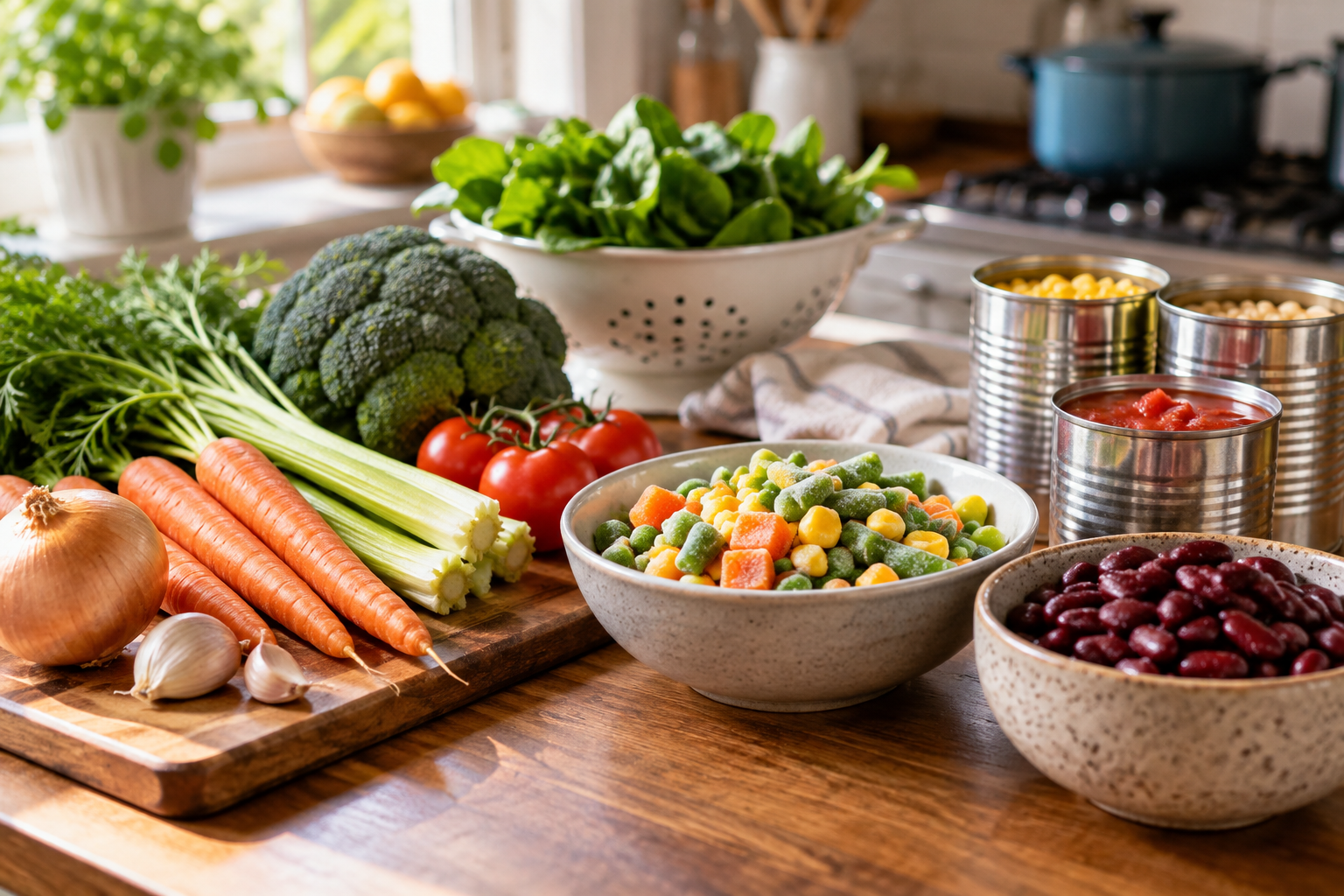
A 750 g bag of frozen peas can look expensive beside a small can, while a fresh head of cauliflower looks like a bargain until half of it spoils. The useful comparison is not the package price. It is the cost of the food your family will actually eat.
When you are weighing frozen vs fresh vegetables cost, add three things: edible portion, waste and convenience. Then check whether the food will still be good when you need it. That simple test usually makes the freezer and pantry more useful than a fridge packed with hopeful produce.
Compare the edible portion, not the label
A fresh vegetable has more than one possible cost. There is the sticker price, plus trimming, peeling, cooking loss and anything that ends up in the compost bin. A bag of frozen vegetables may have less visible waste because it is already washed, trimmed and portioned.
Canned food has its own calculation. Some of the package is liquid. Beans may need draining. Tomatoes may include juice that you use in the recipe, or do not. The right comparison depends on the meal.
Before deciding what is cheapest, ask:
- How much of the package will go into the meal?
- Will I use the rest before it spoils?
- Does the recipe need a drained food or the full contents?
- Will I pay for preparation, such as peeling or chopping, with my time?
- Can I freeze the unused portion?
You do not need a calculator for every grocery trip. Use the comparison when two formats look close in price or when a fresh item has a reputation for being cheaper. The cheaper option is the one that delivers more usable food with less waste.
Frozen vegetables are the weeknight workhorse
Frozen vegetables are often the strongest choice for cooked meals. They are generally harvested when mature and frozen soon after processing, so they can be convenient and reliable when fresh produce is out of season or has travelled a long way.
They also remove several common sources of waste. There is no limp bunch of greens waiting for a meal that never happens. No half a cabbage forgotten in the crisper. No need to use an entire fresh bag because it has started to fade.
Keep frozen vegetables for meals such as:
- Stir-fries and fried rice
- Soups, stews and chilli
- Pasta sauces and casseroles
- Omelettes, frittatas and savoury muffins
- Side dishes with butter, oil, herbs or cheese
- Smoothies, where suitable
Choose plain frozen vegetables when you want maximum flexibility. Mixed vegetables can be useful, but only if your household will eat the mix. A bargain bag is not a bargain if everyone picks out the peas and leaves the carrots behind.
Frozen texture changes after thawing, so they are not always the best choice for crisp salads or fresh snacking. Cook them straight from frozen when the package or recipe allows. This usually gives you better texture and avoids creating another small container of forgotten thawed food.
Canned beans and tomatoes build cheap meals
Canned beans and tomatoes are the backbone of a practical low-cost pantry. They are ready when you are, do not need soaking, and can turn a small amount of meat, grains or vegetables into a filling meal.
Use canned beans in:
- Chilli and soups
- Burrito bowls and tacos
- Pasta sauces
- Grain salads
- Mash for toast or wraps
- Sheet-pan meals and casseroles
Rinse and drain beans when you want a cleaner flavour or less of the canning liquid. Keep the liquid when it helps the recipe, such as a soup or stew. If your household needs to limit sodium, compare labels and look for lower-sodium options where available. Rinsing can also help, but it does not make every product identical.
Canned tomatoes are useful far beyond pasta sauce. Keep crushed, diced or whole tomatoes matched to the meals you actually cook. Whole tomatoes can be broken up in the pot. Diced tomatoes save a preparation step. Passata or tomato sauce may be useful for a smooth sauce, but check the ingredient list if you want to avoid added sugar, salt or seasoning.
The pantry-first habit works because it gives you a base for supper before you shop. A can of beans, a can of tomatoes, frozen vegetables and a grain can become several different meals with different spices and toppings.
Where fresh produce earns its place
Fresh is not a mistake. It is the right choice when texture, convenience or short-term eating matters more than long storage.
Fresh vegetables usually win for:
- Salads and slaws
- Crunchy toppings for tacos, bowls and sandwiches
- Vegetables your children snack on raw
- Produce you will use within about three days
- Foods that do not freeze or reheat well
- Small amounts needed for garnish or flavour
Fresh fruit can also make sense when it will be eaten quickly. Apples, pears, oranges and other sturdy options can work well for snacks, but the best choice depends on what your household reaches for. A less expensive fruit that stays untouched is still wasted food.
Buy fresh produce in the amount your family can manage. If a large bag is only cheaper on paper, choose a smaller amount or select a format with a longer life. Wash and cut only what you expect to eat soon. Preparing everything at once can make some produce lose quality faster.
The same rule applies to herbs. Buy a full bunch when you have several meals planned for it, or choose a longer-lasting alternative when you only need a little. A recipe that calls for a small garnish should not force you into a week of unused parsley.
Build a freezer-and-pantry-first grocery list
This does not mean avoiding fresh food. It means checking your durable food before adding more to the cart.
Start with three quick inventories:
- Check the freezer for vegetables, fruit, bread, cooked meat and leftovers.
- Check the pantry for beans, tomatoes, grains, pasta, broth and canned fish.
- Check the fridge for produce that needs using soon.
Then plan meals in this order:
- Use fresh food that is close to spoiling.
- Add frozen vegetables to meals that need bulk or colour.
- Use canned beans, tomatoes and grains as the meal base.
- Buy fresh items for salads, toppings and snacks.
- Add only the ingredients that connect those meals.
This order reduces duplicate purchases. It also gives you a backup supper. If fresh chicken is not appealing or a planned vegetable has gone soft, frozen vegetables and pantry staples can still carry the meal.
When you shop, look at the weekly flyer for your chosen stores and compare formats. Canadian flyers often turn over on Thursday, but the timing and promotions vary by store and province. A deal at No Frills, FreshCo, Food Basics, Maxi, Super C, Giant Tiger, Costco or another local option may not make sense for your household if the package is too large or the store is out of your way. Check the current details yourself, especially for multi-buy offers and store rules.
A simple test for every produce purchase
Before putting an item in your basket, finish this sentence: “We will eat this in…”
If the answer is within three days, fresh may be the best fit. If the answer is sometime later in the week, frozen or canned may be safer. If you are not sure when you will use it, choose the format with the longest useful life or skip it until you have a meal for it.
The goal is not to choose one category forever. It is to match the format to the job. Fresh brings crunch and snack appeal. Frozen brings low waste and quick cooked vegetables. Canned beans and tomatoes bring dependable meal structure.
For a busy Canadian household, a weekly plan that uses what is already in the freezer and pantry can make the grocery list smaller and supper decisions easier. CartBrain can help plan meals around your budget, chosen Canadian or US stores and current local flyers, then track the cost as you build the list.