 Cart
Homemade or Packaged Snacks? Count Your Time, Too
The cheapest snack on paper may cost more when you add prep, cleanup, wasted ingredients and the value of your limited time.
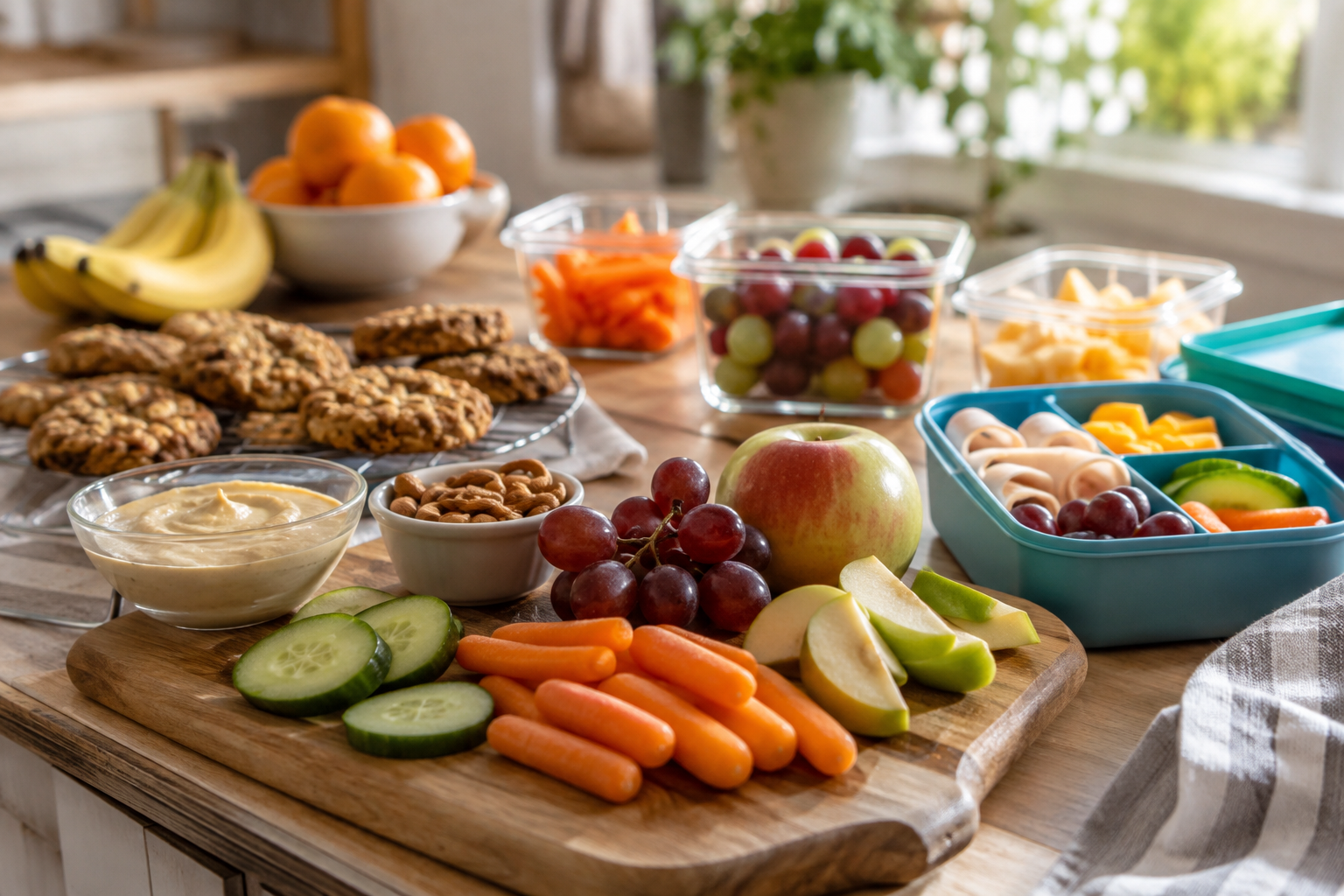
A batch of homemade oat bars can look cheaper than a box of packaged snacks until you count mixing, baking, cooling, cutting and washing the pan. The homemade vs packaged snacks budget question is not just about the checkout total. It is about what your household has time and energy to do.
Neither option deserves a gold star every time. Packaged snacks can be practical. Homemade snacks can make good use of ingredients already in your kitchen. The sensible choice depends on the snack, the week and what would otherwise go to waste.
Start with the full cost, not just the ingredient list
For a fair comparison, count five things:
- The ingredients you need to buy.
- Ingredients you already own.
- The number of portions you actually get.
- Your active preparation and cleanup time.
- Food that gets forgotten, rejected or wasted.
You do not need to assign a perfect dollar value to every minute. A rough estimate is enough to expose the trade-off.
For example, suppose a homemade batch of snack muffins uses flour, oats, bananas, eggs, oil and a few pantry staples. In this hypothetical example, the ingredients add up to $8.50 CAD. The batch makes 18 muffins, so the ingredient cost is about $0.47 per muffin.
Now add the work. Mixing and measuring take 15 minutes. Baking and cooling need more clock time, but you are not actively working for all of it. Cleaning takes 10 minutes. If the next batch also uses bananas that were already getting too soft, the recipe may help prevent waste.
A packaged option might be a box of 12 individually wrapped snack bars for a hypothetical $7.50. That works out to about $0.63 each. There is no mixing or baking, and cleanup is limited to wrappers or containers. The bars may also be easier to portion into school bags or a car snack kit.
The packaged option costs more per piece in this example. It may still be the better choice on a week when nobody has time to bake.
Use ingredients you already own carefully
“Already in the cupboard” does not always mean free.
If you bought the oats, flour or dried fruit for another recipe and will use the rest, homemade snacks can fit neatly into the grocery plan. If you need to buy a special ingredient that will sit untouched, the calculation changes.
Ask three questions before choosing a recipe:
- Will I use the whole package, or only a spoonful?
- Is this ingredient already part of another meal this week?
- Can I swap in something I regularly keep on hand?
A recipe that uses half a bag of shredded cheese for savoury crackers may look affordable, but the unused half needs a job. A snack that uses the same carrots planned for supper is easier to justify. So is a banana bread recipe that uses fruit no one wants to eat plain.
This is where a flexible recipe beats a “perfect” recipe. Homemade snacks do not need unusual seeds, specialty flours or several separate sweeteners to work. Keep the ingredient list short enough that the leftovers have somewhere to go.
Compare portions, not packages
A package is not automatically one serving, and a homemade batch is not automatically portion-controlled.
Write down the useful unit for your household. That might be one muffin, 30 g of crackers, a small container of fruit or one snack bar. Then compare like with like.
A hypothetical homemade granola batch could cost $9 and make 15 portions. That is $0.60 per portion before time and cleanup. A packaged option could cost $6 for 10 portions, or $0.60 per portion as well. The prices look equal, but the labour is not.
The reverse can happen too. A large homemade batch may be inexpensive per portion, but half of it may disappear into the freezer because the family cannot eat it quickly enough. A smaller packaged option may create less waste, even with more packaging.
Portioning can also be a hidden task. If you buy a large bag of crackers, someone needs to divide it into lunch containers or snack bins. If you bake muffins, someone needs to cool, store and possibly freeze them. Include those jobs when comparing convenience.
Put a reasonable value on your time
Your time is not a moral issue. It is a household resource.
For a practical comparison, separate active time from waiting time. Active time is measuring, chopping, stirring, packing and washing. Waiting time is the oven running while you do something else.
You can then use a simple planning value. For example, if you decide your active kitchen time is worth $20 per hour for budgeting purposes, 25 minutes of hands-on work represents roughly $8.33 of time. That is not a wage claim or a universal rule. It is simply a way to see the trade-off.
Using the earlier hypothetical muffins:
- Ingredients: $8.50.
- Active work: 25 minutes, valued at about $8.33.
- Total planning cost: about $16.83.
- Portions: 18 muffins.
- Full planning cost per muffin: about $0.94.
The packaged snack at $0.63 per portion may now be the better value if time is tight. On a weekend when you are already cooking and cleaning, the extra work may feel much smaller. The same recipe can be a smart choice one week and a poor choice the next.
Do not force a time value into every decision if it makes budgeting harder. You can instead label recipes as low, medium or high effort. The important point is to stop treating preparation as invisible.
Account for cleanup and equipment
Cleanup is part of the snack.
Homemade crackers may need a bowl, measuring spoons, a rolling pin, a baking sheet and a cooling rack. A smoothie may require a blender that needs immediate rinsing. Energy bites may be quick to mix but sticky to portion and store.
Packaged snacks have cleanup too, but it is usually different. You may be dealing with wrappers, larger outer bags or reusable containers. If your household already washes lunch containers every evening, packing a homemade snack may add very little work. If it means another tray, knife and food processor, the burden is larger.
Equipment matters as well. A recipe that requires buying a food processor is not a cheap snack for your current kitchen. Use what you own, or choose a recipe with fewer tools.
Build a mixed snack system
You do not need to pick homemade or packaged snacks for the whole month. Use each where it solves a real problem.
A mixed system might include:
- Homemade muffins or quick breads when you already have ripe fruit and time to bake.
- Packaged crackers or bars for travel, rushed mornings and backup snacks.
- Washed fruit and vegetables when they need little preparation.
- Yogurt, cheese or other simple options that require portioning but no recipe.
- Freezer portions for homemade snacks that would otherwise go stale.
Keep a few reliable homemade options rather than collecting ambitious recipes. A snack that gets made repeatedly is more useful than one that looks inexpensive but creates kitchen chaos.
Test your own numbers for one week
Choose one homemade snack and one packaged equivalent. Track only four details:
- What you spent or used from the kitchen.
- How many portions you got.
- How many minutes of active work and cleanup were involved.
- How much was eaten, stored or wasted.
Use hypothetical estimates if exact numbers would make you abandon the exercise. The goal is a useful decision, not an accounting exam.
You may find that homemade snacks win when they use ingredients already planned for other meals. You may find packaged snacks win during activity-heavy weeks. You may find that the best answer is a freezer batch plus a small packaged backup.
For a faster way to plan the week around your budget, household and local flyer options, CartBrain can help organise meals and groceries; the weekly meal planner is free to start, with a full first week free and no card required.