 Cart
How to Plan a Week with Two Evenings Off from Cooking
Reserve your no-cooking nights first, then build easy prep, cold meals, and leftovers around the rest of the week.
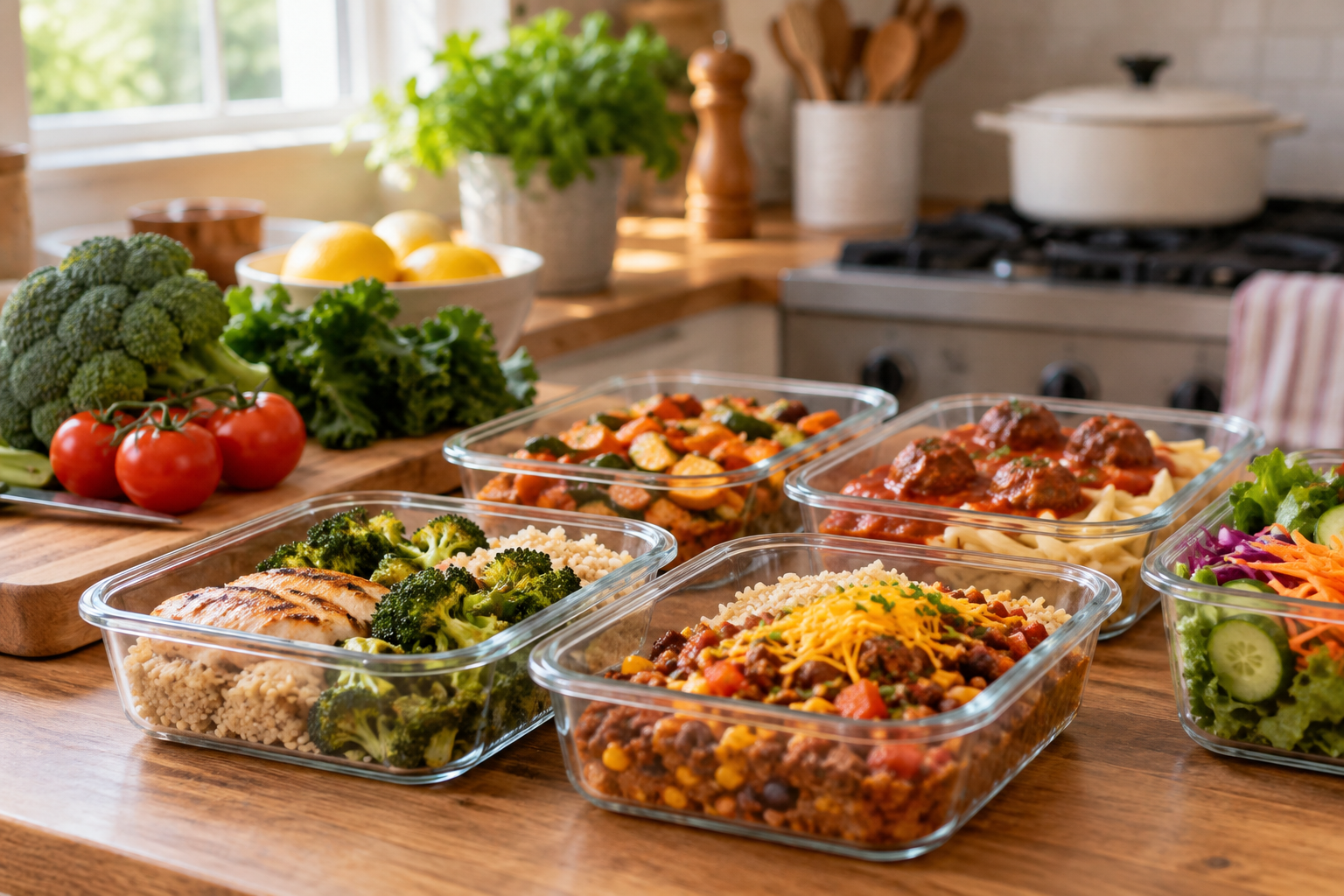
A meal plan no cooking nights can work brilliantly, but only if those evenings are planned before the rest of the week fills up. Put them on the calendar first. Then decide what “no cooking” actually means for your household.
For one family, it means reheating a prepared meal. For another, it means assembling sandwiches, cutting vegetables, and putting out hummus. Neither is the same as doing absolutely nothing. The goal is to remove the evening cooking job, not create a hidden pile of work earlier in the day.
Choose your two no-cooking evenings first
Start with the two evenings that are hardest to protect. They might be packed with activities, appointments, commuting, or a long drive between school and home. They might also be the evenings when you are simply out of energy.
Write those two nights at the top of the weekly plan. Do not leave them as blank spaces to solve later. Blank spaces tend to become expensive takeaway, a rushed grocery run, or breakfast for dinner by default.
A no-cooking night can use:
- Leftovers that only need reheating
- A make-ahead meal prepared earlier in the week
- A freezer meal thawed safely in advance
- A cold supper assembled from ready-to-eat ingredients
- A simple store-bought component combined with food already at home
- A planned takeaway meal that fits the budget
Choose the option that matches the actual night. A freezer lasagne may be fine after a short day at home. It may be a poor choice when everyone is eating in shifts and nobody wants to wait for the oven.
Decide what “no effort” means
This distinction matters. A cold meal still takes effort if someone has to wash, chop, toast, assemble, and clean up. A reheated casserole still requires someone to remember to move it from the freezer to the fridge. A grocery-store roast chicken may remove cooking but not necessarily the work of making sides.
Make a quick effort list for each evening:
- Zero-cook: Open, portion, and eat. Examples include yoghurt, fruit, cheese, bread, and prepared vegetables.
- Assemble: Put several prepared items together. Think wraps, grain bowls, snack plates, or sandwiches.
- Reheat: Warm a meal that was cooked earlier or bought ready-made.
- Finish: Cook one small component, such as pasta, rice, or frozen vegetables, then combine it with prepared food.
There is no prize for choosing the lowest-effort label. Choose the lowest effort your household can realistically manage. If the children need food at different times, individual portions may be more useful than one large dish. If everyone eats together, a shared platter may be quicker.
Plan the make-ahead meal around your real week
One of the easiest ways to create a no-cooking evening is to cook extra on another night. But “make extra” only works when the food will still be appealing and safe to eat when needed.
Good make-ahead choices are meals that hold their texture and flavour after chilling or freezing. Chilli, soup, stew, curry, meatballs, baked pasta, pulled chicken, and cooked grains can often fit this role. Use your household’s favourites rather than choosing a recipe because it looks efficient on paper.
Plan the preparation earlier in the week. You could:
- Double a batch of soup and refrigerate or freeze part of it
- Cook extra rice, potatoes, pasta, or grains for another meal
- Wash and cut vegetables while preparing supper
- Roast a tray of vegetables to use cold or reheated
- Portion leftovers into containers before putting them away
- Move the frozen meal to the fridge on the day it needs to thaw
Label containers with what they contain and when they were stored. Follow your local food-safety guidance, especially for cooling, refrigeration, and reheating. If there is any doubt about how long food has been stored, do not serve it.
Build cold suppers that feel like a meal
Cold food does not have to mean random snacking. Give it a simple structure: a filling item, something fresh, and something with flavour or crunch.
Try combinations such as:
- Whole-grain bread or wraps with sliced chicken, cheese, and vegetables
- Hummus with pitas, cucumbers, peppers, olives, and boiled eggs
- A pasta salad made earlier with beans, vegetables, and a simple dressing
- Greek yoghurt, fruit, oats, and toast for a breakfast-style supper
- A snack board with crackers, cheese, leftover meat, fruit, and raw vegetables
- Tuna or chickpea salad served in wraps or over greens
Keep the components familiar if you are feeding children. One shared meal does not have to mean every person eats every item. Put a few options on the table and let people build a plate from what works for them.
Check the cost before shopping. A cold meal can become expensive if every part is a packaged convenience item. Balance ready-to-eat foods with staples already in the cupboard or fridge. Bread, eggs, beans, yoghurt, seasonal produce, and leftovers can stretch an assembled supper without making it feel repetitive.
Plan the other five evenings around those nights
Once the two no-cooking evenings are reserved, fill the remaining nights with a sensible mix. Do not schedule five ambitious recipes around them. That simply moves the exhaustion to the other days.
A practical week might include:
- One meal that creates useful leftovers
- One quick stovetop or oven meal
- One flexible meal using ingredients that need to be used
- One slower meal for the evening with more breathing room
- One simple backup supper
- Two no-cooking evenings
The backup supper matters. Keep one option that can be made from shelf-stable or freezer items if plans change. Pasta with tomato sauce, eggs on toast, frozen vegetables with rice, or bean quesadillas may be enough. The point is not to create another recipe project. It is to stop a small disruption from wrecking the plan.
Avoid putting delicate fresh ingredients on the no-cooking nights unless you have a clear storage plan. If salad greens, berries, or fresh bread are likely to be forgotten, use them earlier in the week. If your supermarket flyer turns over on Thursday, compare the new offers with what you actually need before building the list. Flyers and availability differ between provinces, towns, and stores, so check your own local options.
Shop for components, not just recipes
A weekly grocery list should show how ingredients will be used across the week. If you buy a large tub of yoghurt for one meal, plan another use. If you buy herbs, choose meals that can share them. If you buy tortillas for a no-cooking night, use them for leftovers or a quick meal too.
Group your list by store and aisle if you shop at more than one place. A discount grocer, a larger supermarket, Bulk Barn, Costco, a local market, or a nearby independent store may each suit different items, but travelling to several shops is only worthwhile if it fits your week.
Before shopping, check:
- What is already in the fridge, freezer, and pantry
- Which ingredients are needed for both no-cooking nights
- Whether a prepared item is cheaper or easier to make in a larger batch
- How much storage space you have
- Whether everyone will eat the planned leftovers
- Which items need to be used first
The best plan is not the one with the most clever recipes. It is the one that uses what you buy and reduces decisions when the week gets busy.
Make the no-cooking nights visible
Put the two evenings somewhere everyone can see them. Add a short note beside each one: “reheat soup,” “assemble wraps,” or “cold plate from the fridge.” This prevents the late question, “What are we having?” from turning into a full discussion.
Do the small preparation when you already have a knife, cutting board, or storage container out. Wash produce after unpacking groceries if that helps your household use it. Portion leftovers before the fridge becomes crowded. Place the next meal where it will be noticed, while still storing food safely.
If the plan changes, keep the two protected evenings whenever possible. Swap meals rather than abandoning the whole week. A leftover night can move to another day. A cold supper can become the backup. Flexibility is part of the plan, not proof that the plan failed.
A meal plan no cooking nights is really a plan for fewer decisions and less evening work. Reserve the two evenings first, prepare one useful meal or set of components ahead of time, and be honest about how much assembly your household can handle. CartBrain can help you build the full week around your budget, household, chosen stores, and local flyer items, so those two easier evenings fit the rest of your shopping plan.